What Are Invisible Money Leaks?
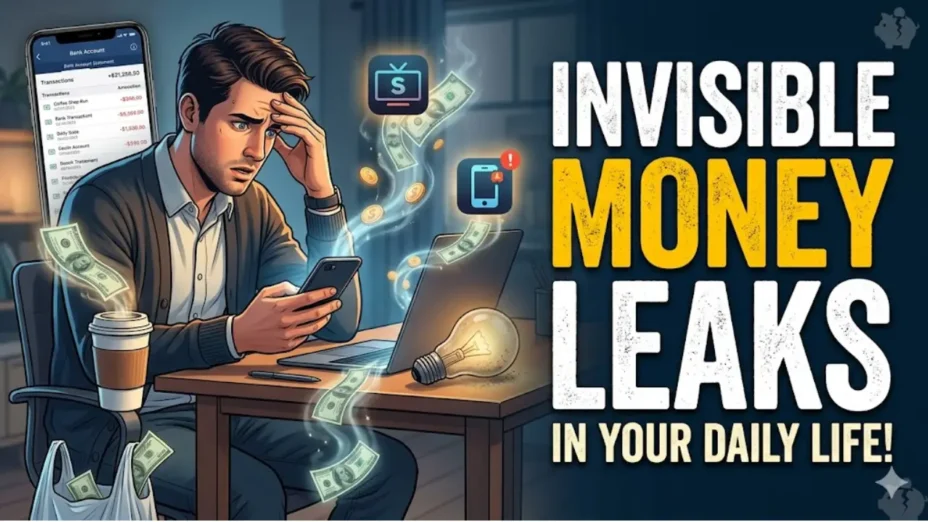
Invisible money leaks are those sneaky, almost unnoticeable expenses that quietly chip away at your finances day after day. They don’t show up as massive purchases or dramatic splurges, which is exactly why they’re so dangerous. Think about the $5 coffee you grab every morning, the unused subscription quietly renewing each month, or the late-night online shopping you barely remember. Individually, they seem harmless. Collectively, they can drain thousands from your bank account every year without you even realizing it.
What makes these leaks particularly tricky is how seamlessly they blend into your routine. Unlike rent or utility bills, which demand your attention, these expenses hide in plain sight. They’re often automated, habitual, or emotionally driven, which means they bypass your logical decision-making process. It’s like having a tiny hole in your wallet nothing dramatic at first, but over time, you’re left wondering where all your money went.
A recent financial behavior study revealed that nearly 65% of people underestimate their monthly spending by at least 20%, largely due to these invisible leaks. That’s a significant gap, and it highlights how disconnected we can become from our own financial habits. When money moves digitally through apps, subscriptions, and contactless payments it becomes even easier to ignore.
Understanding invisible money leaks is the first step toward regaining control. Once you start recognizing them, you begin to see patterns that were previously invisible. And that awareness? It’s powerful. It shifts your mindset from reactive spending to intentional financial living, where every dollar has a purpose instead of quietly slipping away.
The Psychology Behind Unnoticed Spending
Have you ever wondered why it’s so easy to spend money without noticing? The answer lies deep in human psychology. Our brains are wired to prioritize immediate gratification over long-term consequences. When you buy something small a snack, an app upgrade, or a quick ride it triggers a tiny dopamine hit. That feel-good moment overshadows the financial impact, making the expense feel insignificant.
This phenomenon is often referred to as “pain of paying.” When you pay with cash, you physically feel the loss, which makes you more cautious. But with digital payments, that pain is almost nonexistent. Swiping a card or tapping your phone doesn’t feel like spending real money, even though it absolutely is. This disconnect creates the perfect environment for invisible money leaks to thrive.
Another psychological factor at play is decision fatigue. Throughout the day, you make countless decisions, from work tasks to personal choices. By the time you’re deciding whether to order takeout or cook at home, your mental energy is already depleted. Convenience wins, even if it costs more. These small decisions, repeated daily, form habits that slowly drain your finances.
Social influence also plays a significant role. Seeing others indulge in certain lifestyles whether through social media or peer groups can normalize frequent spending. Suddenly, buying expensive coffee or subscribing to multiple streaming platforms feels standard rather than excessive.
Recognizing these psychological triggers doesn’t mean eliminating all spending. It means becoming aware of why you spend and making conscious choices instead of automatic ones. Once you understand the “why,” you gain the power to change the “how.”
Why Small Purchases Feel Harmless but Add Up
A $3 purchase doesn’t feel like a big deal. Neither does a $10 impulse buy. But here’s the catch—these small expenses rarely happen in isolation. They repeat, often daily, and that’s where the real impact lies. It’s the classic “death by a thousand cuts” scenario, where each tiny expense contributes to a much larger financial drain.
Let’s break it down with a simple example. Spending $5 a day on coffee might seem trivial, but over a year, that adds up to $1,825. Now multiply that by other small habits—snacks, subscriptions, convenience fees and you’re easily looking at several thousand dollars annually. That’s money that could have been saved, invested, or used for meaningful experiences.
The reason these purchases feel harmless is because they don’t trigger financial alarm bells. Large expenses force you to pause and think, but small ones slip under the radar. They don’t feel like decisions they feel like habits. And habits are powerful because they operate on autopilot.
There’s also a cognitive bias known as “mental accounting,” where we categorize money differently depending on its source or purpose. For example, you might treat a bonus or cashback reward as “extra” money and spend it freely, even though it’s still part of your overall finances. This mindset further fuels invisible spending.
The key to overcoming this is shifting your perspective. Instead of viewing purchases individually, start seeing them collectively. Ask yourself: “If I continue this habit for a year, what will it cost me?” That simple question can transform your decision-making process and help you spot leaks before they become financial floods.
Common Invisible Money Leaks You’re Probably Ignoring
Subscription Creep and Forgotten Services
Subscription creep is one of the most common and overlooked money leaks in modern life. It starts innocently maybe a streaming service here, a fitness app there, or a free trial you forgot to cancel. Before you know it, you’re juggling multiple subscriptions, many of which you barely use. Because these charges are often small and automated, they quietly slip under your radar month after month.
A 2025 report found that the average consumer spends over $200 per month on subscriptions, yet nearly 40% of them go unused. That’s a staggering amount of wasted money. The problem isn’t just the cost it’s the invisibility. Since these payments are automatic, you don’t actively decide to spend that money each month. It just disappears.
Free trials are another culprit. Companies make it incredibly easy to sign up but surprisingly easy to forget to cancel. That “7-day free trial” can quickly turn into a recurring monthly charge if you’re not paying attention. And because the initial commitment feels risk-free, you’re more likely to sign up without thinking twice.
The solution starts with awareness. Take a close look at your bank statements and identify every recurring charge. Ask yourself: “Do I actually use this? Does it add value to my life?” If the answer is no, it’s time to cut it. Even trimming just a few subscriptions can free up a significant amount of money over time.
Managing subscriptions isn’t about depriving yourself it’s about aligning your spending with what truly matters to you. When you eliminate the unnecessary, you create room for the meaningful.
Food Delivery and Convenience Spending
There’s no denying it food delivery apps have completely changed the way we eat. With just a few taps, you can have your favorite meal delivered straight to your door, no cooking, no cleanup, no hassle. It feels like a modern luxury that’s become almost essential in busy lifestyles. But here’s the uncomfortable truth: convenience comes at a cost, and it’s often much higher than we realize.
When you order food online, you’re not just paying for the meal itself. There are delivery fees, service charges, small order fees, and often inflated menu prices compared to dining in. Add a tip on top of that, and suddenly a $12 meal can easily turn into $25 or more. Now imagine doing that just three times a week. Over the course of a year, that habit could cost you $3,000 to $5,000, depending on your location and preferences.
What makes this a classic invisible money leak is how normalized it has become. After a long day, cooking feels like a chore, and ordering in feels like a reward. It’s emotional spending disguised as convenience. And because each order feels justified in the moment—“I’m tired,” “I deserve this,” “It’s just one meal” the cumulative impact rarely crosses your mind.
There’s also a psychological detachment from the actual cost. You’re not handing over cash; you’re tapping a screen. That distance makes it easier to ignore how much you’re really spending. Over time, this habit becomes part of your routine, not an occasional treat.
Cutting back doesn’t mean eliminating convenience altogether. It means being intentional. Maybe you limit delivery to weekends or special occasions. Maybe you recreate your favorite takeout meals at home a few times a week. Even small changes can significantly reduce this leak without making you feel restricted. The goal isn’t to give up what you enjoy it’s to make sure it’s worth the price you’re paying.
Impulse Buying and Emotional Spending
Impulse buying is like a silent financial predator it strikes quickly, feels good in the moment, and leaves you wondering later why you even made the purchase. Whether it’s a flash sale, a “limited-time offer,” or something you saw while scrolling सोशल media, these spontaneous decisions can quietly drain your bank account.
At the core of impulse spending is emotion. You’re not buying because you need something; you’re buying because you feel something. Maybe you’re bored, stressed, excited, or even a little down. Shopping becomes a quick way to change your mood, offering a temporary sense of satisfaction or control. But that feeling fades quickly, often replaced by regret or indifference.
Retailers understand this psychology extremely well. That’s why you see tactics like countdown timers, low-stock alerts, and personalized recommendations. They’re designed to create urgency and bypass your rational thinking. And it works. Studies suggest that up to 84% of consumers have made impulse purchases, with online shopping making it easier than ever.
The real problem isn’t just the money spent it’s the habit formed. Once impulse buying becomes a coping mechanism, it can be hard to break. You might not even realize how often it’s happening because each purchase feels small or justified in isolation.
One effective way to combat this is to introduce a pause between desire and action. Ask yourself: Consider the question: “Is this truly necessary for me, or am I merely responding to an emotion?” This brief period of contemplation can hold remarkable strength. Over time, it helps you shift from reactive spending to intentional decision-making.
You don’t have to eliminate spontaneity entirely. The goal is to ensure that your purchases align with your values and priorities, not just your emotions in the moment. When you gain control over impulse spending, you’re not just saving money you’re building a healthier relationship with it.
The Role of Digital Payments in Overspending
Tap-to-Pay and the Illusion of “Not Spending”
Digital payments have made life incredibly convenient. Whether it’s tapping your phone, using a smartwatch, or saving your card details online, spending money has never been faster or easier. But that convenience comes with a hidden downside it reduces your awareness of spending.
When you pay with cash, there’s a physical exchange. You see the money leaving your hand, and that creates a sense of loss. Psychologists call this the “pain of paying,” and it plays a crucial role in controlling spending behavior. With digital payments, that pain is significantly reduced or even eliminated. You’re not seeing the money go; you’re just tapping a screen.
This creates what can only be described as an illusion. It doesn’t feel like you’re spending real money, even though you are. Over time, this detachment can lead to overspending because each transaction feels insignificant. It’s like eating snacks while watching TV you lose track of how much you’ve consumed because you’re not fully engaged in the act.
Contactless payments amplify this effect. The speed and ease of tapping mean there’s almost no friction in the decision-making process. You don’t have to enter a PIN, count cash, or even think twice. And when spending becomes frictionless, it becomes frequent.
This doesn’t mean you should abandon digital payments altogether. They’re incredibly useful and, in many cases, necessary. The key is to reintroduce awareness. You can do this by setting spending alerts, reviewing your transactions regularly, or even using budgeting apps that categorize your expenses in real time.
Bringing back that sense of awareness helps you reconnect with your money. It turns unconscious spending into conscious choices, which is essential for plugging those invisible leaks.
Auto-Renewals and Silent Charges
Auto-renewals are designed for convenience, but they often work against your financial awareness. Whether it’s a streaming service, a software subscription, or a cloud storage plan, these recurring charges continue quietly in the background, often long after you’ve stopped using the service.
The problem isn’t just the cost it’s the lack of visibility. Because these charges are automatic, they don’t require any action from you. There’s no monthly decision, no reminder, no moment to reconsider. The money simply leaves your account, and unless you’re actively monitoring your statements, you might not even notice.
Companies rely on this inertia. They know that once you’re signed up, you’re likely to stay subscribed, not because you love the service, but because canceling requires effort. It’s a subtle but powerful form of friction that keeps the money flowing.
A survey found that nearly 30% of consumers continue paying for subscriptions they no longer use, simply because they forget or find it inconvenient to cancel. That’s a significant leak, especially when multiple subscriptions are involved.
Taking control starts with a simple habit: review your recurring charges regularly. Set a reminder once a month to go through your bank or credit card statement. Identify anything that you don’t actively use or value. Canceling might take a few minutes, but the long-term savings can be substantial.
Another effective strategy is to use a dedicated account or card for subscriptions. This makes it easier to track and manage them without mixing them into your everyday spending.
Auto-renewals aren’t inherently bad they’re just easy to ignore. When you bring them into your awareness, you regain control over where your money goes.
Lifestyle Inflation: The Silent Budget Killer
Upgrading Your Life Without Realizing It
Lifestyle inflation is one of the most deceptive money leaks because it doesn’t feel like a problem. In fact, it often feels like progress. You earn more, so you spend more it seems logical, even deserved. Maybe you move to a nicer apartment, upgrade your phone, dine out more often, or start choosing premium options instead of basic ones. Individually, these changes make your life more comfortable. Collectively, they can prevent you from building real wealth.
The issue isn’t the upgrades themselves it’s the automatic nature of them. Instead of consciously deciding how to use your increased income, your spending rises to match it. Before you know it, your expenses have expanded so much that you’re no better off financially than you were before the raise.
This phenomenon is incredibly common. Studies show that as income increases, spending tends to rise proportionally, often leaving savings rates unchanged. It’s like running on a treadmill you’re moving forward, but not actually getting anywhere.
What makes lifestyle inflation particularly dangerous is that it resets your baseline. Once you get used to a certain standard of living, it becomes your new normal. Cutting back later feels like a sacrifice, even if it’s financially necessary.
The key to avoiding this trap is intentionality. When your income increases, decide in advance how much of it will go toward savings, investments, and lifestyle upgrades. This ensures that you’re benefiting from your growth rather than just maintaining a more expensive version of your old life.
Living well doesn’t have to mean spending more it means spending smarter. When you align your lifestyle with your long-term goals, you create a sense of progress that goes beyond temporary comfort.
Social Media Influence on Spending Habits
Scroll through any social media platform, and you’ll see a curated world of perfect lifestyles luxury vacations, trendy outfits, high-end gadgets, and aesthetically pleasing homes. It’s inspiring, entertaining, and, if you’re not careful, financially dangerous.
Social media has a powerful influence on how we perceive success and happiness. When you constantly see others enjoying certain lifestyles, it’s easy to feel like you should be doing the same. This creates a subtle pressure to spend in ways that align with those images, even if they don’t align with your financial reality.
The problem is that what you see online is often a highlight reel, not a complete picture. You’re comparing your everyday life to someone else’s best moments. That comparison can lead to unnecessary spending as you try to “keep up,” even if it means stretching your budget.
Influencer marketing takes this a step further. Products are presented in a way that feels authentic and desirable, making it easier to justify purchases. You’re not just buying a product you’re buying a lifestyle, an identity, or a feeling.
Awareness is your best defense here. Recognize that social media is designed to influence behavior, including spending. That doesn’t mean you have to disconnect completely, but it does mean being mindful of how it affects your decisions.
Ask yourself: “Would I still want this if I hadn’t seen it online?” That simple question can help you separate genuine desire from external influence. Over time, it allows you to build a lifestyle that reflects your values, not someone else’s highlight reel.
How to Identify Your Personal Money Leaks
Tracking Expenses the Smart Way
If invisible money leaks are quietly draining your finances, the only way to stop them is to make the invisible visible. And that starts with tracking your expenses properly, consistently, and honestly. Now, before you roll your eyes and imagine complicated spreadsheets or restrictive budgeting systems, here’s the reality: tracking doesn’t have to be overwhelming. In fact, when done right, it can feel surprisingly empowering.
Most people think they have a rough idea of where their money goes. But when they actually track every expense for 30 days, the results are often eye-opening. You might discover that your “occasional” coffee habit is a daily ritual, or that those quick online purchases are happening far more frequently than you realized. This isn’t about judgment it’s about clarity. Without accurate data, you’re essentially guessing your way through your finances.
A smart approach to tracking starts with simplicity. You don’t need to record every detail obsessively, but you do need to capture the essentials. Focus on categories like food, subscriptions, transportation, entertainment, and miscellaneous spending. Over time, patterns will emerge, and those patterns will reveal your biggest money leaks.
One effective technique is to do a weekly review instead of a daily one. Allocate 15 to 20 minutes at the conclusion of each week to review your transactions. This keeps you aware without feeling overwhelmed. During this review, ask yourself a few key questions: “Which expenses were necessary? Which ones were impulsive? Which ones actually added value to my life?”
Another powerful strategy is to assign meaning to your money. Instead of seeing it as a vague resource, connect it to your goals. Maybe you’re saving for a vacation, building an emergency fund, or investing for the future. When you see how your daily spending impacts those goals, your decisions naturally become more intentional.
Tracking expenses isn’t about restriction it’s about awareness. Once you become aware, you gain control. Those invisible leaks don’t stand a chance when you shine a light on them consistently.
Using Budgeting Tools and Apps Effectively
In today’s digital world, you don’t have to rely on pen and paper to manage your finances. There are countless budgeting tools and apps designed to make tracking and managing money easier, faster, and more intuitive. But here’s the catch simply downloading an app won’t fix your finances. The manner in which you utilize it is what creates the distinction.
Budgeting apps work best when they align with your habits and preferences. Some people prefer detailed tracking with multiple categories, while others want a simple overview of income versus expenses. The key is to choose a system that you’ll actually stick with. Because consistency beats complexity every single time.
Many modern apps automatically sync with your bank accounts and categorize your transactions in real time. This reduces the effort required and gives you an up-to-date picture of your finances at any moment. You can instantly see how much you’ve spent on dining, shopping, or subscriptions, making it easier to spot leaks as they happen.
Here’s a quick comparison of popular budgeting approaches:
| Approach | Best For | Key Benefit | Potential Drawback |
| Manual Tracking | Detail-oriented users | Full control and awareness | Time-consuming |
| Automated Apps | Busy individuals | Real-time insights and convenience | Less hands-on awareness |
| Envelope System | Cash users | Strong spending discipline | Less practical for digital payments |
The real power of these tools lies in the insights they provide. For example, you might notice that your spending spikes on weekends or that a particular category consistently exceeds your expectations. These insights allow you to make adjustments before small leaks turn into major problems.
Another useful feature is setting spending limits or alerts. When you’re close to exceeding a budget category, the app notifies you. That gentle nudge can be enough to stop an unnecessary purchase in its tracks.
At the end of the day, budgeting tools are just that tools. They don’t replace discipline or awareness, but they enhance them. When used effectively, they turn your financial data into actionable insights, helping you plug leaks and build healthier spending habits.
Practical Strategies to Plug Money Leaks
The 24-Hour Rule for Purchases
One of the simplest yet most effective ways to stop invisible money leaks is to introduce a delay between wanting something and buying it. This is where the 24-hour rule comes in. The idea is straightforward: whenever you feel the urge to make a non-essential purchase, you wait 24 hours before deciding.
At first glance, this might seem like a minor change. But psychologically, it’s incredibly powerful. Most impulse purchases are driven by emotion and urgency. You see something, you feel a desire, and you act on it immediately. By introducing a pause, you give your rational mind time to catch up with your emotions.
During those 24 hours, something interesting happens. The initial excitement often fades, and you start to evaluate the purchase more objectively. Do you really need it? Will it still matter a week from now? A month? In many cases, the answer is no, and you end up saving money without feeling deprived.
This rule doesn’t mean you can never make spontaneous purchases. It simply ensures that those decisions are intentional rather than reactive. Over time, it helps you break the habit of impulse buying and replace it with thoughtful spending.
You can even extend this rule for larger purchases. For example, wait 48 hours or even a week before buying something expensive. The bigger the decision, the more valuable that pause becomes.
What makes the 24-hour rule so effective is its simplicity. There are no complicated systems or strict budgets just a small shift in behavior that leads to significant results. It’s like installing a filter between your желания and your actions, ensuring that only the purchases that truly matter make it through.
Subscription Audits and Expense Cutting
If there’s one area where you can quickly and effectively plug money leaks, it’s subscriptions. They’re easy to accumulate, easy to forget, and often surprisingly expensive when combined. That’s why conducting regular subscription audits is one of the smartest financial habits you can develop.
Start by listing every subscription you’re currently paying for. This includes streaming services, music platforms, fitness apps, software tools, cloud storage, and even memberships you might have forgotten about. Seeing everything in one place can be a wake-up call.
Next, evaluate each subscription honestly. Ask yourself three simple questions:
- Do I use this regularly?
- Does it add real value to my life?
- Would I miss it if it were gone?
If the answer to any of these questions is “no,” it’s a strong candidate for cancellation. Remember, the goal isn’t to eliminate all subscriptions it’s to keep only the ones that truly matter.
Even cutting just $50 per month in unused subscriptions can save you $600 per year. And if you invest that money instead of spending it, the long-term impact becomes even more significant.
Another strategy is to consolidate services where possible. For example, instead of paying for multiple streaming platforms, you might rotate them subscribe to one for a few months, then switch to another. This way, you still enjoy the content without paying for everything at once.
Expense cutting doesn’t have to feel restrictive. In fact, it can feel liberating. When you eliminate unnecessary खर्च, you create space for what truly matters whether that’s saving, investing, or simply having more financial peace of mind.
Building Long-Term Financial Awareness
Creating Conscious Spending Habits
Plugging money leaks isn’t just about cutting expenses it’s about changing the way you think about money altogether. That’s where conscious spending comes in. It’s the practice of aligning your financial decisions with your values, goals, and priorities, rather than making choices on autopilot.
Conscious spending starts with clarity. What do you actually care about? Maybe it’s traveling, building a secure future, supporting your family, or enjoying meaningful experiences. Once you identify your priorities, you can direct your money toward those areas and reduce spending in areas that don’t matter as much.
This method changes the emphasis from limitation to purpose. Instead of saying, “I can’t spend money on this,” you’re saying, “I choose to spend my money on something else that matters more.” That small shift in mindset makes a huge difference in how you feel about your finances.
Another key aspect of conscious spending is mindfulness. Before making a purchase, take a moment to consider why you’re buying it. Is it a genuine need? A long-term want? Or just a fleeting desire? This awareness helps you make better decisions without feeling deprived.
Over time, these small, intentional choices become habits. And those habits shape your financial future. You’re no longer reacting to circumstances you’re actively designing your life.
Conscious spending doesn’t mean perfection. You’ll still make mistakes, and that’s okay. What matters is the overall direction. When your spending aligns with your values, every dollar you use feels purposeful, and those invisible leaks gradually disappear.
Turning Saved Money into Investments
Saving money by plugging leaks is a great start but what you do with those savings is what truly transforms your financial future. Instead of letting that extra money sit idle, you can put it to work through investing. This is where your efforts begin to compound, literally and figuratively.
Investing might sound intimidating, especially if you’re new to it. At its essence, it fundamentally revolves around the gradual increase of your wealth over time. Whether it’s through stocks, mutual funds, ETFs, or retirement accounts, the goal is to generate returns that outpace inflation and build wealth.
Let’s put this into perspective. If you save $200 per month by cutting unnecessary expenses and invest it with an average annual return of 8%, you could have over $150,000 in 20 years. That’s the power of consistency and compounding.
The key is to start small and stay consistent. You do not require a significant sum of money to start. In fact, starting early with small amounts is often more effective than starting later with larger sums. Time is your greatest asset when it comes to investing.
Another important aspect is automation. Just like subscriptions automatically deduct money from your account, you can set up automatic investments. This ensures that you consistently invest without having to think about it, turning a good intention into a reliable habit.
Investing also reinforces the value of cutting money leaks. When you see your savings grow over time, it becomes easier to resist unnecessary spending. You’re not just avoiding a purchase you’re choosing a better future.
Conclusion
Invisible money leaks might seem small and insignificant in the moment, but over time, they have the power to shape your entire financial life. From unnoticed subscriptions to impulse purchases and lifestyle inflation, these hidden expenses quietly drain your resources without demanding your attention. The good news is that once you become aware of them, you can take control.
By understanding the psychology behind spending, tracking your expenses, and adopting simple strategies like the 24-hour rule and subscription audits, you can significantly reduce unnecessary खर्च. More importantly, you can shift your mindset from reactive spending to intentional living.
Financial awareness isn’t about restriction it’s about freedom. It’s about knowing where your money goes and making sure it aligns with what truly matters to you. When you plug those invisible leaks and redirect your resources toward meaningful goals, you create a future that feels both secure and fulfilling.
FAQs
1. What are invisible money leaks?
Invisible money leaks are small, often unnoticed expenses that accumulate over time, such as subscriptions, impulse purchases, and convenience spending, gradually draining your finances.
2. How can I identify my money leaks?
You can identify them by tracking your expenses, reviewing bank statements regularly, and using budgeting tools to analyze spending patterns.
3. Are subscriptions really a big financial problem?
Yes, especially when multiple unused or forgotten subscriptions add up. Many people spend hundreds of dollars annually on services they rarely use.
4. How does digital payment contribute to overspending?
Digital payments reduce the “pain of paying,” making it easier to spend without fully realizing the impact, leading to more frequent and unconscious purchases.
5. What is the easiest way to stop impulse spending?
Applying the 24-hour rule is one of the simplest and most effective methods. It gives you time to evaluate whether a purchase is truly necessary.