
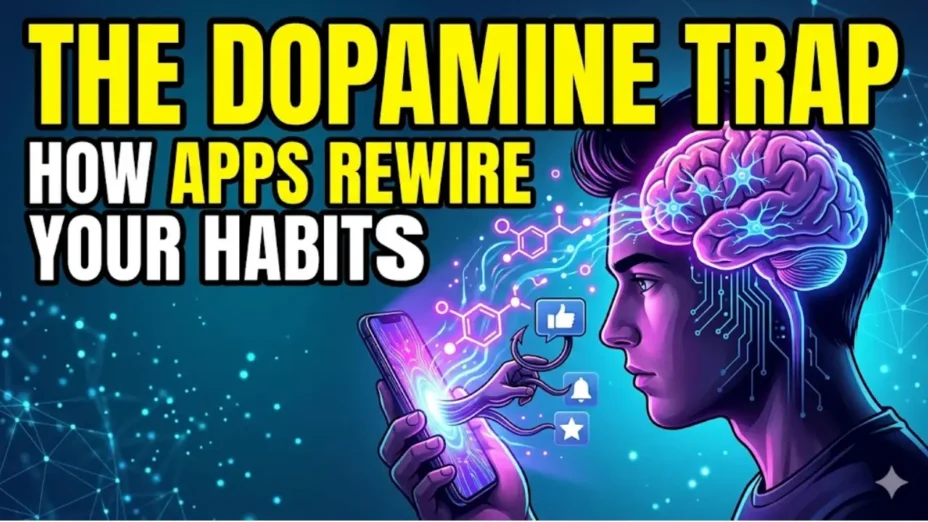
Understanding Dopamine and Its Role in Behaviour
What Is Dopamine and Why It Matters
Dopamine is often mislabeled as the brain’s “pleasure chemical,” but that’s only part of the story. In reality, dopamine is more about motivation, anticipation, and reward-seeking behavior than pure enjoyment. Think of it as the internal signal that nudges you to take action whether that’s grabbing a snack, checking your phone, or scrolling just a little longer than you intended. It doesn’t just reward you after the fact; it drives you to pursue the reward in the first place.
What makes dopamine so powerful is how it reinforces patterns. When your brain links a behavior to a rewarding outcome, it strengthens that neural pathway. Over time, these pathways become automatic. You don’t consciously decide to unlock your phone—you just do it. This is where modern apps come into play. They’ve been carefully engineered to tap into this system, creating loops that keep you coming back.
Here’s where things get interesting. Dopamine isn’t released only when you receive a reward it spikes in anticipation of it. That means the moment you hear a notification ding or see a red badge on your app icon, your brain is already reacting. It’s like a tiny promise of something exciting waiting for you. And who doesn’t want to check?
This mechanism made sense in early human history. It helped our ancestors seek food, shelter, and social bonds. But today, it’s being hijacked by digital platforms designed to keep you engaged for as long as possible. The result? Habits that feel natural but are anything but accidental.
The Brain’s Reward System Explained
The brain’s reward system is like a finely tuned machine built for survival. It involves several regions, including the ventral tegmental area (VTA), the nucleus accumbens, and the prefrontal cortex. Together, these areas process rewards, reinforce behaviors, and help you make decisions. When you do something beneficial like eating or socializing this system releases dopamine, reinforcing that behavior.
Now imagine plugging apps into this system. Every like, comment, or notification acts as a micro-reward. The brain doesn’t distinguish much between a meaningful social interaction and a digital thumbs-up. Both trigger similar responses. Over time, this can blur the line between what’s truly rewarding and what’s artificially stimulating.
What makes apps particularly effective is their ability to deliver frequent, low-effort rewards. Unlike traditional rewards, which might require time and effort, digital rewards are instant. You don’t have to work hard to get a hit of dopamine you just refresh your feed. This ease of access rewires expectations, making real-world rewards feel slower and less satisfying.
There’s also a feedback loop at play. The more you engage, the more your brain expects that stimulation. And when it doesn’t get it, you might feel restless or bored. This isn’t a coincidence it’s a direct result of how the reward system adapts. Over time, your baseline shifts, and you need more stimulation to feel the same level of satisfaction.
This is the foundation of the dopamine trap. It’s not just about using apps it’s about how those apps reshape the way your brain responds to the world around you.
How Modern Apps Exploit Dopamine Loops
The Science Behind Infinite Scroll and Notifications
Ever wondered why you can scroll endlessly without reaching a natural stopping point? That’s not an accident. Features like infinite scroll are designed to eliminate friction. There’s no “end” to signal your brain to stop, which keeps the dopamine loop running continuously. It’s like eating from a bottomless bowl you don’t realize how much you’ve consumed until it’s too late.
Notifications are another powerful tool. Each ping acts as a trigger, pulling you back into the app. What’s fascinating is that these notifications are often strategically timed. They’re not just random they’re optimized based on your behavior. If you tend to check your phone in the evening, you’ll likely receive more alerts during that time.
Research shows that intermittent interruptions can significantly reduce productivity. According to a study by the University of California, it takes an average of 23 minutes to refocus after a distraction. That means every notification doesn’t just grab your attention it fragments it.
There’s also a psychological element called the Zeigarnik effect, which suggests that people remember unfinished tasks better than completed ones. Infinite scroll plays into this by never giving you closure. There’s always another post, another video, another update waiting just below the surface.
Variable Rewards and Habit Formation
One of the most powerful psychological principles used in app design is variable reward schedules. This concept comes from behavioral psychology and is the same mechanism that makes slot machines addictive. You don’t know when you’ll get a reward, but the possibility keeps you engaged.
Apps use this tactic in subtle ways. Not every post gets likes. Not every refresh brings something interesting. But occasionally, you stumble upon something highly engaging a funny video, a meaningful comment, or breaking news. That unpredictability is what keeps you hooked.
The brain loves surprises. When a reward is unpredictable, it triggers a stronger dopamine response compared to predictable rewards. This makes the experience more compelling and harder to resist. It’s not just about the reward it’s about the anticipation of it.
Over time, this creates a habit loop: cue → action → reward. The cue might be boredom. The action is opening the app. The reward is the content you find. Repeat this cycle enough times, and it becomes automatic. You don’t even realize you’re doing it.
The tricky part is that these habits can crowd out other activities. Reading a book, having a deep conversation, or working on a project might feel less stimulating by comparison. And that’s how apps slowly reshape your daily routines without you even noticing.
The Psychology of Digital Addiction
Why You Can’t Stop Checking Your Phone
If you’ve ever picked up your phone “just for a second” and then resurfaced 30 minutes later, you’re not alone and more importantly, you’re not imagining things. This behavior isn’t about weak willpower; it’s about deeply conditioned psychological loops that operate below conscious awareness. Your brain has essentially learned that your phone is a fast, reliable source of stimulation, and it nudges you toward it whenever there’s even a hint of boredom, discomfort, or curiosity.
One major factor here is cue-triggered behavior. Your brain associates certain moments waiting in line, sitting alone, finishing a task with checking your phone. With the passage of time, these signals evolve into instinctive prompts. You don’t actively decide; your hand just moves. This is similar to how someone might reach for a snack when they’re not even hungry it’s habit, not necessity.
Another layer is micro-boredom intolerance. Apps have trained us to avoid even the smallest gaps of inactivity. A few seconds of silence or stillness now feels uncomfortable, almost like something is missing. So what do we do? We fill that gap instantly with a scroll, a tap, or a swipe. The brain begins to prefer constant stimulation over reflection or rest.
There’s also a concept known as cognitive residue. Every time you switch tasks say, from working to checking Instagram part of your attention stays behind. This makes it harder to fully engage with anything. Ironically, the more you check your phone, the less satisfying everything else becomes, which pushes you to check it even more. It’s a loop that feeds itself.
And then there’s the illusion of control. You might think, “I can stop anytime,” but the design of these apps is subtly stacked against that idea. Bright colors, autoplay videos, endless feeds they’re all engineered to reduce friction and keep you engaged. So while it feels like a choice, it’s often more of a reflex shaped by repeated exposure.
Social Validation and Dopamine Hits
Humans are wired for connection. Long before smartphones, our survival depended on social bonds. Being accepted by a group wasn’t just nice it was necessary. Today, that same instinct is being tapped into by digital platforms, where likes, comments, and shares act as modern forms of social validation.
Every time you post something online, there’s a moment of anticipation. Will people like it? Will they respond? That anticipation alone triggers dopamine. And when the notifications start rolling in, each one delivers a small hit of validation. It’s not just about the content it’s about what that response represents: recognition, approval, belonging.
But here’s the catch: this validation is quantified and inconsistent. You can literally count how much attention you received, and it’s never guaranteed. One post might get a lot of engagement, while another barely gets noticed. This unpredictability ties back to variable rewards, making the experience even more compelling.
Over time, this can shift how you perceive yourself. You might start linking your self-worth to metrics how many likes you got, how many followers you have. It becomes less about genuine expression and more about performance. That’s a subtle but significant change.
There’s also the phenomenon of social comparison. When you scroll through curated highlights of other people’s lives, it’s easy to feel like you’re falling behind. Even if you know intellectually that these are just snapshots, emotionally it can still affect you. And what’s the response? Often, it’s to engage more post more, check more, seek more validation.
This creates a cycle where the platform becomes both the source of discomfort and the perceived solution. You feel a dip in mood, so you check your phone for a boost. Sometimes it works, sometimes it doesn’t but either way, the habit deepens.
The Hidden Cost of Constant Stimulation
Impact on Attention Span and Focus
One of the most noticeable effects of constant app usage is how it reshapes your ability to focus. Attention isn’t just something you have it’s something you train. And when your environment is filled with rapid, ever-changing stimuli, your brain adapts accordingly. It becomes better at scanning and switching, but worse at sustained, deep concentration.
Think about how you consume content on most apps. Short videos, quick posts, bite-sized updates. You’re rarely required to stay with one thing for long. This conditions your brain to expect novelty at a rapid pace. So when you sit down to do something that requires focus—like reading a book or working on a complex task it can feel unusually difficult.
Research from Microsoft once suggested that the average human attention span dropped from 12 seconds in 2000 to around 8 seconds in the digital age. While the exact numbers are debated, the broader trend is hard to ignore. Many people report feeling more distracted, more restless, and less able to engage deeply with tasks.
There’s also the issue of task-switching fatigue. Every time you shift your attention, your brain pays a small cognitive cost. Over the course of a day, these costs add up, leaving you mentally drained. You might feel busy all day but still struggle to accomplish meaningful work.
What’s particularly tricky is that this change happens gradually. You don’t wake up one day with a shorter attention span it’s shaped over time by repeated habits. And because apps are such a constant presence, they play a significant role in that process.
The good news is that attention is adaptable. Just as it can be fragmented, it can also be rebuilt. But that requires awareness of what’s happening and a willingness to change how you interact with technology.
Mental Health Consequences
The relationship between app usage and mental health is complex, but there’s growing evidence that excessive engagement can have real consequences. It’s not just about how much time you spend it’s about how that time is structured and what it does to your brain
One major issue is dopamine dysregulation. When your brain gets used to frequent spikes of stimulation, everyday activities can start to feel dull by comparison. This can lead to a sense of emptiness or lack of motivation. Things that once felt enjoyable like hobbies or conversations might not hit the same way.
There’s also a link between heavy social media use and increased rates of anxiety and depression, particularly among younger users. A 2023 report from the American Psychological Association highlighted that teens who spend more than three hours a day on social platforms are at a higher risk of mental health challenges. While correlation doesn’t equal causation, the patterns are concerning.
Sleep is another casualty. Many people use their phones late into the night, exposing themselves to blue light and stimulating content right before bed. This disrupts the body’s natural sleep cycle, making it harder to fall asleep and stay asleep. Poor sleep, in turn, affects mood, focus, and overall well-being.
Then there’s the subtle but persistent feeling of being “always on.” Notifications, messages, updates they create a sense that you need to be constantly available and responsive. This can lead to chronic stress, even if you’re not consciously aware of it.
None of this means that apps are inherently bad. They can connect people, provide information, and even support mental health in some cases. But when the balance tips too far, the costs become harder to ignore. Understanding these effects is the first step toward using technology in a way that supports, rather than undermines, your well-being.
How Tech Companies Design for Engagement
Persuasive Design Techniques
If you’ve ever wondered whether apps are intentionally designed to keep you hooked, the honest answer is yes and not in a vague, accidental way. There’s an entire field called persuasive design dedicated to shaping user behavior through subtle psychological cues. These techniques aren’t inherently malicious, but when applied at scale by billion-dollar platforms, they become incredibly powerful.
One of the most widely used frameworks comes from behavior scientist B.J. Fogg, who proposed that behavior is driven by three elements: motivation, ability, and triggers. Apps are built to optimize all three. They make actions effortless (high ability), provide incentives (motivation), and constantly prompt you (triggers). When all three align, action becomes almost inevitable.
Take something as simple as the “pull-to-refresh” gesture. It mimics the action of a slot machine lever, creating a sense of anticipation. You don’t know what you’ll get when you refresh your feed, but that uncertainty makes it compelling. Or consider autoplay features, which remove the need for any decision at all. One video ends, another begins no pause, no reflection, just continuous consumption.
Color psychology also plays a role. Bright reds for notifications aren’t random they’re chosen because they signal urgency and grab attention. Even the placement of buttons is carefully tested to maximize engagement. These small details might seem insignificant on their own, but together they create an environment that nudges you toward prolonged use.
Former Google design ethicist Tristan Harris once said, “If you’re not paying for the product, you are the product.” That’s not just a catchy quote it reflects the underlying business model. The longer you stay engaged, the more data you generate and the more ads you see. So naturally, the system is optimized to keep you there.
What’s striking is how invisible these techniques often are. You don’t feel manipulated you just feel like you’re making choices. But those choices are being shaped in ways that are easy to overlook.
Data-Driven Personalization
If persuasive design is the engine, then data-driven personalization is the fuel that makes it incredibly precise. Modern apps don’t just use generic engagement tactics they tailor the experience specifically to you. Every click, pause, like, and scroll is tracked, analyzed, and used to refine what you see next.
This creates a feedback loop that’s uniquely powerful. The more you use the app, the better it understands your preferences. And the better it understands you, the more engaging it becomes. It’s like having a system that’s constantly learning how to hold your attention more effectively.
Algorithms play a central role here. Platforms like TikTok, Instagram, and YouTube rely on complex machine learning models to decide what content to show you. These models prioritize engagement metrics what you’re most likely to watch, like, or share. Over time, your feed becomes highly curated, often showing content that aligns closely with your interests or emotional triggers.
There’s a trade-off, though. While personalization can make apps more enjoyable, it can also create echo chambers. You’re more likely to see content that reinforces your existing beliefs and preferences, which can limit exposure to diverse perspectives. This isn’t just a social issue it also deepens your engagement, keeping you within a familiar and rewarding loop.
Another subtle effect is how personalization shapes your sense of time. When everything you see is tailored to your interests, it becomes easier to lose track of how long you’ve been scrolling. What feels like a few minutes can quickly turn into an hour.
The scale of this is staggering. According to industry estimates, platforms process billions of data points daily to refine user experiences. That’s not just optimization it’s continuous behavioral shaping. And while it can feel seamless from the user’s perspective, it’s the result of highly sophisticated systems working behind the scenes.
Recognizing the Signs of the Dopamine Trap
Behavioral Red Flags
Spotting the dopamine trap in your own life isn’t always straightforward because many of the behaviors feel normal everyone is on their phone, after all. But there are certain patterns that signal when casual use has crossed into something more compulsive.
One of the clearest signs is automatic checking. You pick up your phone without a clear reason, unlock it, scroll for a bit, and then put it down sometimes without even remembering why you picked it up in the first place. This kind of behavior suggests that the action has become habitual rather than intentional.
Another red flag is time distortion. You plan to spend five minutes on an app, but end up staying for much longer. When this happens repeatedly, it indicates that the app is successfully capturing and holding your attention beyond your initial intent.
You might also notice task interference. Maybe you’re working, studying, or even watching a movie, but you keep interrupting yourself to check your phone. These interruptions break your focus and make it harder to engage deeply with anything else.
There’s also the tendency to reach for your phone during idle moments waiting in line, sitting in a car, or even during conversations. While this might seem harmless, it reduces your tolerance for stillness and reinforces the need for constant stimulation.
A particularly telling sign is when you continue using apps even when you’re not enjoying them. You might feel bored, irritated, or even drained, yet you keep scrolling. That disconnect between experience and behavior is a hallmark of habit loops driven by dopamine rather than genuine interest.
Emotional and Cognitive Symptoms
Beyond observable behaviors, the dopamine trap also shows up in more subtle emotional and mental patterns. One common experience is a persistent sense of restlessness. When you’re not engaged with your phone, you might feel slightly uneasy, as if something is missing.
There’s also the issue of reduced satisfaction. Activities that used to feel rewarding like reading, exercising, or spending time with friends might not provide the same level of enjoyment. This doesn’t mean those activities have changed; it means your brain’s reward threshold has shifted.
Another symptom is difficulty concentrating. You might find it harder to stay focused on tasks that require sustained attention. Your mind wanders more easily, and you feel the urge to check your phone even when you know you shouldn’t.
Emotionally, there can be a cycle of anticipation and letdown. You check your phone expecting something interesting or rewarding, but often find content that’s just “okay.” That slight disappointment doesn’t stop the behavior it actually reinforces it, because you keep searching for that better hit.
Some people also experience low-level anxiety tied to notifications and social interactions. You might feel compelled to respond quickly, worry about missing out, or become overly aware of how others are engaging with your content.
These symptoms don’t necessarily mean you’re addicted in a clinical sense, but they do indicate that your habits are being shaped in ways that might not align with your goals or well-being. Recognizing them is the first step toward making more intentional choices.
Breaking Free from Dopamine-Driven Habits
Digital Detox Strategies
Escaping the dopamine trap doesn’t require deleting every app or disappearing into the woods for a week. That kind of extreme approach might sound appealing in theory, but it’s rarely sustainable in real life. What actually works is a more deliberate, structured reset something often referred to as a digital detox, but done in a way that fits into your daily routine rather than disrupting it completely.
Start by identifying your high-trigger moments. These are the times when you’re most likely to reach for your phone early morning, late at night, or during work breaks. Instead of trying to eliminate usage altogether, focus on creating boundaries around those moments. For example, keeping your phone out of reach during the first hour after waking up can dramatically change how your day begins. It shifts your brain away from immediate stimulation and gives you space to think more clearly.
Another effective strategy is friction design making it slightly harder to access distracting apps. This could be as simple as logging out after each session, turning off face ID for certain apps, or moving them off your home screen. These small barriers interrupt the automatic loop and force you to make a conscious decision before engaging.
Scheduled breaks also help. Instead of checking your phone whenever the urge arises, set specific times for it. This turns a reactive habit into a controlled activity. You’re still using your apps, but on your terms rather than theirs.
For some people, short-term detox experiments like a 24-hour or weekend reset can be surprisingly powerful. They reveal just how often you reach for your phone and how it feels to step away. Many report an initial sense of discomfort followed by clarity and calm, which highlights how deeply ingrained the habit had become.
The goal here isn’t perfection. It’s awareness and gradual adjustment. You’re not trying to eliminate dopamine that would be impossible but to rebalance how and where you get it.
Rewiring Your Brain for Healthy Rewards
Breaking a habit isn’t just about removing a behavior; it’s about replacing it with something that satisfies the same underlying need. If apps provide quick hits of stimulation, then the solution is to reintroduce slower, more meaningful sources of reward.
This may seem apparent, yet it is frequently disregarded. You can’t just take away a habit and expect nothing to fill the gap. The brain craves engagement, novelty, and satisfaction. The key is to redirect those cravings toward activities that offer deeper, more sustainable rewards.
Engaging in physical activity is among the most efficient options.. Exercise releases dopamine, but in a more balanced way, often accompanied by other beneficial chemicals like endorphins and serotonin. Even a short walk can reset your brain and reduce the urge to check your phone.
Creative activities writing, drawing, playing music also provide a sense of progress and fulfillment that quick digital interactions can’t match. They require effort, which makes the reward feel more earned and, ultimately, more satisfying.
Social interaction in the real world is another powerful counterbalance. Face-to-face conversations engage multiple senses and create a richer emotional experience than digital exchanges. They may not provide the same instant feedback loop, but they offer something more meaningful.
It’s also worth rebuilding your tolerance for boredom. That might sound counterintuitive, but boredom is often the gateway to creativity and deeper thinking. When you stop immediately filling every idle moment, your mind starts to wander in more productive ways.
Neuroscience research suggests that the brain remains highly adaptable, even in adulthood. This means that the same plasticity that allowed apps to shape your habits can also be used to reshape them. The more you engage in healthier patterns, the stronger those neural pathways become.
Building Healthier Digital Habits
Mindful Tech Usage
Using technology mindfully doesn’t mean rejecting it, it means changing your relationship with it. Instead of being pulled in by default, you start making intentional choices about when, why, and how you engage. That shift might seem subtle, but it has a profound impact over time.
One practical way to start is by asking a simple question before opening an app: “What am I here to do?” This creates a moment of awareness that interrupts automatic behavior. If you have a clear purpose replying to a message, checking an update you’re less likely to get lost in endless scrolling.
Another approach is to track your usage patterns. Many smartphones now provide detailed screen-time reports. While these numbers can be surprising, they’re also incredibly useful. They show you where your time is going and help you identify which apps are consuming the most attention.
Mindfulness also involves paying attention to how you feel during and after using apps. Do you feel energized, informed, and connected or drained, distracted, and restless? That feedback can guide your decisions about which platforms deserve your time.
Setting intentional limits is another key step. This doesn’t have to be rigid or restrictive. It can be as simple as deciding not to use certain apps during meals or before bed. These boundaries create space for other experiences and reduce the constant pull of notifications.
Ultimately, mindful usage is about reclaiming agency. Technology becomes a tool rather than a default environment. And when you reach that point, the dopamine trap starts to lose its grip.
Tools and Apps That Help You Disconnect
It might sound ironic, but some of the best ways to reduce app usage involve using other apps—specifically those designed to promote focus and limit distractions. The difference is that these tools are aligned with your goals rather than working against them.
Apps like Forest, Freedom, and Cold Turkey are built to block or restrict access to distracting platforms for set periods of time. They create a structured environment where focus becomes the default. For example, Forest gamifies the process by letting you grow a virtual tree that dies if you leave the app simple, but surprisingly effective.
There are also built-in features on most devices, such as screen time limits, focus modes, and notification controls. These allow you to customize when and how you’re interrupted. Turning off non-essential notifications alone can significantly reduce the number of times you check your phone each day.
Another helpful approach is using grayscale mode, which removes the vibrant colors from your screen. This makes apps less visually stimulating and, as a result, less appealing. It’s a small tweak, but it can noticeably reduce mindless scrolling.
Some people also benefit from accountability systems sharing goals with a friend or using tracking apps that provide regular reports. Knowing that someone else is aware of your habits can add an extra layer of motivation.
The key is to use these tools as support systems, not crutches. They help you build awareness and structure, but the real change comes from how you choose to engage with technology on a daily basis.
The Future of Technology and Human Behavior
Ethical Tech Design
As awareness of the dopamine trap grows, there’s increasing pressure on tech companies to rethink how their products are designed. This has led to the emergence of ethical tech design, a movement focused on creating digital experiences that respect users’ well-being rather than exploiting their attention.
Some companies are experimenting with features that promote healthier usage. For instance, platforms now offer reminders when you’ve been scrolling for too long or options to disable certain engagement-driven features. While these changes are a step in the right direction, they often exist alongside the very mechanisms that drive overuse.
There’s also a growing conversation about regulation and accountability. Governments and organizations are beginning to examine how digital platforms impact mental health, especially among younger users. This could lead to new guidelines or requirements for transparency in how algorithms operate.
Designers themselves are increasingly speaking out. Many former employees of major tech companies have become advocates for more responsible practices, highlighting the ethical dilemmas involved in optimizing for engagement at all costs.
The challenge is balancing business incentives with user well-being. As long as revenue is tied to attention, there will be pressure to maximize engagement. Shifting that model requires both industry innovation and user demand for better alternatives.
Can We Coexist with Addictive Technology?
The question isn’t whether technology will become less engaging it’s whether we can develop the awareness and systems needed to use it without being controlled by it. The answer is likely yes, but it requires a combination of individual responsibility and systemic change.
On a personal level, it comes down to understanding how these systems work and making intentional choices. That doesn’t mean avoiding technology altogether; it means using it in ways that align with your values and goals.
On a broader level, it involves pushing for designs that prioritize long-term satisfaction over short-term engagement. This might include subscription-based models that reduce reliance on ads or platforms that emphasize quality over quantity.
Education also plays a role. Teaching people especially younger generations about how dopamine and habit loops work can empower them to navigate digital environments more effectively.
Technology isn’t inherently good or bad. It is a tool, and similar to any other tool, its effect is contingent upon the manner in which it is utilized. The challenge is ensuring that the relationship remains balanced, so that you’re shaping your habits rather than having them shaped for you.
Conclusion
The dopamine trap isn’t some abstract concept it’s something woven into everyday life, quietly influencing how you think, feel, and behave. From the moment you wake up to the last scroll before bed, apps are competing for your attention using strategies rooted in neuroscience and psychology. And while that might sound unsettling, it’s also empowering. Because once you see the pattern, you’re no longer operating on autopilot.
What makes this challenge unique is that it doesn’t require complete disconnection. You don’t need to abandon technology to regain control. Instead, the focus shifts toward awareness, intention, and balance. Small changes like setting boundaries, reducing notifications, or simply pausing before opening an app can create meaningful shifts over time.
The real opportunity lies in redefining what reward means. Moving away from quick, shallow hits of stimulation toward deeper, more fulfilling experiences changes not just your habits, but your overall quality of life. It’s not about resisting dopamine it’s about choosing where it comes from.
As technology continues to evolve, so will the strategies used to capture attention. But your ability to adapt and make conscious choices evolves too. And that’s where the balance can be found.
FAQs
1. What is the dopamine trap in simple terms?
The dopamine trap refers to the cycle where apps and digital platforms trigger your brain’s reward system, encouraging repeated use through notifications, likes, and endless content. Over time, this creates habits that are hard to break because your brain starts craving those quick bursts of stimulation.
2. Are apps intentionally designed to be addictive?
Many apps are designed using behavioral psychology principles to maximize engagement. While not always labeled as “addictive,” features like infinite scroll, variable rewards, and notifications are intentionally created to keep users coming back frequently.
3. How can I reduce my screen time without quitting apps completely?
You can start by setting limits, turning off non-essential notifications, using focus tools, and creating phone-free zones or times during your day. The goal is to use apps intentionally rather than automatically.
4. Does dopamine addiction affect mental health?
Excessive reliance on quick dopamine hits can contribute to issues like reduced attention span, anxiety, and low motivation. While it’s not always clinical addiction, it can still negatively impact your mental well-being over time.
5. Can the brain recover from dopamine overstimulation?
Yes, the brain is highly adaptable. By reducing overstimulation and engaging in healthier activities like exercise, reading, or social interaction, you can rebalance your reward system and rebuild focus and satisfaction.