Introduction to the Changing Work Landscape
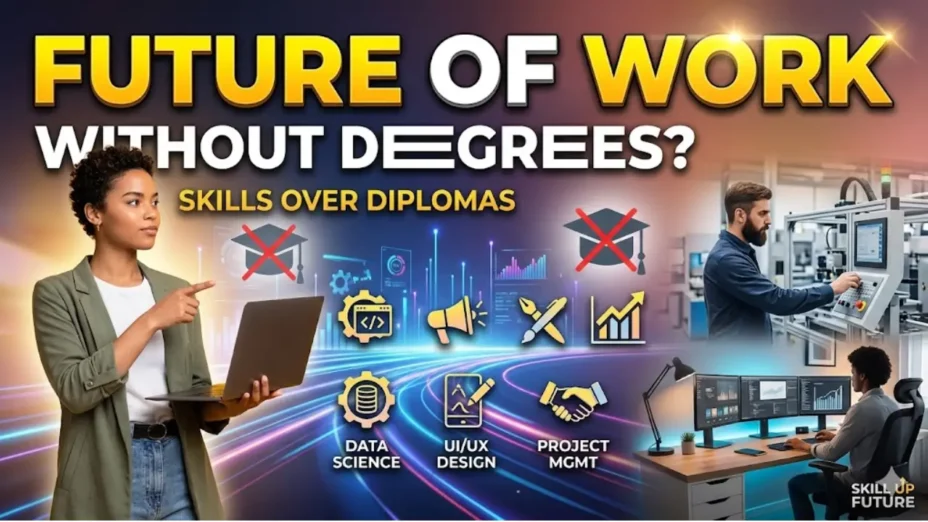
The idea that a college degree is the golden ticket to success is quietly unraveling. For decades, society treated higher education like a mandatory checkpoint graduate high school, get a degree, land a stable job. But the modern workforce is rewriting that script in real time. Employers are beginning to care less about where you studied and more about what you can actually do. It’s not just a trend it’s a structural shift that’s reshaping hiring practices across industries.
Think about it: companies today operate in a fast-moving digital environment where skills become outdated almost as quickly as they’re learned. In such a world, a static degree earned years ago doesn’t always reflect current ability. That’s why businesses are increasingly prioritizing adaptability, practical experience, and problem-solving skills over formal credentials. According to recent labor market data, a growing number of job postings especially in tech and creative industries no longer list degrees as mandatory requirements.
This transformation is also being fueled by accessibility. Not everyone has the time, money, or opportunity to pursue a four-year degree. Rising tuition costs and student debt have made traditional education less appealing, pushing individuals to explore alternative pathways. Online courses, bootcamps, and self-taught skills are filling the gap, creating a more inclusive workforce where talent can emerge from anywhere.
What implications does this hold for the future? It signals a shift toward a more meritocratic system at least in theory where your skills, creativity, and initiative define your career trajectory. But it also raises questions: Can this system truly replace traditional education? And how can individuals position themselves to thrive in it?
Why Traditional Degrees Are Losing Dominance
For a long time, degrees acted as a convenient filter for employers. They signaled discipline, knowledge, and a baseline level of competence. But in today’s rapidly evolving job market, that signal is becoming less reliable. Industries are changing too quickly, and academic curricula often struggle to keep up with real-world demands.
Consider the tech industry as an example. Many programming languages, tools, and frameworks used today didn’t even exist a decade ago. A computer science degree might teach foundational concepts, but it doesn’t always equip graduates with the latest practical skills employers need. This gap has led companies like Google, Apple, and IBM to remove degree requirements for many roles, focusing instead on demonstrated ability.
Another factor is the explosion of alternative learning options. Platforms like Coursera, Udemy, and LinkedIn Learning have made high-quality education accessible to anyone with an internet connection. Coding bootcamps, for instance, can train individuals in months rather than years, often with a direct pipeline to employment. When employers see candidates who can build real-world projects, contribute to open-source communities, or showcase a strong portfolio, the absence of a degree becomes less significant.
There’s also a cultural shift happening. Younger generations are questioning the return on investment of traditional education. With student debt in the U.S. surpassing $1.7 trillion, many are asking whether a degree is worth the financial burden. This skepticism is pushing both individuals and employers to rethink the value of formal education.
The decline of degree dominance doesn’t mean education is becoming irrelevant it means the definition of education is expanding. Learning is no longer confined to classrooms; it’s continuous, flexible, and deeply tied to real-world application.
The Rise of Skills-Based Hiring
If degrees are losing their grip, what’s replacing them? The answer is skills-based hiring, a model that evaluates candidates based on what they can actually do rather than where they studied. This approach is gaining traction across industries, and for good reason it aligns more closely with business needs.
Imagine hiring a graphic designer. Would you prioritize someone with a design degree but no portfolio, or someone self-taught with an impressive body of work? Most employers would choose the latter. Skills-based hiring recognizes that competence can be developed through many pathways, not just formal education.
Companies are increasingly using practical assessments, project-based evaluations, and real-world simulations during the hiring process. Instead of relying solely on resumes, they’re asking candidates to demonstrate their abilities. This shift is particularly evident in fields like software development, digital marketing, and content creation, where measurable output matters more than theoretical knowledge.
There’s also data backing this trend. A report by Harvard Business School found that employers who adopt skills-based hiring practices often see improved retention rates and better job performance. Why? Because they’re selecting candidates who are truly capable, not just credentialed.
However, this approach isn’t without challenges. It requires more effort from employers to design fair and effective assessments. It also places greater responsibility on candidates to showcase their skills, often through portfolios, certifications, or freelance work. But overall, it creates a more dynamic and inclusive job market.
In many ways, skills-based hiring is leveling the playing field. It allows individuals from diverse backgrounds to compete based on merit rather than pedigree. And as this model continues to evolve, it’s likely to become a cornerstone of the future workforce.
The Evolution of Education and Employment
The relationship between education and employment has never been static, but what’s happening now feels less like evolution and more like a reset. For generations, the path was predictable: earn a degree, enter the workforce, and gradually climb the ladder. Today, that linear journey has fractured into dozens of flexible, nontraditional routes. Education is no longer a one-time investment made in your early twenties it’s becoming a continuous, lifelong process that adapts alongside your career.
One of the biggest drivers of this shift is the pace of technological change. Skills that were valuable five years ago can quickly become outdated, which means workers must constantly update their knowledge. Traditional degree programs, with their rigid structures and long timelines, often struggle to keep pace. In contrast, modern learners are turning to modular, on-demand education options that allow them to learn exactly what they need, when they need it.
Employers are responding to this change by redefining what qualifies someone as “educated.” Instead of focusing on academic credentials, they’re looking for evidence of learning in action. Did you complete a relevant certification? Have you built something tangible? Can you demonstrate your ability to solve real problems? These questions matter far more than the name of a university on a resume.
Another significant factor in this evolution is accessibility. Education is no longer confined to elite institutions or physical classrooms. Anyone with an internet connection can access world-class resources, often at little to no cost. This democratization is opening doors for people who were previously excluded from traditional systems, making the workforce more diverse and dynamic.
In this new landscape, the boundary between learning and working is blurring. People are learning while they work and working while they learn. Internships, freelance gigs, side projects, and online communities are becoming just as important as formal education. The result is a workforce that’s more adaptable, self-directed, and resilient qualities that are essential in an unpredictable future.
From Degrees to Micro-Credentials
Micro-credentials are quietly becoming the new currency of education. Unlike traditional degrees, which require years of study and cover broad subject areas, micro-credentials focus on specific skills or competencies. They’re short, targeted, and highly practical exactly what today’s job market demands.
Think of micro-credentials as building blocks. Instead of committing to a four-year program, learners can stack multiple certifications over time, creating a customized skill set tailored to their career goals. For example, someone interested in digital marketing might earn separate credentials in SEO, social media strategy, and data analytics. Each certification adds value, and together they form a comprehensive skill profile.
Employers are progressively acknowledging the significance of these credentials. Many companies now partner with online learning platforms to create industry-specific certifications that align directly with job requirements. Google’s Career Certificates, for instance, have gained widespread acceptance as alternatives to traditional degrees for certain roles. These programs are designed with input from employers, ensuring that learners acquire relevant, job-ready skills.
There’s also a psychological advantage to micro-credentials. They provide quick wins, which can be incredibly motivating. Instead of waiting years to earn a degree, learners can achieve milestones in weeks or months. This sense of progress encourages continuous learning and helps individuals stay engaged.
However, micro-credentials aren’t a perfect solution. The sheer number of available programs can be overwhelming, and not all certifications carry equal weight. Learners need to be strategic, choosing reputable providers and focusing on skills that are in demand. Despite these challenges, the rise of micro-credentials represents a fundamental shift toward more flexible, personalized education.
Online Learning Platforms Reshaping Careers
Online learning platforms have transformed from supplementary resources into primary pathways for career development. What started as a convenience has become a necessity, especially in a world where remote work and digital skills dominate. Platforms like Coursera, Udemy, edX, and Skillshare are no longer just for hobbyists they’re shaping entire career trajectories.
One of the most powerful aspects of these platforms is their accessibility. You don’t need to relocate, take out massive loans, or meet strict admission requirements. You have the opportunity to study at your own speed, according to your own timetable, frequently at a significantly lower cost compared to conventional education. This flexibility is particularly valuable for working professionals, parents, and individuals in underserved communities.
Another key advantage is the practical nature of online courses. Many programs are designed with real-world applications in mind, incorporating hands-on projects, case studies, and interactive exercises. Instead of passively consuming information, learners actively build skills they can immediately apply in the workplace. This aligns perfectly with the shift toward skills-based hiring.
Online platforms also foster global communities. Learners can connect with peers, instructors, and industry professionals from around the world. These connections can lead to collaborations, job opportunities, and valuable insights that go beyond the course material. In many ways, these platforms are not just educational tools they’re networking hubs.
Statistics highlight the impact of this trend. The global e-learning market is projected to exceed $400 billion by 2026, reflecting the growing demand for flexible education solutions. Employers are taking notice, with many actively encouraging or even funding online learning for their employees.
Still, success in online learning requires discipline and self-motivation. Without the structure of a traditional classroom, it’s easy to lose focus. Those who thrive are the ones who treat learning as a priority, set clear goals, and consistently apply what they learn.
The rise of online learning platforms is not just changing how people acquire knowledge it’s redefining what it means to be qualified. And as these platforms continue to evolve, their influence on the future of work will only grow stronger.
Industries Leading the No-Degree Movement
Not all industries are evolving at the same pace, but some are clearly sprinting ahead when it comes to embracing talent without formal degrees. These sectors are driven by rapid innovation, measurable output, and a constant need for fresh skills making them ideal environments for individuals who have taken alternative learning paths. If you’re wondering where opportunities are most abundant without a degree, this is where things get exciting.
One major pattern you’ll notice is that industries with tangible, demonstrable outcomes tend to care less about credentials. When employers can directly evaluate your work whether it’s code, designs, campaigns, or content the need for a degree naturally fades into the background. This is why fields like technology, creative media, and digital marketing are leading the charge.
Another reason these industries are more open is necessity. There’s a global talent shortage in many skill-based roles, especially in tech. Companies simply cannot afford to limit themselves to degree-holders when there are capable, self-taught professionals ready to contribute. According to recent reports, millions of tech jobs remain unfilled worldwide, pushing employers to rethink outdated hiring filters.
What’s also interesting is how these industries reward performance over pedigree. If you can deliver results, you can grow often quickly. Promotions, raises, and new opportunities are frequently tied to what you achieve, not what’s printed on your diploma. This creates a more dynamic, merit-driven environment that appeals to ambitious individuals.
That said, entering these industries without a degree still requires strategy. You need to build proof of your skills, stay updated with trends, and continuously refine your craft. The barrier isn’t gone it’s just different. Instead of passing exams, you’re proving your value in real-world scenarios.
Technology and IT Careers
The tech industry is arguably the poster child for the no-degree revolution. It’s a space where skills reign supreme, and the ability to solve problems matters far more than formal education. Many of today’s most successful developers, engineers, and cybersecurity experts are self-taught or have learned through nontraditional routes.
Take software development, for example. Employers don’t just want someone who understands theory they want someone who can build functional, efficient applications. This is why coding bootcamps have exploded in popularity. Programs like these can take someone from beginner to job-ready in a matter of months, focusing intensely on practical skills. Graduates often leave with portfolios showcasing real projects, which carry significant weight during hiring.
There’s also a strong culture of open-source contribution in tech. Platforms like GitHub allow developers to share their work, collaborate with others, and build a public track record of their abilities. For many hiring managers, a well-maintained GitHub profile is more valuable than a degree because it ցույցs consistent, real-world engagement.
Tech giants have also played a major role in shifting perceptions. Companies like Google, Tesla, and IBM have publicly removed degree requirements for many positions. Instead, they focus on technical assessments, coding challenges, and problem-solving interviews. This approach has opened doors for countless individuals who might have been overlooked in the past.
However, the field is competitive. Without a degree, you need to stand out through your projects, certifications, and practical experience. Specializing in high-demand areas like cloud computing, AI, cybersecurity, or data analytics can significantly boost your prospects. The key is to treat learning as an ongoing process because in tech, standing still is not an option.
Creative and Digital Media Fields
Creative industries have always valued talent over tradition, but the digital era has amplified this mindset dramatically. Whether it’s graphic design, video editing, content creation, or social media management, what matters most is your ability to create compelling work not where you studied.
Think about platforms like YouTube, TikTok, and Instagram. Entire careers are being built on these channels by individuals who never set foot in a formal classroom for their craft. Brands are increasingly collaborating with creators who understand digital audiences, storytelling, and engagement. In this space, your portfolio is your resume, and your audience is your credibility.
Graphic design is another strong example. Employers and clients want to see your style, creativity, and technical ability. A stunning portfolio showcasing diverse projects can easily outweigh a degree. Tools like Adobe Creative Suite, Canva, and Figma are widely accessible, allowing anyone to learn and create professional-quality work.
Digital marketing is also thriving as a degree-optional field. Skills like SEO, content writing, paid advertising, and analytics are highly measurable. If you can demonstrate that you’ve increased website traffic, improved conversion rates, or grown social media engagement, you’re already speaking the language employers understand. Certifications from platforms like Google or HubSpot can further validate your expertise.
What makes creative fields particularly appealing is their flexibility. Freelancing, remote work, and project-based opportunities are abundant. You’re not limited to a single employer or location you can build a career on your own terms. However, this freedom comes with responsibility. You need to consistently produce high-quality work, manage your time effectively, and adapt to changing trends.
Ultimately, creative and digital media fields embody the essence of the future of work: skill-driven, flexible, and accessible. They prove that passion, combined with dedication and continuous learning, can open doors that traditional pathways might never offer.
Skills That Matter More Than Degrees
If degrees are no longer the primary currency in the job market, then what is? The answer is surprisingly simple yet deeply nuanced: skills. But not just any skills ones that are relevant, adaptable, and demonstrable in real-world scenarios. The future of work is increasingly centered around what you can do consistently and effectively, not what you studied years ago.
One of the biggest misconceptions people have is thinking skills are static. In reality, they’re more like muscles you either keep building them or they weaken over time. Employers today are not just looking for competence; they’re looking for continuous learners. Someone who can adapt, pick up new tools, and evolve alongside industry changes is far more valuable than someone with outdated expertise, even if that expertise came with a degree.
There’s also a growing emphasis on hybrid skill sets. For example, a marketer who understands data analytics or a designer who knows basic coding instantly becomes more valuable. These combinations create versatility, which is a major asset in a rapidly changing work environment. It’s no longer about being good at one thing it’s about being adaptable across multiple areas.
Another important factor is visibility. Skills only matter if they can be seen and verified. This is why portfolios, personal projects, and real-world experience are becoming essential. It’s not enough to say you have a skill you need to show it in action. Whether it’s through a GitHub repository, a blog, a YouTube channel, or a freelance portfolio, proof is everything.
Ultimately, the shift toward skill-based evaluation is empowering. It restores control to individuals. You don’t need permission from an institution to start learning or building expertise. You can begin today, improve over time, and create opportunities based on your own efforts.
Hard Skills in Demand
Hard skills are the technical abilities that can be measured, taught, and directly applied to specific tasks. These are often the first things employers look for because they directly impact productivity and performance. In a degree-free world, hard skills act as your foundation they’re the tangible proof that you can do the job.
Some of the most in-demand hard skills today are rooted in technology. Programming languages like Python, JavaScript, and SQL are highly sought after, as they power everything from websites to data analysis. Similarly, skills in cloud computing (AWS, Azure, Google Cloud) are becoming essential as businesses move their operations online. Cybersecurity is another booming area, with increasing demand for professionals who can protect digital assets.
But it’s not just tech. Fields like digital marketing require skills in search engine optimization (SEO), content strategy, and paid advertising. These are measurable skills you can show results like increased traffic, higher rankings, or improved ROI. That kind of evidence speaks louder than any degree.
Here’s a quick comparison of popular hard skills and their applications:
| Skill | Industry | Practical Use |
| Python | Tech/Data | Automation, data analysis |
| SEO | Marketing | Website ranking, traffic growth |
| Graphic Design | Creative | Branding, visual content |
| Video Editing | Media | Content production |
| Data Analysis | Business | Decision-making insights |
What makes hard skills particularly powerful is their accessibility. You can learn most of them online, often for free or at a low cost. The challenge isn’t access it’s consistency. Mastery requires practice, experimentation, and real-world application.
Soft Skills Employers Value
While hard skills may get your foot in the door, soft skills are what keep you in the room and help you grow. These are the human-centric abilities that influence how you work, communicate, and collaborate. In a world where automation is taking over routine tasks, soft skills are becoming even more valuable because they’re difficult to replicate with technology.
One of the most important soft skills is communication. Whether you’re working remotely or in an office, the ability to clearly express ideas, ask questions, and provide feedback is crucial. Miscommunication can lead to costly mistakes, while strong communication can drive projects forward efficiently.
Another key skill is problem-solving. Employers seek individuals capable of critical thinking, analyzing situations, and devising effective solutions. This doesn’t mean having all the answers it means being resourceful and proactive when challenges arise. It’s the difference between someone who waits for instructions and someone who takes initiative.
Adaptability is also at the top of the list. The modern workplace is constantly changing, and those who can adjust quickly have a significant advantage. This might involve learning new tools, shifting roles, or navigating unexpected challenges. Adaptability shows resilience, which is highly valued in any industry.
Then there’s emotional intelligence, which includes empathy, self-awareness, and interpersonal skills. These qualities are essential for teamwork, leadership, and conflict resolution. Even in highly technical roles, the ability to work well with others can make a huge difference.
What’s fascinating is how soft skills often amplify hard skills. A brilliant developer who can’t communicate effectively may struggle, while a competent developer with strong communication and teamwork skills can thrive. This combination is what employers are increasingly seeking.
In the end, soft skills are what make you human in a skill-driven world. They complement your technical abilities and help you navigate the complexities of modern work environments.
The Role of Technology in Democratizing Work
Technology isn’t just changing jobs it’s reshaping who gets access to them in the first place. In the past, opportunities were often limited by geography, educational background, or social connections. Today, technology is breaking down those barriers and creating a more level playing field where individuals can compete based on skill and output rather than credentials or location.
One of the most powerful aspects of this shift is accessibility. With just a laptop and an internet connection, someone can learn new skills, build a portfolio, connect with global clients, and earn an income. That kind of access was unimaginable a few decades ago. Platforms like GitHub, LinkedIn, Fiverr, and Upwork have essentially become digital marketplaces where talent meets opportunity no degree required.
There’s also a transparency element that technology introduces. Employers can now see your work directly, whether it’s code, writing samples, design projects, or video content. This reduces reliance on traditional signals like degrees and instead emphasizes real-world performance. It’s a bit like moving from a résumé-based system to a proof-of-work economy.
At the same time, technology is accelerating the pace of change. New tools, platforms, and workflows are constantly emerging, which means workers need to stay agile. But this constant evolution also creates new opportunities. Roles that didn’t exist a few years ago like AI prompt engineering or content automation specialists are now in demand, often without formal degree requirements.
The democratization of work isn’t perfect. There are still challenges like digital divides, access to reliable internet, and global competition. But overall, technology is making it easier than ever for individuals to carve out their own career paths, regardless of traditional credentials.
Remote Work Opportunities
Remote work has gone from a niche perk to a mainstream reality, and it’s playing a huge role in reducing the importance of degrees. When companies hire remotely, they’re often less concerned with where you studied and more focused on whether you can deliver results from wherever you are.
This shift was accelerated by global events, but it has persisted because it works. Businesses save on overhead costs, while employees gain flexibility and access to a broader range of opportunities. For individuals without degrees, this opens doors that might have been closed in traditional, location-based hiring systems.
Remote work also encourages a results-oriented mindset. Managers can’t rely on physical presence as a measure of productivity, so they focus on output. Did you complete the project? Did you meet the deadline? Did you solve the problem? These questions matter far more than your academic background.
There’s also a global dimension to consider. You’re no longer competing with people in your city you’re competing with talent worldwide. While this increases competition, it also expands opportunity. You can work for companies in different countries, access higher-paying markets, and diversify your experience.
However, remote work requires discipline. Without structure, it’s easy to lose focus or struggle with time management. Communication also becomes more critical, as most interactions happen through digital channels. Those who succeed are the ones who can stay organized, communicate clearly, and consistently deliver high-quality work.
In many ways, remote work is the ultimate equalizer. It shifts the focus from where you are and what credentials you hold to what you can actually accomplish.
AI and Automation Creating New Roles
Artificial intelligence and automation are often seen as threats to jobs, but they’re also powerful engines for creating new opportunities especially for those without traditional degrees. As machines take over repetitive tasks, humans are being pushed toward roles that require creativity, strategy, and critical thinking.
One of the most interesting developments is the emergence of entirely new job categories. Roles like AI content editors, prompt engineers, automation specialists, and data annotators didn’t exist until recently. Many of these positions prioritize practical skills and hands-on experience over formal education. If you understand how to work with AI tools effectively, you already have a competitive edge.
AI is also acting as a force multiplier. Individuals can now achieve more with fewer resources. A solo entrepreneur can run a business, create content, analyze data, and manage marketing campaigns AI-powered tools. This reduces the barrier to entry for many careers and makes it easier for self-taught individuals to compete with larger, degree-backed professionals.
There’s also a shift in how work is structured. Instead of long-term, rigid roles, we’re seeing more project-based and task-based work. Companies are hiring for specific outcomes rather than permanent positions, which aligns well with skills-based hiring. If you can deliver value on a project, your educational background becomes less relevant.
That said, AI also raises the bar. As tools become more powerful, basic skills may no longer be enough. The focus is shifting դեպի higher-level thinking strategy, creativity, and problem-solving. Those who can combine technical know-how with human insight will be in the strongest position.
The key takeaway is that AI isn’t replacing the need for human workers it’s redefining what valuable work looks like. And in this new definition, degrees are often optional, while skills and adaptability are essential.
Benefits of a Degree-Free Career Path
Choosing a career path without a traditional degree isn’t just an alternative it can actually be a strategic advantage if approached thoughtfully. While society has long promoted higher education as the default route, the modern economy is proving that there are multiple ways to build a successful and fulfilling career. In fact, for many people, skipping a degree can unlock opportunities that might otherwise be delayed or financially burdensome.
One of the most immediate benefits is flexibility. Without being tied to a rigid academic timeline, individuals can explore different interests, experiment with career paths, and pivot quickly when opportunities arise. This adaptability is incredibly valuable in a world where industries evolve rapidly and new roles emerge constantly. Instead of spending years preparing for a single career, you can start working, learning, and earning simultaneously.
Another major advantage is the ability to focus on practical, job-ready skills from day one. Traditional education often includes theoretical or generalized coursework that may not directly translate to specific roles. In contrast, alternative learning paths like online courses, bootcamps, or self-directed study tend to emphasize real-world application. This means you can build a portfolio, gain experience, and demonstrate your abilities much earlier in your career.
There’s also a psychological benefit. Taking control of your own learning journey can be empowering. You’re not waiting for validation from an institution you’re actively creating your own opportunities. This mindset fosters independence, resilience, and a growth-oriented perspective, all of which are highly valuable in today’s workforce.
Of course, this path requires discipline and initiative. Without the structure of a formal program, you need to set your own goals, stay motivated, and continuously push yourself to improve. But for those who embrace this challenge, the rewards can be significant.
Cost Savings and Accessibility
One of the most compelling reasons people are reconsidering degrees is cost. Higher education has become increasingly expensive, with tuition fees rising steadily over the years. In many countries, students graduate with significant debt that can take decades to repay. This financial burden can limit career choices, delay major life decisions, and create long-term stress.
By contrast, a degree-free path can be far more affordable. Many online courses are affordable or cost a fraction of traditional tuition fees. Even intensive bootcamps, which can be relatively expensive, are still significantly cheaper than a four-year degree. This lower barrier to entry makes education more accessible to a wider range of people, including those from underserved or economically disadvantaged backgrounds.
Accessibility isn’t just about money it’s also about time and location. Not everyone has the ability to relocate, attend classes full-time, or commit to years of study. Alternative learning options allow individuals to learn at their own pace, from anywhere in the world. This adaptability is particularly beneficial for working professionals, parents, or individuals managing various obligations.
There’s also an opportunity cost to consider. Spending four years in school means delaying entry into the workforce. During that time, someone on a degree-free path could be gaining experience, building a network, and earning income. Over time, this head start can translate into significant career and financial advantages.
However, it’s important to invest wisely. Not all courses or programs offer the same value. Choosing reputable platforms, focusing on in-demand skills, and applying what you learn in real-world scenarios are essential steps to maximize your return on investment.
Faster Entry into the Workforce
Speed is another major advantage of skipping a traditional degree. In a rapidly changing job market, the ability to enter the workforce quickly can make a huge difference. Instead of spending years in classrooms, you can start building experience almost immediately.
This early entry allows you to learn by doing, which is often more effective than theoretical study. You’re not just absorbing information you’re applying it, making mistakes, and improving in real time. This hands-on experience is highly valuable to employers because it demonstrates that you can perform in real-world situations.
There’s also a compounding effect. The earlier you start working, the more time you have to grow your skills, advance your career, and increase your earning potential. Even small gains in the early stages can add up significantly over time. It’s like investing the sooner you start, the greater the long-term returns.
Another benefit is the ability to pivot quickly. If you realize a particular field isn’t the right fit, you can switch directions without having invested years in a specific degree. This flexibility reduces risk and encourages exploration, which can lead to more satisfying career choices.
That said, entering the workforce early doesn’t mean skipping learning it means integrating learning with working. The most successful individuals on this path are those who treat every job as an opportunity to develop new skills and expand their knowledge.
Challenges of Working Without a Degree
While the opportunities are growing, it would be unrealistic to ignore the challenges. A degree-free career path comes with its own set of obstacles, and understanding them is key to navigating this journey effectively.
One of the biggest challenges is perception. Despite the shift toward skills-based hiring, some employers still place significant value on formal education. This can create barriers, especially in more traditional industries or senior-level roles. You may need to work harder to prove your capabilities and earn the same level of trust as someone with a degree.
Another issue is structure. Without a clear academic path, it’s easy to feel overwhelmed by the number of options available. Deciding what to learn, where to learn it, and how to apply it can be challenging. This requires a high level of self-direction and discipline.
There’s also the risk of inconsistency. Without formal training, your knowledge may have gaps, which can become apparent in certain situations. This makes continuous learning essential. You need to actively identify and fill those gaps to stay competitive.
Despite these challenges, many individuals successfully build thriving careers without degrees. The key is to approach the journey strategically, stay committed to growth, and remain adaptable in the face of change.
Bias in Hiring Practices
Even as the job market evolves, bias hasn’t disappeared completely. Some hiring managers still view degrees as a benchmark of credibility, even when it’s not directly relevant to the role. This can make it harder for candidates without degrees to get their foot in the door.
This bias frequently manifests in nuanced forms. Job descriptions may list degrees as “preferred” or “required,” even when the actual work doesn’t demand them. Automated screening systems may filter out candidates without specific credentials, preventing them from being considered at all.
To overcome this, candidates need to be strategic. A strong portfolio, relevant certifications, and real-world experience can help offset the lack of a degree. Networking is also crucial personal connections can often bypass traditional hiring filters and open doors that might otherwise remain closed.
It’s also worth targeting companies that actively embrace skills-based hiring. Many forward-thinking organizations are moving away from degree requirements and focusing on ability instead. Identifying and applying to these companies can significantly improve your chances.
While bias can be frustrating, it’s not insurmountable. The growing emphasis on skills and performance is gradually reducing its impact, creating more opportunities for those who can demonstrate their value.
Limited Career Growth in Some Fields
Not all industries are equally open to degree-free pathways. Fields like medicine, law, and certain areas of engineering still require formal education and licensing. In these cases, a degree isn’t just a preference it’s a necessity.
Even in more flexible industries, there may be limits. Some leadership or specialized roles still favor candidates with formal education, particularly in large, traditional organizations. This doesn’t mean growth is impossible, but it may require additional effort, experience, or alternative credentials.
One way to address this is through continuous upskilling. Certifications, advanced training programs, and professional development courses can help bridge the gap. Over time, experience and proven performance can outweigh the absence of a degree.
Another approach is to focus on industries and roles that prioritize skills over credentials. By aligning your career path with these areas, you can maximize your growth potential without being held back by traditional requirements.
Ultimately, the key is awareness. Understanding the limitations of your chosen field allows you to plan accordingly and make informed decisions about your career path.
How to Succeed Without a Degree
Succeeding without a degree isn’t about luck it’s about strategy, consistency, and a willingness to learn. While the path may be less structured, it offers a unique opportunity to design your own career based on your strengths and interests.
The first step is clarity. You need to identify what you want to do and what skills are required to get there. This doesn’t mean having everything figured out from the start, but having a general direction helps you stay focused.
Next comes execution. Learning skills is important, but applying them is what truly matters. This means working on projects, taking on freelance work, or contributing to real-world initiatives. Experience is your strongest asset, so prioritize opportunities that allow you to build it.
Consistency is another critical factor. Progress may be slower at times, and setbacks are inevitable. The key is to keep moving forward, continuously improving, and adapting to changes.
Building a Strong Portfolio
A portfolio is your most powerful tool in a degree-free career path. It’s tangible proof of your abilities, showcasing what you can do rather than what you claim to know. In many cases, a strong portfolio can completely outweigh the absence of a degree.
Your portfolio should highlight your best work, demonstrating both skill and versatility. For example, a web developer might include live websites, code samples, and case studies explaining their process. A writer might showcase articles, blogs, or content campaigns with measurable results.
Quality matters more than quantity. It’s better to have a few quality projects than a large number of mediocre ones. Each piece should tell a story what problem you solved, how you approached it, and what results you achieved.
It’s also important to keep your portfolio updated. As you gain new skills and experience, your portfolio should evolve to reflect your growth. Think of it as a living document that represents your professional journey.
Networking and Personal Branding
In a world without degree-based validation, who knows you can be just as important as what you know. Networking and personal branding play a crucial role in creating opportunities and building credibility.
Networking isn’t just about attending events it’s about building genuine relationships. Engaging with professionals on platforms like LinkedIn, participating in online communities, and collaborating on projects can help you expand your network. These relationships may result in employment opportunities, guidance, and significant knowledge.
Personal branding is about how you present yourself to the world. This includes your online presence, the content you share, and the way you communicate your expertise. A strong personal brand can position you as a knowledgeable and trustworthy professional, even without a formal degree.
Consistency is key here as well. Regularly sharing insights, showcasing your work, and engaging with your audience helps build visibility over time. It’s not about self-promotion it’s about demonstrating value.
The Future Outlook of Degree-Free Work
The trajectory is clear: the future of work is becoming increasingly skills-driven, flexible, and inclusive. While degrees won’t disappear entirely, their role is changing. They’re becoming one of many pathways rather than the default one.
Predictions for the Next Decade
Looking ahead, several trends are likely to shape the future of degree-free work. First, skills-based hiring will continue to expand, driven by the need for agility and efficiency. More companies will adopt assessment-based hiring processes, reducing reliance on traditional credentials.
Second, alternative education models will become more sophisticated. Micro-credentials, online certifications, and industry-specific training programs will gain greater recognition and standardization. This will make it easier for employers to evaluate candidates and for learners to choose the right paths.
Third, technology will continue to create new opportunities. As AI and automation evolve, new roles will emerge that prioritize creativity, strategy, and human insight. These roles are less likely to require formal degrees and more likely to value practical experience.
Finally, the concept of a “career” itself may change. Instead of long-term roles within a single company, more people will engage in project-based work, freelancing, and entrepreneurship. This shift will further reduce the importance of degrees and emphasize adaptability and continuous learning.
Conclusion
The future of work without degrees isn’t a distant concept it’s already unfolding. Skills, experience, and adaptability are becoming the true markers of success, while traditional credentials are gradually losing their dominance. For those willing to embrace continuous learning and take ownership of their growth, the opportunities are vast and expanding.
FAQs
1. Can you really get a high-paying job without a degree?
Yes, many industries especially tech, marketing, and creative fields offer high-paying roles based on skills and experience rather than formal education.
2. What are the best careers without a degree?
Some of the best options include software development, digital marketing, graphic design, content creation, and cybersecurity.
3. How do employers verify skills without a degree?
They rely on portfolios, certifications, practical tests, and past work experience to assess a candidate’s abilities.
4. Is it harder to grow in your career without a degree?
It can be in some traditional fields, but in skills-based industries, growth often depends more on performance and continuous learning.
5. What is the first step to starting a career without a degree?
Identify a skill in demand, start learning through online resources, and build a portfolio showcasing your work.