
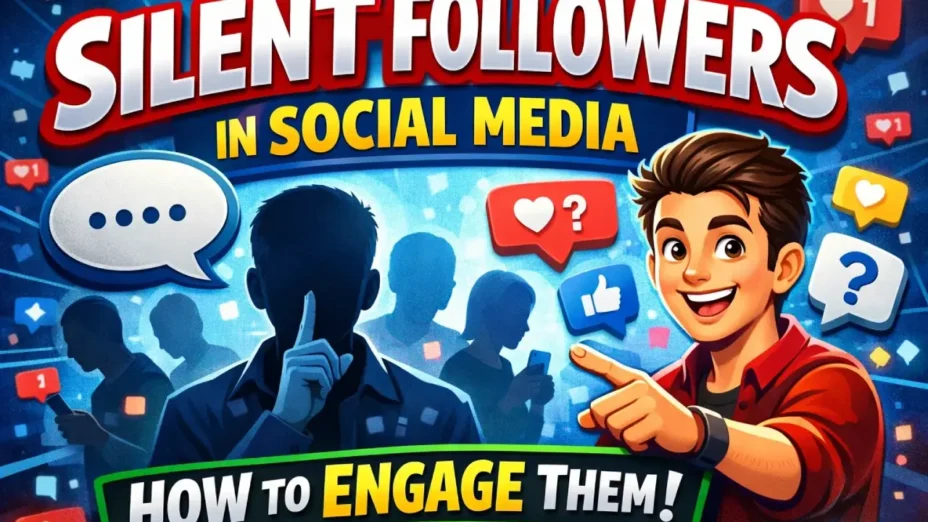
Understanding the Concept of Silent Followers
What Are Silent Followers in Social Media?
Scroll through your follower list, and you’ll probably notice something odd thousands of people watching your content, yet only a tiny fraction actually liking, commenting, or sharing. These are what we now call silent followers, and they’re far more common than most creators realize. In fact, they might make up the majority of your audience.
Silent followers are individuals who regularly consume content but choose not to engage publicly. They watch your Instagram stories, read your tweets, binge your TikToks, and even revisit your posts but they do it quietly. No likes, no comments, no reactions. It’s almost like they’re invisible spectators sitting in the back row of a packed theater.
What makes this phenomenon fascinating is that these users are not inactive. They are deeply engaged but in a way that traditional metrics fail to capture. According to recent social media behavior studies, over 70% of users admit to consuming content without interacting with it publicly. That’s a staggering number, and it flips the traditional understanding of engagement on its head.
Think about your own habits for a moment. How often do you scroll through content, enjoy it, maybe even feel inspired by it but keep moving without tapping the like button? Exactly. Silent following is not an anomaly; it’s human behavior amplified by digital platforms.
This shift challenges everything we thought we knew about influence and reach. It forces creators, marketers, and brands to rethink how they measure success. Because if someone is consistently watching but never reacting, are they really disengaged or just engaging differently?
Why This Trend Is Growing Rapidly
The rise of silent followers isn’t random it’s the result of a perfect storm of psychological, technological, and cultural changes happening all at once. Social media has matured, and so have its users. What used to be a space for open interaction is now a more complex environment where people are cautious about how they present themselves.
One major driver of this trend is digital fatigue. With endless content flooding feeds every second, users are overwhelmed. Liking or commenting on every post becomes exhausting, so people default to passive consumption. It’s not that they don’t care it’s that they simply don’t have the mental bandwidth to engage with everything they see.
Another factor is the growing awareness of digital footprints. People now understand that every like, comment, or share contributes to their online identity. This awareness makes them more selective about what they engage with publicly. In many cases, silence becomes a form of control a way to consume without leaving a trace.
There’s also the influence of platform design. Algorithms prioritize content consumption time, watch duration, and scrolling behavior more than ever before. This means users don’t need to actively engage for content to be considered “valuable.” The system already knows what they like based on their behavior.
Culturally, we’re also seeing a shift toward private engagement over public interaction. Features like direct messages, close friends lists, and private groups are becoming more popular than public comment sections. People are still engaging they’re just doing it behind closed doors.
So, when you see low engagement on a post, it doesn’t necessarily mean your content failed. It might just mean your audience is part of this growing silent majority watching, absorbing, and valuing your content in ways that aren’t immediately visible.
The Psychology Behind Silent Engagement
Fear of Judgment and Online Anxiety
Let’s be honest social media isn’t always a comfortable place to express yourself. Every like, every comment, every reaction is a tiny public statement, and not everyone feels safe making those statements. This is where fear of judgment steps in as a major reason behind silent following.
People worry about how they’ll be perceived based on their interactions. What if someone judges them for liking a controversial post? What if a comment is misunderstood or criticized? These concerns may sound small, but they add up quickly, especially in an environment where screenshots and callouts are common.
Research in digital psychology suggests that social anxiety is amplified online, not reduced. The permanence and visibility of interactions create pressure. Unlike a casual conversation that fades away, a comment can linger indefinitely. That permanence makes people think twice—or not act at all.
There’s also the issue of context collapse. On social media, your audience includes friends, family, coworkers, and strangers all at once. Something you feel comfortable engaging with in one context might feel inappropriate in another. So instead of navigating that complexity, many users choose silence.
Interestingly, silent followers are often highly engaged emotionally. They might feel inspired, entertained, or even deeply connected to content but they keep those reactions internal. It’s like watching a movie in a theater without clapping at the end. The experience is real, even if the response isn’t visible.
This creates a disconnect between creators and their audiences. A post might resonate deeply, but the lack of visible engagement can make it seem like it didn’t land. Understanding this psychological barrier is key to interpreting social media metrics more accurately.
The Desire for Passive Consumption
Not every social media user wants to participate they just want to observe. And there’s nothing wrong with that. In fact, passive consumption has become one of the dominant ways people interact with digital content.
Think of social media as a streaming service. Most people don’t comment on every show they watch on Netflix, right? They consume, enjoy, and move on. The same logic applies here. Users treat their feeds like personalized entertainment channels rather than interactive communities.
This behavior is reinforced by how platforms are designed. Endless scrolling, autoplay videos, and algorithmic recommendations make it incredibly easy to consume content without stopping. Engagement requires effort, even if it’s just a tap. And when people are in a relaxed, passive state, even small actions can feel like interruptions.
There’s also a growing preference for low-effort experiences. In a fast-paced world, people look for ways to unwind without additional cognitive load. Engaging with content especially thoughtfully requires attention and energy. Silent consumption doesn’t.
Another layer to this is the idea of emotional bandwidth. People might love your content, but they’re saving their limited energy for interactions that feel more meaningful or necessary. It’s not a rejection it’s prioritization.
So, silent followers aren’t necessarily disengaged. They’re choosing a different mode of interaction one that’s quieter, more personal, and less demanding. And in many ways, this reflects a broader shift in how people use technology: less about broadcasting, more about consuming.
Social Media Algorithms and Silent Behavior
How Platforms Track Invisible Engagement
Here’s where things get interesting just because someone doesn’t like or comment doesn’t mean platforms think they’re inactive. In fact, social media algorithms are far more sophisticated than surface-level metrics. They’re quietly tracking behaviors that most users don’t even realize count as engagement.
Every scroll, every pause, every replay it’s all data. If someone stops to watch your video for an extra three seconds, that signals interest. If they revisit your profile or rewatch your story, that’s another strong indicator. Platforms like Instagram, TikTok, and YouTube heavily prioritize watch time, retention rate, and dwell time over simple likes.
This means silent followers are actually feeding the algorithm valuable information. A user who never interacts publicly but consistently watches your content to the end might be more “valuable” in algorithmic terms than someone who casually drops a like and scrolls past. According to internal platform insights shared by industry experts, watch time can account for over 50% of content ranking signals on short-form video platforms.
It’s almost like the algorithm is reading body language instead of listening to words. It notices what people linger on, what they skip, and what they come back to. And in many cases, silent engagement speaks louder than visible interaction.
For creators, this is both reassuring and confusing. Reassuring because your content might be performing better than it appears. Confusing because the metrics you see likes, comments, shares don’t tell the full story anymore.
Understanding this hidden layer of engagement changes how success should be measured. It’s no longer just about how many people react it’s about how deeply they consume.
Why Likes and Comments Are No Longer the Full Story
There was a time when likes and comments were the currency of social media. The more you had, the more successful you were perceived to be. But that model is slowly becoming outdated.
Today, platforms are shifting toward a more nuanced understanding of engagement. Why? Because likes can be misleading. They’re easy to give, often impulsive, and sometimes even automated. A user might double-tap without truly caring about the content, while another might watch every second of your video and feel genuinely connected without ever touching the like button.
This shift has led to a reevaluation of what engagement actually means. Metrics like:
- Average watch duration
- Content saves
- Profile visits
- Direct shares via messages
are now considered more meaningful indicators of impact. These actions suggest intent and interest, not just habit.
There’s also an economic angle to this. Advertisers care about attention, not just interaction. If users are spending more time-consuming content silently that attention becomes valuable. In fact, some marketing reports indicate that content with high watch time but low visible engagement can still outperform highly “liked” content in conversions.
This creates a paradox for creators. You might feel like your content isn’t resonating because the likes are low, but behind the scenes, it could be driving significant impact.
The takeaway? Engagement is evolving, and clinging to old metrics can lead to misinterpretation. Silent followers are a big part of that evolution, quietly reshaping what success looks like in the digital world.
The Impact on Content Creators
Misleading Metrics and Engagement Frustration
If you’ve ever posted something you were proud of, only to see it receive minimal likes or comments, you know how frustrating it can be. It feels like speaking into a void. But with the rise of silent followers, those metrics can be incredibly misleading.
Creators often equate low visible engagement with failure. It’s a natural reaction after all, those are the numbers we’re conditioned to look at. But when a large portion of your audience is engaging silently, those numbers don’t reflect reality.
This mismatch can lead to creative burnout. You start questioning your content, your style, even your voice. You might think, “Is this even worth it?” when, in reality, people are watching, learning, and enjoying just not saying anything.
There’s also the issue of comparison. When you see other creators with high engagement, it’s easy to assume they’re more successful. But what you don’t see is their audience composition. They might have more active followers, while yours are quieter but equally loyal.
Interestingly, some creators report that their direct messages and real-life interactions tell a completely different story. Followers might say, “I love your content, I watch everything you post,” even though they’ve never liked a single post. That disconnect can be both validating and confusing.
To navigate this, creators need to shift their mindset. Instead of focusing solely on public metrics, it’s important to look at the bigger picture reach, impressions, watch time, and even qualitative feedback.
Because sometimes, the quietest audiences are the most attentive.
Monetization Challenges with Silent Audiences
While silent followers can be valuable in terms of attention, they present unique challenges when it comes to monetization. Brands and sponsors often rely on visible engagement metrics to evaluate potential partnerships. And if those numbers are low, it can be difficult to demonstrate your true influence.
This creates a gap between actual impact and perceived value. You might have a highly engaged silent audience that trusts your recommendations, but without likes and comments, it’s harder to prove that trust to external parties.
For example, a brand might look at your profile and think, “Low engagement low ROI,” even if your content is consistently watched and remembered. This can lead to missed opportunities or undervalued collaborations.
However, the landscape is slowly changing. Some forward-thinking brands are beginning to recognize the importance of deep engagement metrics. They’re asking for analytics like:
- Story views and completion rates
- Link clicks and conversions
- Audience retention data
These metrics provide a more accurate picture of influence, especially in an era dominated by silent consumption.
Creators can also adapt by diversifying their monetization strategies. Instead of relying solely on brand deals, they can explore direct-to-audience models like memberships, digital products, or newsletters where engagement is more intentional and measurable.
The key is to translate silent attention into tangible value. It’s not easy, but it’s possible with the right approach.
Silent Followers vs Active Followers
Key Differences in Behavior and Value
At first glance, active followers seem more valuable. They like, comment, share they make noise. Silent followers, on the other hand, fade into the background. But when you dig deeper, the distinction isn’t so black and white.
Active followers are visible. They boost your engagement metrics and help your content reach a wider audience through algorithmic signals. They’re like the cheerleaders of your digital presence loud, supportive, and easy to notice.
Silent followers are different. They’re more like dedicated listeners. They might not clap, but they’re paying attention. They consume consistently, often more deeply than active users. And in many cases, they form a stronger, more personal connection with the content.
Here’s a simple comparison:
| Aspect | Active Followers | Silent Followers |
| Visibility | High | Low |
| Public Interaction | Frequent | Rare |
| Content Consumption | Moderate | High |
| Algorithm Impact | Immediate | Long-term |
| Emotional Connection | Varies | Often strong |
What’s surprising is that silent followers can sometimes be more loyal. They’re not engaging out of habit or social pressure they’re there because they genuinely care about the content.
Which Audience Type Matters More?
So, which is better active or silent followers? The honest answer is: you need both.
Active followers help your content spread. They trigger the algorithm, increase visibility, and create social proof. Without them, growth can be slow.
Silent followers, however, provide depth. They’re the ones who stick around, consume consistently, and often convert whether that means buying a product, signing up for a service, or simply staying loyal over time.
It’s like running a café. Active followers are the people who leave reviews and bring friends. Silent followers are the regulars who come in every day, order the same coffee, and keep the business running.
Focusing too much on one group can create imbalance. If you chase only visible engagement, you might overlook the quiet majority. If you ignore active users, you might struggle to grow.
The real goal is to create content that resonates with both to invite interaction without depending on it.
Why People Choose Not to Engage Publicly
Privacy Concerns in the Digital Age
Privacy isn’t just a buzzword anymore it’s a major factor shaping online behavior. As people become more aware of how their data is used, they’re becoming more cautious about their digital footprints.
Every like, comment, or share leaves a trace. It contributes to a user’s profile, influences algorithmic recommendations, and can even be seen by others. For some, that level of visibility feels intrusive.
Silent engagement offers a way to stay informed and entertained without exposing personal preferences. It’s a form of digital self-preservation.
There’s also the issue of surveillance culture. With increasing concerns about data tracking and online monitoring, users are more hesitant to interact publicly. Even if the risk is minimal, the perception is enough to influence behavior.
This shift toward privacy is one of the strongest drivers of silent following and it’s unlikely to reverse anytime soon.
Content Overload and Decision Fatigue
Imagine scrolling through hundreds of posts in a single session. Each one asks for a reaction like, comment, share. It’s exhausting.
This is what we call decision fatigue. When faced with too many choices, people default to the easiest option: doing nothing.
Silent consumption becomes a coping mechanism. It allows users to continue enjoying content without the pressure to respond. It’s efficient, effortless, and mentally less taxing.
As content volume continues to grow, this behavior will likely become even more common. Engagement will become more selective, more intentional and more rare.
Why Silent Followers Are Valuable
Many creators underestimate silent followers, but they play a crucial role in your growth:
1. They Increase Reach
Even without engagement, their views signal algorithms that your content is being consumed.
2. They Are Warm Audience
They already know you and your content—making them easier to convert than new followers.
3. They Can Become Loyal Fans
Once activated, silent followers often turn into your most consistent supporters.
Ignoring them means missing out on a massive growth opportunity.
10 Proven Strategies to Activate Silent Followers
1. Make Engagement Effortless
One of the biggest reasons people don’t engage is effort. Writing a comment or forming an opinion takes time.
Solution: Reduce the friction.
Use:
- Polls (Yes/No, This/That)
- Emoji sliders
- One-tap reactions
Example:
“Do you prefer working in the morning or night?
Simple interactions increase participation dramatically.
2. Ask Questions That Feel Personal
Generic content rarely triggers engagement. People respond when they feel directly involved.
Instead of:
“Here are 5 tips to stay productive”
Try:
“Which of these habits are YOU struggling with right now?”
This shifts your content from informational to conversational—making followers more likely to respond.
3. Use Strong Call-to-Actions (CTAs)
Never assume your audience knows what to do.
Tell them clearly:
- “Comment YES if you agree”
- “Save this for later”
- “Tag someone who needs this”
Clear instructions increase action. Subtle hints often get ignored.
4. Build Emotional Connection Through Storytelling
Silent followers often stay quiet because they don’t feel connected.
Sharing:
- Personal struggles
- Failures and lessons
- Behind-the-scenes moments
…makes your content relatable and human.
When people feel emotionally connected, they are more likely to engage.
5. Reply to Comments Quickly and Meaningfully
The moment someone comments, it’s a breakthrough.
Don’t just reply with “Thanks.” Instead:
- Ask a follow-up question
- Appreciate their perspective
- Continue the conversation
This creates a welcoming environment and encourages others to join in.
6. Use Interactive Content Formats
Certain formats naturally trigger engagement:
- Carousel posts with storytelling
- Short videos with strong hooks
- “This vs That” comparisons
- Opinion-based or slightly controversial posts
These formats create curiosity and invite responses even from passive viewers.
7. Create a Sense of Community
People engage where they feel they belong.
Build that feeling by:
- Using inclusive language (“we”, “our community”)
- Featuring follower comments in your stories
- Creating recurring content series
When followers feel seen and valued, they are more likely to participate.
8. Post Consistently at the Right Time
Even great content fails if it reaches people at the wrong time.
To improve visibility:
- Analyze your audience activity
- Post when they are most active
- Maintain a consistent schedule
Consistency builds familiarity and familiarity builds trust and engagement.
9. Break the Scroll with Pattern Interrupts
Social media is full of repetitive content. To stand out, you need to disrupt scrolling behavior.
Try:
- Bold or surprising statements
- Curiosity-driven hooks
- Reverse psychology
Example:
“Most people reading this won’t comment… prove me wrong.”
This directly challenges silent followers and nudges them to respond.
10. Create Safe and Judgment-Free Spaces
Many users stay silent because they fear being judged.
Encourage openness by saying:
- “No wrong answers here”
- “Be honest this is a safe space”
- “Everyone’s opinion matters”
You can also use anonymous tools like polls or Q&A features to reduce hesitation.
The Psychology Behind Silent Followers
To convert silent followers, you need to understand their mindset:
- They don’t want to be the first to comment
- They doubt whether their opinion matters
- They prefer observing over participating
Your role is to:
- Reduce effort
- Build trust
- Invite participation clearly
When these barriers are removed, engagement naturally increases.
Common Mistakes to Avoid
Even experienced creators make these mistakes:
- Posting without a clear CTA
- Ignoring comments or replying late
- Being overly promotional
- Not experimenting with content formats
Fixing these alone can significantly improve your engagement rates.
Final Thoughts
Silent followers are not a problem they are an opportunity.
They already consume your content. They already follow your journey. The only thing missing is activation.
By making engagement easy, building emotional connections, and creating a safe and interactive environment, you can transform passive viewers into:
- Active commenters
- Loyal followers
- Brand advocates
In the end, social media success is not just about reaching more people—it’s about connecting deeply with the people who are already watching you silently.
The Future of Social Media Engagement
Will Silent Engagement Become the Norm?
All signs point to yes. As platforms evolve and user behavior shifts, silent engagement is becoming the default rather than the exception.
This doesn’t mean interaction will disappear it just means it will change form. Less public, more private. Less frequent, more meaningful.
Creators who understand this shift will be better positioned to adapt.
How Brands and Creators Must Adapt
Success in this new landscape requires a mindset shift. It’s no longer about chasing likes—it’s about capturing attention and building trust.
Focus on quality over quantity, depth over visibility, and connection over metrics. Because in a world full of noise, sometimes the quietest signals matter the most.
Conclusion
The rise of silent followers is reshaping the way we understand social media engagement. What once seemed like a lack of interest is now revealed as a different, more subtle form of interaction. These quiet observers are not disengaged they are attentive, selective, and often deeply connected to the content they consume.
For creators, this shift demands a new perspective. Success can no longer be measured solely by likes and comments. It requires a broader view one that includes invisible metrics, emotional resonance, and long-term loyalty.
As digital spaces continue to evolve, one thing is clear: silence doesn’t mean absence it often means attention.
FAQs
1. Are silent followers bad for engagement?
Not at all. Silent followers still contribute to watch time, reach, and overall content performance. They just engage in less visible ways.
2. Why do people watch content but never like it?
Common reasons include privacy concerns, social anxiety, content overload, and a preference for passive consumption.
3. Can silent followers convert into customers?
Yes, and often at high rates. Their consistent consumption can build strong trust over time.
4. How can I track silent engagement?
Look at metrics like watch time, impressions, saves, and direct messages rather than just likes and comments.
5. Will likes and comments become irrelevant?
Not completely, but they are becoming less dominant as platforms prioritize deeper engagement signals.