
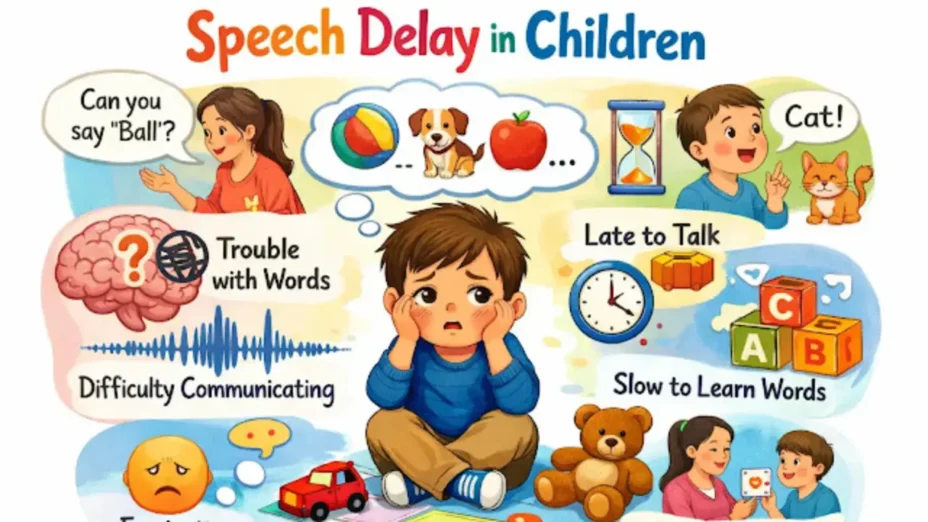
Understanding Speech Delay in Children.
A speech delay isn’t just about a child talking later than others it’s about how they develop communication skills compared to typical milestones. Every child grows at their own pace, sure, but when words, sounds, or sentences don’t emerge as expected, it may signal a delay that needs attention. Some kids might understand everything you say but struggle to express themselves, while others may have trouble both understanding and speaking. That distinction matters because it helps determine the kind of support they need.
Think of speech like building a house. First comes listening, then understanding, then forming words, and finally creating sentences. If one layer is shaky, the whole structure slows down. A speech delay could show up as limited vocabulary, unclear pronunciation, or difficulty combining words. For instance, by age two, most children use simple two-word phrases like “want toy” or “more juice.” If that’s not happening, it’s worth paying attention.
What makes this tricky is how easily delays can be dismissed with phrases like “boys talk later” or “they’ll grow out of it.” While that can sometimes be true, relying on hope instead of observation can delay helpful intervention. Early action often makes a huge difference, not just in speech but in confidence and learning ability later on.
The key is not panic it’s awareness. When you understand what speech delay really means, you’re already one step ahead in helping your child find their voice.
Common Causes of Speech Delay
Speech delays don’t have a one-size-fits-all cause. In fact, they often come from a mix of factors, some obvious and others surprisingly subtle. One common cause is hearing issues. If a child can’t hear sounds clearly, it becomes incredibly hard to imitate them. Even mild or temporary hearing loss due to frequent ear infections can slow speech development significantly.
Another factor could be developmental conditions such as autism spectrum disorder, where communication challenges are part of a broader pattern. But it’s important not to jump to conclusions many children with speech delays do not have autism. Sometimes the cause is simply a delay in expressive language, meaning the child understands well but struggles to speak.
Environmental factors also play a role. Children learn language through interaction, so limited verbal engagement at home can contribute to delays. If conversations are minimal or screens replace human interaction, the opportunity to practice speech shrinks. That doesn’t mean parents are doing something wrong it just highlights how crucial daily communication is.
There are also physical factors, like oral-motor issues, where the muscles used for speech aren’t strong or coordinated enough. Imagine trying to play a musical instrument without proper control it’s frustrating and slow. Similarly, children may know what they want to say but struggle to form the words.
Genetics can’t be ignored either. If there’s a family history of late talkers, your child might simply be following that pattern. Still, even in those cases, supportive strategies can make a big difference.
Understanding the root cause helps you choose the right approach. And often, it’s not about fixing something “wrong,” but about giving your child the tools and environment they need to catch up.
Early Signs Parents Should Watch For
Age-Based Speech Milestones
Watching your child grow is exciting, but it can also feel like you’re constantly wondering, “Is this normal?” Speech development comes with general milestones that act more like guidelines than strict rules. Still, they’re incredibly useful for spotting early signs of delay.
By 12 months, most babies start babbling with intent sounds like “mama” or “dada” might appear, even if they’re not perfectly used yet. By 18 months, children typically have a small vocabulary of around 10–20 words and can point to objects when named. Once they hit 2 years old, things usually speed up, with vocabulary expanding to 50 words or more and simple two-word phrases forming.
If your child isn’t meeting these markers, it doesn’t automatically mean something is wrong but it does signal a need for closer observation. For example, a child who doesn’t respond to their name, avoids eye contact, or rarely attempts to imitate sounds might benefit from early support.
The tricky part is that some children compensate in other ways. They might use gestures, pointing, or even leading you by the hand to communicate. While that’s clever and adaptive, it can sometimes mask the need for verbal development.
Instead of comparing your child to others, think of milestones as checkpoints. They help you understand whether your child is moving forward, plateauing, or falling behind. And when you notice gaps early, you can step in with strategies that feel natural rather than overwhelming.
When to Seek Professional Help
There’s a fine line between “wait and see” and “act early,” and knowing where that line sits can feel confusing. If your gut is telling you something isn’t right, it’s worth listening. Parents often notice subtle signs long before professionals do.
Generally, it’s a good idea to consult a specialist if your child isn’t using single words by 18 months, isn’t combining words by age two, or has difficulty understanding simple instructions. Other signs include limited eye contact, lack of gestures like waving or pointing, or frustration when trying to communicate.
A speech-language pathologist (SLP) is usually the go-to expert. They can assess not just speech but overall communication skills, including comprehension and social interaction. The process isn’t as intimidating as it sounds it often involves play-based evaluation where your child interacts naturally.
Early intervention has been shown to significantly improve outcomes. According to the American Speech-Language-Hearing Association, children who receive support before age three often catch up faster than those who start later. That’s because young brains are incredibly adaptable, almost like soft clay ready to be shaped.
Seeking help doesn’t label your child it empowers them. And it gives you, as a parent, practical tools to support their development every single day.
Emotional Impact on Parents and Children
How Speech Delay Affects Confidence
When a child struggles to communicate, it’s not just about words it’s about how they feel inside. Imagine knowing exactly what you want but not being able to express it clearly. That frustration can build up quickly, often showing itself in unexpected ways like tantrums, withdrawal, or even aggression. For many speech-delayed children, behavior becomes their “voice,” and that can sometimes be misunderstood by adults who see the reaction but not the root cause.
Confidence takes a hit early. Kids naturally compare themselves, even if they can’t articulate it. When they see peers talking, singing, or answering questions with ease, they may start to feel left out or “behind.” Over time, this can lead to hesitation in social situations. A child who once babbled freely might become quieter, avoiding interaction because it feels too hard or even embarrassing.
This is where your role becomes incredibly powerful. The way you respond can either reinforce insecurity or build resilience. When you celebrate small communication attempts whether it’s a single word, a gesture, or even a sound you’re sending a clear message: “Your voice matters.” That kind of reassurance slowly builds confidence from the inside out.
It’s also important to create low-pressure communication opportunities. Instead of putting your child on the spot with direct questions, try commenting on what they’re doing or offering choices. For example, “Do you want the red cup or blue cup?” Provides them with a clear method to respond without feeling overwhelmed..
Confidence doesn’t grow overnight. It builds in small, consistent moments where a child feels heard, understood, and supported. And those moments, repeated daily, can completely change how a speech-delayed child sees themselves.
Managing Parental Stress
Let’s be honest parenting a child with a speech delay can feel overwhelming at times. There’s the constant worry, the comparisons with other children, and the quiet questions that creep in late at night: “Am I doing enough?” or “Will they catch up?” That emotional weight is real, and ignoring it doesn’t make it disappear.
Stress often comes from uncertainty. You’re navigating something without a clear roadmap, and that can be exhausting. Add in well-meaning but unhelpful comments from others like “they’ll talk when they’re ready” and it’s easy to feel isolated or even dismissed. But your concerns are valid, and seeking answers is part of being an attentive parent.
One of the most helpful shifts is moving from worry to action. Instead of focusing on what hasn’t happened yet, center your energy on what you can do today. Small, consistent efforts talking more, reading together, engaging in play create a sense of control and progress. And progress, even when slow, reduces anxiety.
It also aids in creating a support system. This could include speech therapists, pediatricians, or even other parents going through similar experiences. Sharing stories and strategies reminds you that you’re not alone in this journey. Sometimes, just hearing “we’ve been there too” can lift a huge emotional burden.
Taking care of yourself matters just as much as supporting your child. Burnout doesn’t help anyone. Whether it’s carving out a few minutes for yourself, talking to a friend, or simply acknowledging your efforts, these moments recharge you.
You don’t need to be perfect you just need to be present, consistent, and patient. And that’s already more than enough.
Creating a Communication-Friendly Environment
Importance of Daily Interaction
If speech development had a secret ingredient, it would be interaction. Not fancy tools, not expensive programs just simple, consistent, everyday communication. Children learn language the same way they learn to walk: through repetition, observation, and practice. And the more they’re exposed to words in meaningful contexts, the faster those connections start to form.
Think about your daily routine. Every moment mealtime, bath time, getting dressed is an opportunity to build language. When you describe what is happening (“Now we’re putting on your shoes” or “Look at the bubbles!”), you’re giving your child a live demonstration of how language works. It might feel repetitive to you, but for them, it’s like hearing a new song over and over until they finally learn the lyrics.
What makes interaction powerful isn’t just talking it’s engaging. Eye contact, facial expressions, gestures, and tone all play a role in helping children understand meaning. When you combine words with actions, it creates a richer learning experience. For example, saying “big ball” while holding up a large ball reinforces both the concept and the vocabulary.
It’s also important to pause and give your child time to respond. Silence might feel uncomfortable, but it’s often where learning happens. Those few extra seconds give them space to process and attempt communication, even if it’s just a sound or gesture.
Quality matters more than quantity. You don’t need to talk nonstop you just need to be intentional. Short, meaningful interactions throughout the day can have a bigger impact than long periods of distracted communication.
Language grows in connection. And the more connected your interactions are, the stronger your child’s communication skills will become.
Reducing Screen Time
Screens are everywhere phones, tablets, TVs and they can feel like an easy solution, especially on busy days. But when it comes to speech development, screens often do more harm than good if they replace real interaction. That’s because language isn’t just about hearing words; it’s about engaging with them in a responsive, back-and-forth way.
When a child watches a screen, they’re in a passive role. There’s no expectation to respond, no feedback loop, no adjustment based on their reactions. It’s like trying to learn a conversation by watching others talk without ever participating. Even educational programs can’t replicate the dynamic nature of human interaction.
Research supports this. Studies have shown that excessive screen time, especially in children under three, is linked to delayed language development. The American Academy of Pediatrics recommends limiting screen use and prioritizing interactive play instead.
That doesn’t mean screens are completely off-limits. When used intentionally and in moderation, they can be a supplement but not a substitute. Viewing something together and discussing it (“What’s that animal?”) or “Look, he’s leaping!” Transforms passive watching into an interactive experience.
The goal isn’t perfection it’s balance. Replacing even a portion of screen time with conversation, reading, or play can make a noticeable difference. Think of it as swapping background noise for meaningful dialogue.
At the end of the day, children don’t learn to speak from screens they learn from people. And your voice, your reactions, and your presence are far more powerful than any app or show.
Practical Parenting Tips to Encourage Speech
Talking More Throughout the Day
One of the simplest yet most effective strategies for helping a speech-delayed child is also the most overlooked: just talk more. Not in a forced or overwhelming way, but in a natural, flowing, everyday manner. Language thrives in environments where it’s constantly modeled, repeated, and reinforced. The more your child hears words used in context, the more familiar and accessible those words become.
Narration is your best friend here. Describe what you’re doing, what your child is doing, and what’s happening around you. “You’re stacking blocks,” “The dog is barking,” “We’re cutting apples” these simple statements create a steady stream of language input. Over time, your child begins to associate words with actions, objects, and emotions.
Repetition plays a huge role. It might feel redundant to say the same words multiple times, but repetition strengthens neural connections. Think of it like practicing a song you don’t learn it by hearing it once. The same applies to language.
Another powerful technique is expansion. If your child mentions “car,” you could reply with “Yes, a big red car!” This builds on their attempt without correcting or pressuring them. It shows them how language can grow naturally from a single word into a full sentence.
Questions can be helpful, but they should be balanced with statements. Too many questions can feel like a test. Instead, mix in comments and observations that invite participation without demanding it.
Talking more doesn’t require extra time it just requires intention. By turning everyday moments into language opportunities, you create a rich environment where speech can develop organically.
Reading and Storytelling Techniques
Reading to a speech-delayed child isn’t just a calming bedtime ritual it’s one of the most powerful tools you have for building language skills. But here’s the catch: it’s not about how many books you read, it’s about how you read them. Simply flipping through pages and reciting text won’t have the same impact as interactive storytelling that pulls your child into the experience.
Start by choosing books with bright pictures, simple words, and repetitive phrases. These elements make it easier for your child to predict and participate. Instead of reading every word exactly as written, pause to point at images and describe them. “Look, a big brown dog!” or “What is the cat doing?” Even if your child doesn’t react immediately, you are demonstrating how language relates to the world around them.
Repetition is your secret weapon here. Reading the same book multiple times might feel boring to you, but for your child, it builds familiarity and confidence. Eventually, they may start filling in words or recognizing patterns, which is a huge step forward. It’s like hearing a favourite song you begin to anticipate the lyrics.
Storytelling doesn’t always have to come from a book. You can create your own stories using toys, daily events, or even your child’s favorite activities. For example, narrating a simple story about their day (“You went to the park, saw a bird, and played on the swing”) helps them connect language with real-life experiences.
Tone and expression matter more than perfection. Use different voices, exaggerate emotions, and make the story come alive. This keeps your child engaged and shows them that communication is not just functional it’s fun.
Reading together fosters more than just vocabulary development; it creates a sense of connection. And in that shared space, language has the freedom to grow naturally and confidently.
Using Play as a Learning Tool
If there’s one place where children feel completely at ease expressing themselves, it’s during play. That’s why play isn’t just entertainment it’s a powerful learning environment, especially for speech development. When children play, they’re relaxed, engaged, and open to experimenting with sounds, words, and interactions without fear of being “wrong.”
The key is to join their play rather than direct it. Sit down at their level, observe what they’re doing, and become part of their world. If they’re playing with toy cars, you might say, “The car is going fast!” or “Crash!” These simple sound effects and descriptions introduce language in a way that feels natural and exciting.
Pretend play is especially valuable. Acting out scenarios like cooking, shopping, or going to the doctor introduces everyday vocabulary and social language. You can model short phrases like “Your turn,” “More juice,” or “All done.” Over time, your child may start to imitate these phrases during play.
It’s also helpful to follow the “one step ahead” rule. If your child uses single words, respond with two-word phrases. If they’re using two words, expand to short sentences. This gently challenges them without overwhelming them.
Toys that encourage interaction like building blocks, dolls, or animal figures are often more effective than those that make noise or function automatically. Why? Because they require communication and imagination rather than passive engagement.
Play is where learning feels effortless. And when speech practice is woven into fun, it becomes something your child looks forward to rather than avoids.
Role of Speech Therapy
What Happens in Speech Therapy
Speech therapy can feel like a big step, especially if you’re not sure what to expect. But in reality, it’s far from intimidating it’s often play-based, engaging, and tailored specifically to your child’s needs. A speech-language pathologist (SLP) doesn’t just focus on words; they look at the entire communication process, including understanding, expression, and social interaction.
During sessions, your child might play games, look at picture cards, or engage in activities designed to encourage speech. The therapist uses these moments to model sounds, introduce new vocabulary, and guide your child in forming words or sentences. It may look like simple play on the surface, but every activity has a purpose.
One of the most valuable aspects of speech therapy is personalization. No two children are the same, so strategies are adjusted based on your child’s strengths, challenges, and interests. For example, a child who loves animals might learn through animal-themed games, while another might respond better to music or movement.
Parents are often included in the process, which is incredibly beneficial. You’ll learn techniques that can be used at home, turning everyday interactions into opportunities for growth. This consistency between therapy and home life accelerates progress.
Progress in speech therapy isn’t always linear. Some days will feel like breakthroughs, while others may seem slow. That’s completely normal. What matters is the overall trend gradual improvement over time.
Speech therapy isn’t about “fixing” your child; it’s about giving them tools to communicate more effectively. And with the right support, many children make significant strides that positively impact their entire development.
Supporting Therapy at Home
Speech therapy doesn’t end when the session is over in many ways, that’s where the real work begins. The time you spend with your child at home is where skills are reinforced, practiced, and turned into habits. Think of therapy as the blueprint and home practice as the construction process.
Consistency is key. Incorporating therapy techniques into your daily routine doesn’t require extra hours; it just requires intention. If your child is working on naming objects, you can practice during meals, bath time, or outside. The more natural the practice feels, the more likely your child is to engage.
Communication with your child’s therapist is essential. Ask questions, request demonstrations, and make sure you understand how to apply strategies correctly. Even small adjustments like how you phrase a question or how long you wait for a response can make a big difference.
It’s also important to keep things positive. Celebrate attempts, not just successes. If your child tries to say a word but doesn’t get it quite right, acknowledge the effort rather than correcting immediately. Confidence plays a huge role in willingness to communicate.
Creating a supportive environment means being patient and adaptable. Some days your child will be eager to practice, while other days they may resist. That’s okay. The aim is consistent advancement, not flawless results.
When therapy and home life work together, progress becomes more consistent and meaningful. And over time, those small, daily efforts add up to big changes in your child’s ability to communicate.
Nutrition and Lifestyle Factors
Foods That Support Brain Development
What your child eats doesn’t just affect their physical growth it plays a surprisingly important role in how their brain develops and functions, including speech and language skills. While no single food can “fix” a speech delay, a balanced and nutrient-rich diet creates the foundation for healthy neural connections, which are essential for communication.
The brain thrives on healthy fats, particularly omega-3 fatty acids, which are found in foods like salmon, walnuts, chia seeds, and flaxseeds. These fats are like fuel for brain cells, helping them communicate more efficiently. Think of it as upgrading the wiring system in a house everything runs smoother when the connections are strong.
Iron is another critical nutrient. Low iron levels have been linked to developmental delays, including language skills. Foods like spinach, lentils, eggs, and lean meats can help maintain adequate levels. Pairing iron-rich foods with vitamin C sources (like oranges or tomatoes) improves absorption, making those nutrients even more effective.
Don’t overlook the importance of protein either. Protein provides amino acids, which are the building blocks for neurotransmitters the chemical messengers that allow brain cells to communicate. Simple additions like yogurt, beans, or chicken can make a meaningful difference over time.
Hydration also matters more than many parents realize. Even mild dehydration can affect concentration and energy levels, making it harder for children to engage in communication activities.
That said, feeding a child especially a picky eater can feel like a battle. The goal isn’t perfection; it’s consistency. Offering a variety of whole foods and gently encouraging new options over time creates a supportive environment for both physical and cognitive growth.
When nutrition supports brain health, it quietly strengthens your child’s ability to learn, process, and eventually express language more effectively.
Sleep and Routine Importance
Sleep is often underestimated, but it’s one of the most powerful tools for a child’s development especially when it comes to speech and language. During sleep, the brain processes and organizes information gathered throughout the day. It’s like hitting the “save” button on everything your child has learned, including new words and sounds.
Children who don’t get enough quality sleep may struggle with attention, memory, and emotional regulation. And when those areas are affected, speech development can slow down. After all, it’s hard to learn new words when you’re tired, irritable, or unable to focus.
Establishing a consistent routine can make a huge difference. Simple habits like going to bed at the same time each night, having a calming pre-sleep ritual, and limiting screen exposure before bedtime help signal to the brain that it’s time to rest. Over time, this consistency improves both the quality and duration of sleep.
Routine doesn’t just apply to bedtime it extends throughout the day. Predictable schedules help children feel secure and reduce anxiety, which creates a better environment for learning. When a child knows what to expect, they’re more likely to engage and participate in activities that promote speech.
For example, having regular times for meals, play, reading, and interaction creates repeated opportunities for communication. These patterns reinforce language naturally, without feeling forced or overwhelming.
Think of sleep and routine as the quiet supporters of speech development. They don’t always get the spotlight, but they make everything else work better. When your child is well-rested and feels secure in their daily rhythm, they’re far more ready to learn, explore, and communicate.
Building Social Skills
Encouraging Peer Interaction
Speech doesn’t develop in isolation it grows through interaction, especially with other children. Peer interaction provides something unique that adults can’t fully replicate: spontaneous, unpredictable communication. Whether it’s sharing toys, taking turns, or simply playing side by side, these moments create natural opportunities for language use.
For a speech-delayed child, social settings can feel intimidating at first. They may hang back, observe, or rely on gestures instead of words. That’s completely normal. The goal isn’t to force interaction but to gently encourage it in a supportive environment.
Start small. Playdates with one familiar child can be less overwhelming than large group settings. Choose activities that encourage cooperation, like building something together or playing simple games. These shared experiences naturally prompt communication, even if it starts with just a few words or sounds.
Modelling plays a big role here. You can help guide interactions by suggesting phrases like “my turn,” “your turn,” or “can I play?” Over time, your child may begin to use these phrases independently.
It’s also important to celebrate effort rather than perfection. If your child attempts to communicate even nonverbally acknowledge it. Positive reinforcement boosts self-assurance and motivates them to continue making efforts.
Social skills and speech development go hand in hand. As your child becomes more comfortable interacting with others, their motivation to communicate increases. And sometimes, that desire to connect is the strongest driver of all.
Technology and Tools for Speech Development
Apps and Learning Resources
Technology often gets a bad reputation when it comes to young children, but when used thoughtfully, it can actually support speech development. The key lies in choosing the right tools and using them as a supplement not a replacement for real-life interaction.
There are several apps designed specifically to encourage language skills, focusing on vocabulary building, sound recognition, and interactive storytelling. These apps often use visuals, repetition, and engaging activities to hold a child’s attention while reinforcing key concepts. For example, apps that prompt children to name objects or match sounds can be helpful when used in short, guided sessions.
Here’s a quick comparison of common types of speech development tools:
| Tool Type | Benefits | Limitations |
| Interactive Apps | Engaging, visual learning, repetition | Can become passive if overused |
| Flashcards | Simple, flexible, parent-led | Less engaging without interaction |
| Audio Books | Improves listening skills | Lacks visual cues |
| Educational Videos | Entertaining and informative | Limited interaction |
The real magic happens when you participate. Sitting with your child, asking questions, and reacting to what’s on the screen turns a passive activity into an interactive one. For instance, if an app shows a picture of a dog, you might say, “That’s a dog! What sound does a dog make?” This bridges the gap between digital content and real-world communication.
Moderation is crucial. Short, purposeful sessions are far more effective than long periods of unsupervised use. Think of technology as a tool in your toolbox not the entire solution.
When balanced with human interaction, the right resources can enhance your efforts and make learning feel fresh and exciting for your child.
Long-Term Outlook and Patience
Celebrating Small Wins
Progress in speech development rarely happens in big, dramatic leaps. Instead, it unfolds in small, meaningful steps that are easy to overlook if you’re only focused on the end goal. But those small wins? They’re everything.
Maybe your child says a new word, imitates a sound, or even just makes more eye contact during communication. These moments might seem minor, but they represent real progress. They’re signs that your child is learning, processing, and building the foundation for more complex language skills.
Celebrating these wins doesn’t mean throwing a party every time your child says a word. It’s about acknowledging effort in a way that feels natural and encouraging. A smile, a clap, or a simple “You did it!” can go a long way in reinforcing positive behaviour.
Tracking progress can also be helpful. Keeping a journal of new words or milestones allows you to see how far your child has come over time. On days when progress feels slow, looking back can be incredibly reassuring.
Patience is essential here. It’s easy to compare your child to others, but every child’s journey is different. Some may catch up quickly, while others take more time and that’s okay.
Growth isn’t always visible day to day, but over weeks and months, those small steps add up. And when you focus on progress rather than perfection, the journey becomes a lot more hopeful and rewarding.
Staying Consistent Over Time
Coherence is the link that connects everything. You can have the best strategies, the right tools, and professional support but without consistency, progress can stall. The good news? Consistency doesn’t mean perfection. It means showing up, day after day, and creating opportunities for communication.
Think of speech development like planting a garden. You can’t water it just once and expect it to grow. You nurture it regularly, even when you don’t see immediate results. Over time, those efforts begin to bloom.
Consistency also builds trust. When your child knows they have a safe, supportive environment where communication is encouraged, they’re more likely to take risks and try new words. That sense of security is incredibly powerful.
It’s important to stay flexible as well. What works one month might need adjustment the next. As your child grows and develops, your approach should evolve with them.
There will be ups and downs days when everything clicks and days when nothing seems to work. That’s part of the process. What matters is staying committed and maintaining a positive, patient mindset.
Over time, consistent effort creates lasting change. And while the journey may feel slow at times, it’s moving forward one word, one sound, one moment at a time.
Conclusion
Parenting a child with a speech delay is a journey filled with questions, challenges, and moments of deep reflection. But it’s also a journey of connection, growth, and resilience. When you understand the reasons behind speech delays, create a supportive environment, and actively engage in your child’s development, you’re laying the groundwork for meaningful progress.
There’s no single solution or overnight fix. Instead, it’s the combination of daily interaction, thoughtful strategies, professional support, and emotional encouragement that makes the difference. Each small step your child takes is part of a bigger picture one that unfolds over time with patience and consistency.
What matters most is not how quickly your child catches up, but how supported and confident they feel along the way. Your role isn’t to rush the process it’s to guide, encourage, and celebrate every bit of progress.
And in that steady, supportive presence, your child finds the space to grow, communicate, and thrive.
FAQs
1. Can a child outgrow speech delay without intervention?
Some children do catch up naturally, especially if the delay is mild. However, early support significantly improves outcomes and reduces the risk of long-term challenges.
2. How much should I talk to my speech-delayed child daily?
There’s no strict number, but consistent, meaningful interaction throughout the day is key. Focus on quality and engagement rather than quantity alone.
3. Are bilingual homes a cause of speech delay?
No, bilingualism does not cause speech delay. Children may mix languages initially, but they typically develop strong language skills over time.
4. What is the ideal age to begin speech therapy?
The earlier, the better. Many experts recommend evaluation as early as 18–24 months if delays are suspected.
5. How long before improvements become visible?
Progress varies depending on the child and the cause of the delay. Some children show improvement within months, while others may take longer with consistent support.