
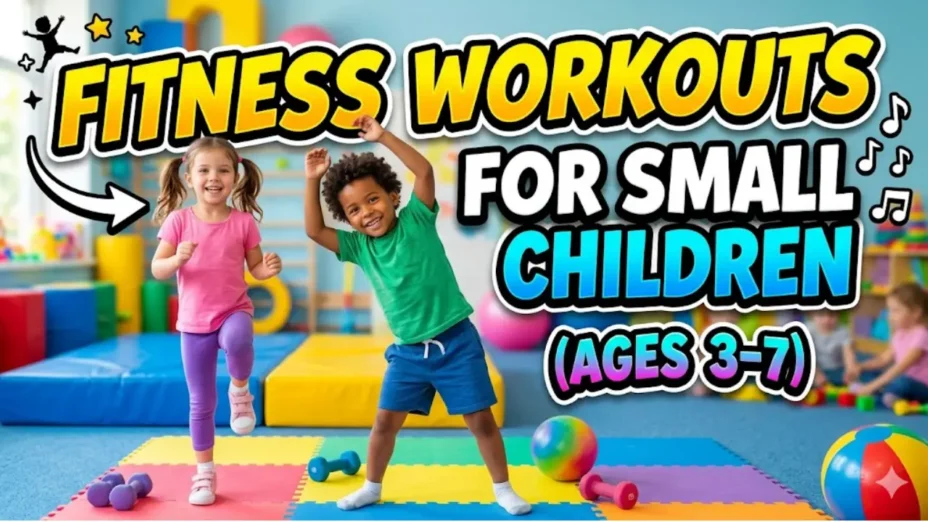
Why Fitness Woirkouts for small children actually matters?
Physical Development Benefits
Picture this: a child sprinting across a playground, climbing a slide the “wrong way,” then jumping off with zero hesitation. That’s not chaos that’s development in action. Physical activity is the engine that drives growth in young children, shaping everything from muscle strength to bone density and even posture. At this stage of life, movement is not optional it’s essential fuel.
Research from global health organizations suggests that children aged 3–5 years should engage in at least 180 minutes of physical activity daily, with a portion of that being energetic play. That might sound like a lot, but when you break it down, it’s just kids doing what they naturally love moving, exploring, and experimenting with their bodies.
Every jump strengthens leg muscles. Every crawl improves coordination. Even a basic action like standing on one foot engages core muscles that help maintain posture and stability. Think of the body like a house under construction movement lays down the bricks, strengthens the beams, and ensures everything stands tall and strong.
What’s often overlooked is how early movement prevents future problems. Poor posture, weak muscles, and even early signs of obesity can be traced back to sedentary habits formed in childhood. By introducing engaging fitness routines early, you’re not just building strength you’re preventing issues before they begin.
Fine and gross motor skills also develop rapidly through activity. Throwing a ball, hopping over a line, or climbing a small structure helps kids refine control over their bodies. These skills later translate into everyday abilities like writing, tying shoelaces, and participating in sports.
And here’s the twist kids don’t need a “workout plan.” They need opportunities. The more they move, the stronger and more capable they become. It’s that simple.
Mental and Emotional Growth
Now let’s talk about something just as powerful but less visible: what fitness does to a child’s mind. Ever noticed how kids seem calmer, happier, and more focused after active play? That’s not random it’s biology at work.
Physical activity triggers the release of endorphins and dopamine, chemicals that boost mood and reduce stress. For young children who may not yet have the words to express their emotions, movement becomes their language. Running, jumping, and dancing allow them to “process” feelings in a healthy, natural way.
There’s also a fascinating connection between movement and brain development. Studies show that physically active children tend to have better memory, improved attention spans, and stronger problem-solving skills. Why? Because movement increases blood flow to the brain, essentially “waking it up” and making it more receptive to learning.
Fitness also builds emotional resilience. When a child learns to balance without falling or finally catches a ball after multiple tries, they experience small but powerful wins. These moments teach persistence, patience, and confidence. It’s like building a mental toolkit they’ll carry for life.
Socially, active play introduces essential life skills. Sharing, teamwork, taking turns these all happen naturally during group activities. A simple game of tag becomes a lesson in cooperation and communication.
Dr. John Ratey, a well-known expert in brain and exercise science, once said, that Exercise is the most beneficial activity for your brain regarding mood, memory, and learning. That is equally applicable if not more so to children.
When children are active, they’re doing more than just expending energy. They’re building sharper minds, stronger emotions, and healthier social habits all at once. Essential fitness workouts for small children improve strength, balance, and health with age-appropriate exercises and daily routines.
Understanding Age-Appropriate Workouts
Toddlers vs Preschoolers Needs
Here’s where many people get it wrong: they assume all young children need the same kind of activity. In reality, a 2-year-old and a 5-year-old are worlds apart in terms of physical and cognitive development.
Toddlers (ages 1–3) are explorers. Their movements are often uncoordinated but full of curiosity. At this stage, fitness should be completely unstructured. Think chasing bubbles, stacking blocks, or waddling like a penguin. These activities might look random, but they’re building essential motor pathways in the brain.
Preschoolers (ages 3–5), on the other hand, are ready for more structured play. They can follow simple instructions, understand rules, and engage in group activities. This is the perfect time to introduce games like hopscotch, mini obstacle courses, or follow-the-leader exercises.
The biggest mistake? Rushing the process. Kids aren’t mini athletes they’re learners. Their bodies are still developing, and pushing them into structured workouts too early can do more harm than good.
Instead, think of fitness as a progression of play. As kids grow, their activities naturally become more complex. Your role is to guide not control that progression.
Safety Considerations for Kids
Let’s be real kids are fearless. And while that’s part of their charm, it also means safety needs to be a priority. The goal isn’t to restrict movement but to create an environment where kids can explore safely.
Start with the basics: a clear, clutter-free space. Whether it’s a living room or a backyard, make sure there are no sharp edges, slippery surfaces, or unstable objects. Soft mats or grass surfaces can reduce the risk of injury during active play.
Supervision is non-negotiable. Even simple activities can turn risky without guidance. But here’s the key don’t hover. Give kids space to move while keeping a watchful eye.
Hydration is another often overlooked factor. Kids can become dehydrated quickly, especially during energetic play. Encourage regular water breaks, even if they don’t ask for them.
Clothing matters too. Comfortable, breathable outfits and well-fitting shoes can prevent slips and discomfort. Avoid anything too tight or restrictive.
And perhaps most importantly listen to the child. If they’re tired, frustrated, or uninterested, it’s okay to stop. Fitness should never feel like punishment.
Fun Warm-Up Exercises for Kids
Animal Walks and Imitation Games
Let’s be honest if you tell a child, “We’re going to do a warm-up,” you’ll probably lose their interest in seconds. But say, “Let’s become jungle animals,” and suddenly you’ve got their full attention. That’s the magic of animal walks and imitation games they turn ordinary movement into storytelling, imagination, and laughter.
Animal walks are more than just cute they’re incredibly effective. A bear crawl strengthens the shoulders, arms, and core. A frog jump builds explosive leg power. A crab walk challenges coordination and engages muscles kids don’t normally use. Even something like slithering like a snake improves flexibility and body awareness. It’s essentially a full-body workout cleverly disguised as playtime.
To make it even more engaging, create a mini adventure. Imagine saying, “We’re crossing a jungle watch out for the river! Hop like a frog!” or “A tiger is coming crawl like a bear to escape!” These narrative elements activate a child’s imagination, which keeps them engaged far longer than repetitive instructions ever could.
Imitation games can go beyond animals. Kids can pretend to be robots, superheroes, airplanes, or even construction machines. “Show me how a robot walks” or “Fly like a rocket!” invites creativity while encouraging movement. The unpredictability of these prompts keeps their brains and bodies active at the same time.
What’s happening behind the scenes is even more impressive. These activities improve motor planning, coordination, and muscle activation while gently increasing heart rate. And because kids are laughing and having fun, they’re more likely to stay active longer.
The real secret? Variety. Rotate different animals and characters frequently so it never feels repetitive. When kids are excited to “see what’s next,” you’ve already won half the battle.
Simple Stretching Routines
Stretching might sound boring but only if it’s done the boring way. For kids, stretching needs a twist of imagination, a bit of storytelling, and maybe even some music to keep it lively. The goal isn’t to hold perfect poses; it’s to gently prepare their bodies while keeping their minds engaged.
Start with big, expressive movements. Ask kids to “reach for the stars” or “pick apples from a tall tree.” These actions stretch the arms, shoulders, and spine naturally. Then move into toe touches but instead of calling them that, say, “Let’s see if we can tickle our toes before they run away!” It has a playful tone, and before you know it, they’re bending and stretching freely.
Side stretches can become “rainbows,” where kids bend from one side to the other, imagining they’re drawing a giant arc in the sky. Gentle twists can be framed as “looking behind you for a sneaky puppy.” These tiny storytelling elements make a huge difference in keeping kids engaged.
Adding music is a game-changer. A fun song can guide the rhythm of movements, turning stretching into a mini dance session. You can even pause the music and ask kids to “freeze in a stretch,” adding an element of surprise and excitement.
From a physical perspective, stretching improves flexibility, joint mobility, and injury prevention. But it also teaches kids body awareness helping them understand how their bodies move and feel.
Keep it short and dynamic 5 to 10 minutes is more than enough. The goal is not perfection; it’s participation. When stretching feels like play instead of a task, kids are far more likely to embrace it.
Basic Strength-Building Activities
Bodyweight Exercises for Kids
Strength training for kids doesn’t involve dumbbells or heavy lifting it’s all about mastering their own body weight. And honestly, that’s more than enough. Children naturally build strength through movement, but adding a bit of structure can enhance those benefits without taking away the fun.
Think about squats, push-ups, lunges, and planks but presented in a way that sparks curiosity. Instead of saying “do squats,” try “Let’s sit on an invisible chair.” For push-ups, wall push-ups or knee push-ups are perfect starting points. You can also make it a game: “How many superhero push-ups can you complete?”
Planks can become a “statue challenge,” where kids try to stay as still as possible. Even holding a plank for 10–20 seconds is a big achievement at this age. These exercises build core strength, stability, and endurance, which are essential for everyday activities.
Here’s a quick comparison of simple bodyweight exercises and their benefits:
| Exercise | Primary Benefit | Fun Twist |
| Squats | Leg strength | Invisible chair game |
| Push-ups | Upper body strength | Superhero challenge |
| Plank | Core stability | Statue contest |
| Lunges | Balance & coordination | Giant steps game |
What matters most is consistency and encouragement. Kids don’t need long sessions just a few minutes of focused activity can make a difference. And remember, form doesn’t have to be perfect. The goal is to build confidence and familiarity with movement.
When kids realize they can control and strengthen their own bodies, it creates a powerful sense of independence. And that confidence carries over into everything they do.
Play-Based Strength Training
If there’s one golden rule for kids’ fitness, it’s this: if it feels like play, they’ll keep doing it. Play-based strength training taps into natural behaviours climbing, pushing, pulling, and lifting without ever feeling like a workout.
Take playgrounds, for example. Climbing a ladder strengthens arms and legs. Hanging from bars builds grip strength and upper body endurance. Sliding, jumping, and crawling all engage different muscle groups. It’s a full-body workout hidden inside fun.
At home, you can recreate similar experiences. Build a pillow fort, set up a mini obstacle course, or organize a treasure hunt where kids have to carry objects. Even something as simple as tug-of-war with a soft rope can develop strength and teamwork.
Wheelbarrow walks are another fantastic activity. One individual supports the child’s legs as they walk on their hands. It sounds silly and it is but it’s also incredibly effective for building arm and core strength.
What makes play-based training so effective is its unpredictability. Kids are constantly adjusting, reacting, and adapting, which engages muscles in a more natural way than repetitive exercises.
It also encourages creativity. Allow children to create their own games and challenges. When they feel ownership over the activity, their enthusiasm skyrockets.
At the end of the day, strength isn’t just about muscles it’s about capability. And play-based training helps kids feel strong, capable, and ready to take on new challenges.
Cardiovascular Activities for Small Children
Running, Jumping, and Skipping
If you’ve ever watched kids at play, you’ll notice one thing they rarely stand still. Running, jumping, and skipping are second nature to them, and that’s exactly what makes these activities so powerful for cardiovascular fitness.
Running games like tag are timeless. They require no setup, no equipment, and instantly get kids moving. You can add variations like freeze tag or obstacle tag to keep things fresh. The constant movement improves heart health, lung capacity, and endurance.
Jumping activities are just as effective. Whether it’s hopping over small objects, jumping in place, or playing hopscotch, these movements strengthen the legs and improve coordination. Skipping adds a layer of rhythm and timing, making it both fun and slightly challenging.
You can also introduce mini challenges:
- “How many jumps can you do in 20 seconds?”
- “Can you run to the tree and back before I count to 10?”
These small goals add excitement without pressure.
The beauty of these activities lies in their simplicity. Kids don’t see them as exercise they see them as games. And that’s precisely the reason they are so effective.
Dance and Rhythm Exercises
Turn on music, and suddenly everything changes. Kids who might resist structured activities often light up when they hear a beat. That’s why dance is one of the most effective and enjoyable forms of exercise for children.
Dancing improves cardiovascular fitness, coordination, and flexibility all while allowing kids to express themselves freely. There’s no right or wrong way to dance, which removes pressure and builds confidence.
You can guide them with simple routines or let them freestyle. Games like “freeze dance,” where kids stop moving when the music pauses, add an extra layer of fun and excitement.
Rhythm-based activities like clapping patterns or jumping to beats also enhance timing and listening skills. These exercises engage both the body and the brain, making them incredibly valuable.
Group dance sessions can amplify the fun. Whether it’s a family dance party or a small group activity, the shared energy makes it more engaging.
Dance turns movement into celebration. And when kids associate fitness with joy, they’re far more likely to stay active long-term.
Balance and Coordination Workouts
Balance Games
Balance is one of those hidden superpowers that often goes unnoticed—until it’s missing. For small children, developing balance is like building the foundation of a house. Without it, everything else running, jumping, even sitting properly becomes harder. The good news? Balance can be improved through simple, playful activities that kids genuinely enjoy.
Start with easy games like standing on one foot. But instead of making it feel like an exercise, turn it into a story: “Let’s be flamingos standing in a lake!” This small shift transforms a basic movement into an imaginative experience. You can even add challenges like closing one eye or counting how long they can hold the pose.
Walking along a straight line is another classic activity. Use chalk outdoors or tape indoors to create a “tightrope.” Encourage kids to walk forward, backward, or even sideways. Want to make it more exciting? Ask them to carry a toy or balance a soft object on their head while walking. Suddenly, it’s not just balance it’s a mission.
You can also create DIY balance beams using cushions, wooden planks, or even books placed in a line. The uneven surfaces force kids to engage their core muscles and adjust their posture constantly. This improves not only balance but also body awareness.
Balance games also teach patience and focus. Kids learn to slow down, control their movements, and stay present in the moment. And here’s the interesting part these skills carry over into academic tasks like reading and writing, where concentration is key.
The goal isn’t perfection. Kids will wobble, step off, and try again and that’s exactly how they improve. Every small attempt strengthens their confidence and coordination.
Hand-Eye Coordination Activities
Hand-eye coordination might sound technical, but in reality, it’s something kids use every single day. Whether they’re catching a ball, stacking blocks, or even turning pages in a book, this skill is constantly at work. Strengthening it early can have a lasting impact on both physical and cognitive development.
One of the simplest ways to build coordination is through throwing and catching games. Start with a soft ball or even a rolled-up pair of socks. At first, kids might miss more catches than they make and that’s completely normal. Each attempt helps their brain and body learn to work together more effectively.
Balloon games are another fantastic option. Because balloons move slowly and unpredictably, they give kids more time to react. Ask them to keep the balloon in the air using their hands, or challenge them to use different body parts like their head or knees. It’s chaotic, fun, and incredibly beneficial.
Target-based games also work wonders. Set up a basket, bucket, or even a cardboard box and have kids toss bean bags or small balls into it. You can adjust the distance to match their skill level, gradually increasing the challenge as they improve.
Here’s a quick breakdown of coordination activities and their benefits:
| Activity | Skill Developed | Fun Element |
| Catching a ball | Timing & reaction | Partner play |
| Balloon taps | Control & focus | Unpredictable movement |
| Target throwing | Accuracy | Score-based game |
| Block stacking | Precision | Creative building |
These activities do more than improve coordination they enhance focus, patience, and problem-solving skills. Kids learn to anticipate movement, adjust their actions, and stay engaged in the task.
And the best part? They’re having so much fun that they don’t even realize they’re learning.
Creating a Daily Fitness Routine
Structuring Workout Time
Creating a fitness workout routine for small children doesn’t mean turning your home into a mini boot camp. In fact, the opposite works better. Kids thrive on structure but only when it feels flexible and fun rather than rigid and forced.
A good starting point is setting aside 20 to 40 minutes of intentional activity each day, in addition to free play. If necessary, this can be divided into smaller parts. For example, 10 minutes in the morning, 15 minutes in the afternoon, and another 10 minutes in the evening. Short bursts of activity are often more effective than one long session.
A balanced routine might look something like this:
- A playful warm-up (animal walks or dancing)
- A mix of cardio (running or jumping games)
- Strength-based play (climbing or obstacle courses)
- A gentle cool-down (stretching or slow movements)
But here’s the key don’t treat this like a strict schedule. Think of it as a flexible framework. Some days might be more energetic, while others are calmer. That’s perfectly fine.
Variety is essential. Repeating the same activities every day can quickly lead to boredom. Rotate games, introduce new challenges, and adapt based on the child’s mood and energy level. You can also designate “theme days” such as “Dance Day” or “Obstacle Course Day” to add some excitement.
Consistency matters more than perfection. Even on busy days, a short burst of activity is better than none. Over time, these small efforts add up, creating a strong foundation for lifelong fitness habits.
Keeping Kids Motivated
Keeping kids motivated is where creativity really comes into play. Children are naturally curious and energetic, but their attention spans can be short. The trick is to make fitness feel like something they want to do, not something they have to do.
One of the most effective strategies is turning activities into games and challenges. Kids love a sense of achievement, so setting small, fun goals can make a big difference. “Can you jump 10 times without stopping?” or “Let’s see who can balance the longest!” These mini-challenges generate enthusiasm and a feeling of achievement.
Positive reinforcement goes a long way. Celebrate effort, not just success. A simple “That was amazing!” or “You’re getting stronger!” can boost confidence and encourage kids to keep trying. Avoid comparisons with other children, as it can lead to unnecessary pressure.
Incorporating imagination is another powerful tool. Turn a workout into an adventure—maybe they’re explorers crossing a jungle or superheroes saving the day. When kids are emotionally engaged, they’re far more likely to stay physically active.
Music can also be a huge motivator. A lively playlist can instantly lift the mood and make activities feel like a party rather than a routine. You’ll often find kids moving naturally to the rhythm without any prompting.
Lastly, give kids a sense of control. Let them choose activities or create their own games. When they feel involved in the process, their enthusiasm increases dramatically.
Motivation isn’t about pushing harder it’s about making movement irresistible.
Common Mistakes to Avoid
Even with the best intentions, it’s easy to make a few missteps when introducing fitness to young children. One of the most common mistakes is over-structuring activities. Kids don’t need strict workout plans they need freedom to explore movement. Too many rules can turn something fun into something stressful.
Another mistake is focusing too much on results. At this age, it’s not about how many push-ups a child can do or how fast they can run. It’s about participation, enjoyment, and gradual improvement. Pushing for performance too early can lead to frustration and even a dislike for physical activity.
Lack of variety is another big one. Doing the same activities repeatedly can make fitness feel boring. Kids crave novelty, so mixing things up is essential to keep them engaged.
Safety is sometimes underestimated. Allowing kids to play in unsafe environments or without supervision can lead to injuries. Simple precautions like clearing the play area and ensuring proper footwear can prevent many accidents.
Finally, excessive screen time often competes with physical activity. While screens aren’t inherently bad, balance is crucial. Encouraging active play alongside limited screen use helps maintain a healthy lifestyle.
Avoiding these mistakes doesn’t require perfection just awareness and a willingness to adapt. Small changes can make a big difference in how children experience fitness.
Conclusion
Helping small children embrace fitness isn’t about discipline or strict routines it’s about creating joyful experiences that make movement feel natural. When kids run, jump, dance, and play, they’re not just staying active they’re building stronger bodies, sharper minds, and more confident personalities.
The beauty of children’s fitness lies in its simplicity. No expensive equipment, no complicated plans just creativity, encouragement, and a willingness to join in the fun. Whether it’s pretending to be animals, dancing to music, or navigating an obstacle course, every movement contributes to their growth.
These early experiences shape lifelong habits. A child who learns to associate movement with fun is far more likely to stay active as they grow older. And in a world where sedentary lifestyles are becoming more common, that’s a gift that lasts a lifetime.
So the next time you see a child running in circles or jumping for no reason, remember they’re not just playing. They’re building the foundation for a healthier, happier future.
FAQs
1. What is the best time of day for kids to exercise?
There’s no single “best” time it depends on the child’s routine and energy levels. Morning activities can boost focus for the day, while afternoon sessions help release built-up energy. The key is consistency and choosing a time when the child is naturally active.
2. Can shy or less active children enjoy fitness too?
Absolutely. Start with low-pressure, fun activities like dancing, storytelling games, or solo play. Gradually introduce group activities as their confidence grows. The goal is to make them comfortable, not overwhelmed.
3. Are digital fitness games effective for kids?
Yes, when used in moderation. Interactive games that involve movement—like dance or sports simulations can be a fun way to keep kids active indoors. However, they should complement, not replace, real-world play.
4. How do I know if my child is getting enough exercise?
If your child is active, energetic, sleeping well, and generally healthy, they’re likely getting enough movement. Aim for at least 2–3 hours of varied activity spread throughout the day.
5. Should parents participate in kids’ workouts?
Definitely. Kids are more likely to stay engaged when parents join in. It also strengthens the bond and turns fitness into a shared, enjoyable experience.