
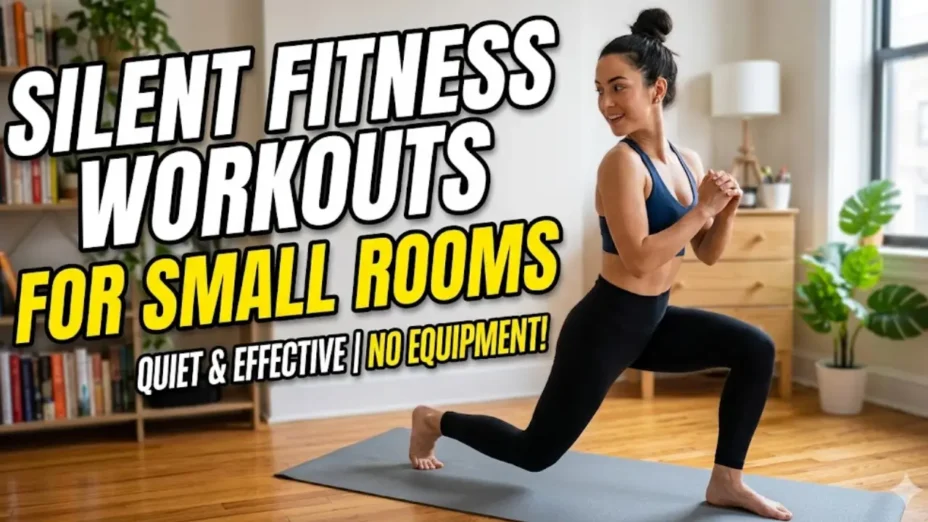
Why Silent fitness Workouts Are Gaining Popularity
Silent fitness workouts have quietly (pun intended) transformed the way people approach fitness, especially in urban environments where space is limited and walls are thin. If you’ve ever hesitated to exercise because you didn’t want to disturb your neighbors or worse, wake up a sleeping family member you’re definitely not alone. The growing demand for low-noise, space-efficient workouts reflects a shift in lifestyle where convenience and consideration go hand in hand.
The Rise of Apartment Living and Noise Concerns
City living has its perks proximity, culture, and convenience but it also comes with constraints. According to recent housing trends, a significant percentage of people now live in apartments or shared housing, where sound travels easily through walls and floors. This reality has made traditional high-impact workouts like jumping jacks or burpees less practical for many.
Think about it: a simple jump can echo like a drumbeat in a downstairs neighbor’s ceiling. That’s enough to make anyone second-guess their fitness routine. This is where silent fitness workouts step in as a smart alternative. Instead of sacrificing exercise altogether, people are turning to controlled, low-impact movements that deliver results without the noise.
The appeal goes beyond avoiding complaints. Silent workouts allow you to exercise anytime early morning or late at night without worrying about disrupting others. This flexibility can be a game-changer for those juggling busy schedules or unconventional work hours.
Fitness Without Disturbing Others
There’s something empowering about knowing you can work out freely without being “that noisy neighbor.” Silent fitness workout routines are designed to be respectful, intentional, and efficient, focusing on quality over intensity of movement. You’re not sacrificing effectiveness you’re refining it.
By eliminating loud, jarring movements, you naturally shift toward controlled muscle engagement, which can actually improve strength and endurance over time. It’s like switching from banging on piano keys to playing a smooth, deliberate melody same instrument, but a much better experience.
Another overlooked benefit is reduced stress. When you’re not worried about noise, your mind stays focused on the workout itself. This leads to better performance and a stronger mind-body connection. And let’s be honest, exercising is a lot more enjoyable when you’re not constantly thinking, “Was that too loud?”
Silent workouts aren’t just a trend they’re a practical evolution in how we stay fit in modern living spaces.
Benefits of Silent Workouts in Small Spaces
Working out in a small room might seem limiting at first glance, but once you understand the advantages, it starts to feel like a hidden superpower. Silent workouts, in particular, are perfectly tailored for compact environments, turning constraints into opportunities.
Space Efficiency and Convenience
One of the biggest perks of silent workouts is how little space they require. You don’t need a full home gym or a garage setup. In fact, a small corner of your room just enough space for a yoga mat is often all you need. This makes it incredibly easy to stay consistent because there’s no setup barrier.
Imagine rolling out of bed, stepping onto your mat, and getting straight into your routine. No commute, no waiting for equipment, no distractions. This level of accessibility removes one of the biggest excuses people have for skipping workouts: lack of time.
Another advantage is the minimal equipment involved. Many silent fitness workouts rely heavily on bodyweight exercises, which means you’re not cluttering your living space with bulky machines. Even when equipment is used, it’s typically compact and easy to store, like resistance bands or light dumbbells.
The convenience extends to cleanup as well. There’s no heavy lifting, no rearranging furniture, and no complicated setups. You can seamlessly integrate your workout into your daily routine without it feeling like a major event.
Mental Focus and Privacy
There’s something uniquely calming about exercising in a quiet environment. Without loud music, pounding footsteps, or external distractions, you’re able to fully tune into your body. This enhances your awareness of each movement, helping you perform exercises with better form and precision.
Silent fitness workouts also create a sense of privacy that’s hard to replicate in a crowded gym. You’re free to move at your own pace, experiment with routines, and focus entirely on your personal goals without feeling self-conscious.
This privacy can be especially beneficial for beginners who might feel intimidated in public fitness spaces. In your own room, there’s no pressure just progress.
Interestingly, quiet workouts can also double as a form of mindfulness practice. The slow, deliberate movements encourage deep breathing and concentration, similar to yoga or meditation. Over time, this can lead to reduced stress levels and improved mental clarity.
In a world that’s constantly noisy and fast-paced, silent workouts offer a refreshing pause—a chance to reconnect with your body and mind while still getting an effective workout.
Essential Equipment for Quiet Workouts
When it comes to building an effective silent workout routine in a small room, the right equipment can make all the difference but here’s the twist: you actually don’t need much. The goal isn’t to turn your bedroom into a full-blown gym; it’s to optimize minimal tools for maximum results while keeping noise to an absolute minimum.
One of the most underrated pieces of equipment is a high-quality exercise mat. It acts like your personal shock absorber, cushioning your movements and preventing vibrations from traveling through the floor. Whether you’re doing planks, glute bridges, or slow mountain climbers, a thick mat ensures your workout stays quiet and joint-friendly. If you’ve ever worked out directly on hardwood or tile, you’ll instantly notice the difference.
Another essential is resistance bands. These lightweight, portable tools are incredibly versatile and completely silent. Unlike traditional weights that can clank or drop, resistance bands create tension smoothly and quietly. You can target almost every muscle group from legs and glutes to arms and back without making a sound. Plus, they’re easy to store in a drawer, which is perfect for small spaces.
Light dumbbells can also be useful, but they require a bit more control. Opt for neoprene-coated weights, as they’re softer and less likely to make noise if they touch the ground. The key here is mindful movement placing weights down gently instead of dropping them.
If you’re looking to elevate your routine, consider slider discs or even a pair of socks on a smooth floor. These allow for fluid, low-impact movements that engage your core and stabilizing muscles without any noise. It’s like turning your floor into a silent training machine.
Low-Noise Fitness Gear
Choosing low-noise gear isn’t just about avoiding complaints it’s about creating a smoother, more controlled workout experience. Equipment that encourages slow, deliberate movement naturally aligns with the principles of silent fitness.
For example, ankle weights can add intensity to leg workouts without requiring any jumping or heavy lifting. Similarly, yoga blocks can enhance stability and deepen stretches, making your workouts more effective without adding complexity.
Here’s a quick comparison of common quiet workout tools:
| Equipment | Noise Level | Space Needed | Best For |
| Resistance Bands | Very Low | Minimal | Full-body strength training |
| Dumbbells | Low | Small | Strength and toning |
| Yoga Mat | None | Minimal | All exercises |
| Slider Discs | None | Minimal | Core and mobility |
| Ankle Weights | Very Low | Minimal | Lower body workouts |
The beauty of these tools is their simplicity. You’re not overwhelmed with choices you’re empowered to focus on execution.
Resistance Bands vs Dumbbells
This is a common debate, especially for people working out in tight spaces: should you go with resistance bands or dumbbells? The answer depends on your priorities, but if silence is your top concern, resistance bands often take the lead.
Resistance bands provide constant tension throughout the movement, which can actually make exercises more challenging despite their lightweight nature. They’re also incredibly forgiving—there’s no risk of dropping them and causing a loud thud. This makes them ideal for beginners and anyone prioritizing quiet workouts.
Dumbbells, on the other hand, offer a more traditional strength training experience. They’re great for progressive overload, but they require more control to keep things silent. If you’re someone who values precision and already has good form, dumbbells can absolutely work in a quiet setting.
Think of it like this: resistance bands are like water fluid, adaptable, and quiet while dumbbells are like stone solid, reliable, but requiring careful handling.
Bodyweight Exercises That Make No Noise
If there’s one category of workouts that perfectly fits the silent fitness lifestyle, it’s bodyweight exercises. No equipment, no setup, and most importantly no noise. But don’t mistake quiet for easy. When done correctly, these exercises can be incredibly challenging and effective.
The secret lies in control and tempo. Instead of rushing through reps, you slow everything down. This not only reduces noise but also increases muscle engagement. It’s like turning every movement into a deliberate act rather than a rushed task.
Controlled Movements for Strength
Controlled strength exercises are the backbone of silent workouts. Think slow squats, push-ups, lunges, and glute bridges. These movements don’t require any jumping or sudden impact, making them perfect for small rooms.
Take the squat, for example. Instead of dropping quickly and bouncing back up, you lower yourself slowly, pause at the bottom, and then rise with control. This eliminates noise and forces your muscles to work harder. It’s a small adjustment with a big payoff.
Push-ups follow the same principle. Lowering yourself slowly and pushing back up with intention not only keeps things quiet but also improves your upper body strength more effectively than rapid repetitions.
Lunges can be performed in place rather than stepping forward or backward, which reduces movement and noise. By focusing on balance and stability, you engage more muscle groups without increasing intensity in a disruptive way.
Core Workouts Without Impact
Core training is where silent workouts truly shine. Most core exercises are naturally low-impact, making them ideal for noise-free routines.
Planks, for instance, are completely silent yet incredibly effective. Holding a plank position engages your entire core, along with your shoulders and legs. Variations like side planks or plank leg lifts can add intensity without adding noise.
Slow mountain climbers are another excellent option. Instead of rapidly switching legs, you move one knee at a time toward your chest in a controlled manner. This keeps the exercise quiet while still providing a solid cardio and core challenge.
Leg raises, dead bugs, and bird dogs are also fantastic choices. These exercises focus on stability and coordination, helping you build a strong core without any impact.
The beauty of core workouts is that they often require you to stay grounded literally. And when your body stays close to the ground, noise becomes a non-issue.
Cardio Without Jumping or Noise
Cardio is often associated with high-energy, high-impact movements jumping jacks, burpees, running in place but none of those are exactly neighbor-friendly. The good news? You can still get your heart rate up without making a sound.
Low-Impact Alternatives
Low-impact cardio is the cornerstone of silent fitness. Exercises like step-backs, slow high knees, and shadow boxing allow you to stay active without leaving the ground.
One effective approach is tempo-based cardio, where you maintain a steady pace rather than going all-out. This keeps your heart rate elevated while minimizing noise. It’s less about explosive bursts and more about sustained effort.
Dance-inspired movements can also work well, as long as you keep them controlled. Think smooth transitions rather than jumps. It’s like dancing in slow motion graceful, deliberate, and quiet.
Another option is isometric cardio, where you hold positions that challenge your endurance. Wall sits, for example, can get your heart pumping without any movement at all.
Walking-in-Place Techniques
Walking in place might sound too simple to be effective, but when done correctly, it can be surprisingly powerful. The key is to add variation and intensity without adding impact.
You can lift your knees higher, engage your arms, or incorporate light resistance like ankle weights. By focusing on form and rhythm, you turn a basic movement into a full-body workout.
Try alternating between slow, controlled steps and slightly faster intervals. This creates a natural rhythm that mimics traditional cardio without the noise.
It’s a bit like turning your room into a treadmill minus the noise, the cost, and the space requirements.
Creating a Silent Workout Routine
Building a silent workout routine isn’t just about picking quiet exercises it’s about designing a system that fits seamlessly into your life and your space. When you’re working out in a small room, every movement, every minute, and every transition matters. The goal is to create a routine that feels natural, efficient, and sustainable, rather than forced or overly structured.
Start by thinking of your workout as a flow rather than a checklist. Instead of jumping from one exercise to another randomly, group movements that complement each other. For example, you might pair lower-body exercises like squats and glute bridges with core movements like planks. This reduces unnecessary repositioning, which can sometimes create noise or disrupt your rhythm.
A balanced silent workout typically includes three main components: strength, core, and low-impact cardio. You don’t need to spend hours on each. Even 30–40 minutes can be incredibly effective if you stay consistent and focused. The trick is to maintain intensity through control rather than speed.
Rest periods are another area where silent workouts differ. Instead of completely stopping, you can incorporate active recovery gentle movements like stretching or slow marching in place. This keeps your heart rate up without introducing noise.
Consistency is what transforms a routine into results. It’s better to do a 20-minute silent workout daily than a loud, intense session once a week that you dread repeating. Over time, your body adapts, and those quiet movements start to deliver noticeable strength and endurance gains.
Structuring a Weekly Plan
Creating a weekly plan helps remove decision fatigue. You’re not waking up and wondering what to do you already have a roadmap. A simple structure might look like alternating focus areas throughout the week while keeping everything low-noise.
For instance, you could dedicate certain days to lower body and core, while others focus on upper body and mobility. The key is balance. Even in a small space, you want to ensure all muscle groups are being worked evenly.
Here’s a simple example of how a silent weekly routine might be structured:
| Day | Focus Area | Workout Type |
| Monday | Lower Body + Core | Strength + Stability |
| Tuesday | Upper Body | Controlled Strength |
| Wednesday | Full Body | Low-Impact Cardio + Core |
| Thursday | Rest or Light Stretching | Recovery |
| Friday | Lower Body | Resistance Band Training |
| Saturday | Core + Mobility | Stability + Flexibility |
| Sunday | Active Recovery | Gentle Movement |
This structure keeps things fresh while ensuring your workouts remain quiet and manageable. It also prevents burnout, which is especially important when you’re working out in the same small space every day.
Timing and Consistency
One of the biggest advantages of silent workouts is flexibility. You’re not bound by gym hours or worried about disturbing others, which means you can choose a time that genuinely works for you.
Some people prefer early mornings when the world is still quiet. Others find late evenings more relaxing. The best time is the one you can stick to consistently. Your body thrives on routine, and having a set workout time helps build that habit.
Consistency also means listening to your body. If you’re feeling fatigued, it’s okay to scale back intensity while maintaining the habit. Silent workouts make this easier because they’re inherently less taxing on your joints.
Think of consistency like compound interest. Each quiet workout may not feel monumental, but over weeks and months, the results add up in a big way.
Tips to Minimize Noise Even Further
Even though silent workouts are designed to be low-noise, a few extra tweaks can make them almost completely undetectable. If you’ve ever worried about creaky floors or thin walls, these tips will give you peace of mind.
Flooring and Mats
Your floor has a more significant impact than you may realize. Hard surfaces like wood or tile can amplify even the smallest movements. That’s why investing in a thick, high-density workout mat is one of the smartest decisions you can make.
If you want to go a step further, consider layering mats or using foam tiles. These act as shock absorbers, reducing both sound and vibration. It’s like putting your workout on mute.
Carpets can also help, but they’re not always enough on their own. Combining a carpeted surface with a mat creates a double layer of noise reduction that’s hard to beat.
Movement Control Techniques
Noise often comes from lack of control, not the exercise itself. Slamming your feet down, dropping your hands, or rushing through reps can all create unnecessary sound.
The solution? Slow everything down. Focus on smooth transitions and deliberate movements. Imagine you’re trying to move as quietly as possible almost like sneaking through a room without waking someone up.
Breathing also plays a role. Controlled breathing helps regulate your pace and keeps your movements steady. When your breath is calm, your body tends to follow.
Another useful trick is to stay grounded. The more your body stays in contact with the floor, the less opportunity there is for noise. Exercises that involve jumping or sudden shifts can usually be modified into quieter versions without losing effectiveness.
Common Mistakes to Avoid in Silent Training
Silent workouts might seem straightforward, but there are a few common pitfalls that can limit your progress if you’re not careful. One of the biggest mistakes is assuming that quiet means easy. Just because you’re not jumping around doesn’t mean you’re not working hard enough.
In fact, the opposite is often true. Silent workouts rely heavily on time under tension, which can be more challenging than high-impact movements. If you rush through exercises or cut corners, you lose that benefit.
Another mistake is neglecting progression. It’s easy to stick with the same routine because it feels comfortable, but your body adapts quickly. To keep improving, you need to gradually increase intensity whether that’s through longer holds, slower reps, or added resistance.
Form is another critical factor. Without the external feedback of a trainer or gym environment, it’s important to stay mindful of your technique. Poor form not only reduces effectiveness but can also lead to discomfort or injury over time.
Some people also underestimate the importance of recovery. Even though silent workouts are low-impact, your muscles still need time to repair and grow. Skipping rest days or pushing too hard can backfire.
Finally, don’t fall into the trap of overcomplicating things. You don’t need dozens of exercises or fancy equipment. Simplicity, when executed well, is far more effective.
Conclusion
Silent fitness workouts for small rooms prove that you don’t need a massive space, expensive equipment, or high-impact movements to stay in shape. With the right approach, even the smallest corner of your home can become a powerful training ground.
By focusing on controlled movements, low-impact cardio, and thoughtful routines, you can achieve impressive results without making a sound. It’s a method that respects both your environment and your body, offering a sustainable way to stay active in today’s space-conscious world.
The beauty of silent workouts lies in their simplicity and adaptability. Whether you’re a beginner or someone looking to refine your routine, this approach meets you where you are and grows with you over time.
FAQs
1. Can silent workouts really help build muscle?
Yes, silent workouts can absolutely build muscle when performed with proper form and controlled tempo. By increasing time under tension and focusing on muscle engagement, you can achieve strength gains comparable to traditional workouts.
2. How long should a silent workout session be?
A typical session can range from 20 to 45 minutes. The key is consistency and intensity through control rather than duration.
3. Are silent workouts suitable for beginners?
They are ideal for beginners because they focus on controlled movements and low-impact exercises, reducing the risk of injury while building a solid foundation.
4. Do I need equipment for silent workouts?
No, many effective silent workouts rely solely on bodyweight exercises. However, tools like resistance bands and mats can enhance your routine.
5. Can I lose weight with silent workouts?
Yes, combining silent strength training with low-impact cardio and a balanced diet can support weight loss over time.