
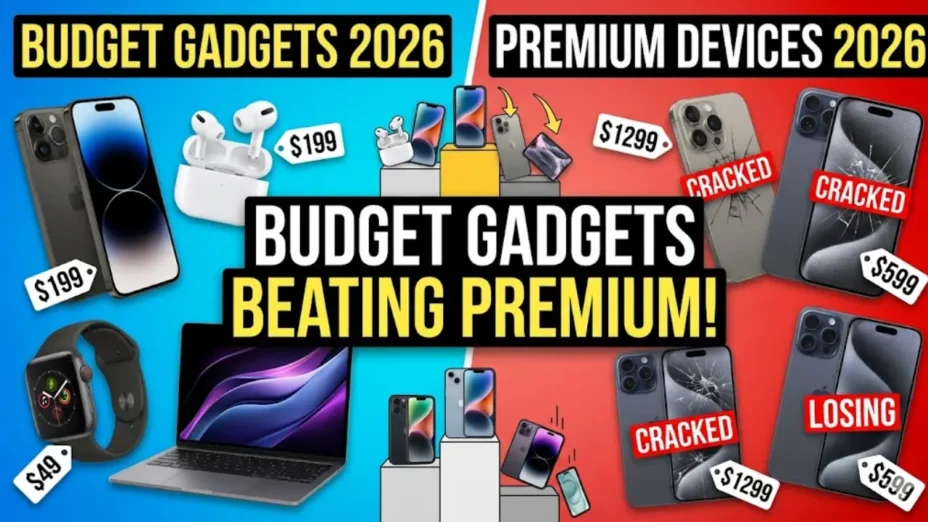
Why Budget Tech Is Winning in 2026
The Shift in Consumer Priorities
Walk into any electronics store in 2026, and you’ll notice something surprising people aren’t automatically reaching for the most expensive gadget anymore. Instead, there’s a quiet but powerful shift happening. Buyers are asking smarter questions: “Does it actually perform better?” “Will I notice the difference?” And most importantly, “Is it worth the extra $800?” More often than not, the answer is no.
The truth is, consumers have become more informed than ever. With endless reviews, comparison videos, and real-world tests flooding the internet, it’s harder for premium brands to justify their high price tags purely through marketing. People now care more about value per dollar rather than brand prestige. It’s a bit like choosing between a luxury restaurant and a hidden local gem sometimes the smaller, cheaper option delivers a far more satisfying experience.
Another key factor driving this shift is economic reality. Inflation, rising living costs, and a more cautious approach to spending have made buyers rethink their tech purchases. Instead of upgrading every year, users want devices that last longer and perform reliably without draining their wallets. Budget gadgets have stepped up to meet that demand, often delivering 90–95% of flagship performance at half the cost.
There’s also a psychological angle to this. Owning a premium device used to feel like a status symbol, but today, being a savvy shopper carries its own kind of pride. Finding a budget gadget that performs just as well if not better feels like beating the system. And honestly, who doesn’t love that?
Innovation Without the Premium Price Tag
If you think budget gadgets are just watered-down versions of premium devices, it’s time to rethink that assumption. In 2026, innovation is no longer exclusive to high-end brands. In fact, many budget manufacturers are moving faster, experimenting more, and taking risks that premium companies often avoid.
Why? Because they have less to lose and more to prove.
Premium brands tend to play it safe. They rely on incremental upgrades slightly better cameras, marginally faster processors, and minor design tweaks while keeping prices sky-high. Budget brands, on the other hand, are aggressively integrating cutting-edge features like AI-powered photography, high refresh rate displays, and ultra-fast charging into their devices without inflating costs.
It’s almost like watching a startup outpace a giant corporation. The smaller players are leaner, more adaptable, and more in tune with what users actually want. Instead of adding flashy features no one uses, they focus on practical improvements that make a real difference in everyday life.
Another reason budget gadgets are thriving is the accessibility of technology. Components that were once exclusive to flagship devices like OLED displays or advanced chipsets—have become cheaper to produce. This trickle-down effect means budget devices can now offer premium-level performance without the premium price.
Think about it this way: a few years ago, having a phone with a 120Hz display or noise-canceling earbuds under $100 seemed impossible. Today, it’s almost expected. That’s not just progress it’s a complete reshaping of the tech landscape.
And here’s the kicker: many users can’t even tell the difference between a budget gadget and a premium one in day-to-day use. When the gap becomes invisible, the cheaper option doesn’t just compete it wins.
What Makes a Gadget “Better” Than Premium?
Performance vs Branding
Here’s a question that might feel a little uncomfortable: are premium gadgets actually better, or are we just conditioned to believe they are? For years, big-name brands have dominated the conversation, convincing us that higher price automatically equals higher quality. But in 2026, that narrative is starting to crack and for good reason.
Performance is no longer exclusive to flagship devices. Budget gadgets now come equipped with powerful processors, optimized software, and efficient hardware integration that rival or even surpass their premium counterparts in everyday use. Think about how you actually use your devices—scrolling social media, streaming videos, replying to messages, maybe some light gaming or work. For these tasks, many budget devices perform just as smoothly, if not better, because they’re optimized for efficiency rather than overloaded with unnecessary features.
Branding, on the other hand, still carries a heavy influence. Premium companies invest billions into marketing, design aesthetics, and ecosystem lock-ins that create a sense of exclusivity. But here’s the catch: that extra money often goes toward perception rather than raw performance. You’re not just paying for the device you’re paying for the logo, the packaging, and the prestige.
Budget brands flip that equation. They cut down on flashy marketing and focus on delivering maximum functionality per dollar. It’s like buying a car that skips the luxury leather seats but gives you a stronger engine and better fuel efficiency. At the end of the day, what matters more?
Interestingly, benchmark tests and user reviews in 2026 are increasingly showing that mid-range processors can handle 95% of real-world tasks without breaking a sweat. Unless you’re doing intensive video editing or high-end gaming, the difference becomes almost impossible to notice. This is where budget gadgets quietly take the lead they deliver what you actually need, not what looks impressive on paper.
Real-World Usability Over Luxury Features
Let’s be honest for a second how many premium features do you actually use? Ultra-high-resolution displays, advanced gesture controls, or niche AI tools might sound impressive during a product launch, but in daily life, they often go untouched. This is where budget gadgets shine, focusing on practical usability rather than flashy extras.
Real-world usability means prioritizing things like battery life, durability, ease of use, and reliability. And surprisingly, many budget devices outperform premium ones in these areas. For example, a budget smartphone might skip a slightly sharper display but offer two-day battery life, which is something users genuinely appreciate. Similarly, affordable earbuds might not have the most advanced spatial audio, but they deliver consistent, high-quality sound without connectivity issues.
Another advantage is simplicity. Premium devices often come packed with features that can feel overwhelming or unnecessary. Budget gadgets tend to streamline the experience, offering a cleaner and more intuitive interface. It’s like comparing a Swiss Army knife with 50 tools to a simple, well-designed kitchen knife you’ll probably reach for the one that just works.
There’s also the issue of durability. Ironically, some premium devices are more fragile due to their glass-heavy designs and slim builds. Budget gadgets, in contrast, often prioritize practical design choices, making them more resilient in everyday situations. And let’s face it—most people would rather have a device that survives a drop than one that looks stunning but cracks easily.
In the end, “better” isn’t about having the most features it’s about having the right features. And that’s exactly where budget gadgets are quietly outperforming their premium rivals.
Top 10 Budget Gadgets Outperforming Premium Devices
1. Budget Smartphones Rivaling Flagships
If there’s one category where budget gadgets are absolutely crushing it in 2026, it’s smartphones. Not long ago, buying a budget phone meant compromising on speed, camera quality, and overall experience. Today? That gap has shrunk so much that many users can’t justify spending over $1,000 on a flagship anymore.
Modern budget smartphones come packed with high-refresh-rate displays (90Hz to 120Hz), powerful mid-range chipsets, and advanced camera systems that deliver stunning results in most lighting conditions. Brands like Xiaomi, Realme, and Samsung’s A-series have redefined what “budget” means, offering devices that handle multitasking, gaming, and media consumption with ease.
One of the biggest game-changers has been software optimization. Instead of relying solely on raw power, budget phones are now designed to run smoothly with efficient resource management. This means fewer slowdowns, better battery life, and a more consistent user experience. In fact, some users report that their mid-range phones feel faster than older flagship models simply because they’re better optimized.
Camera technology is another area where budget phones are punching above their weight. Thanks to AI-powered image processing, even affordable devices can produce sharp, vibrant photos that rival premium models in everyday scenarios. Sure, they might struggle in extreme conditions like low light or professional-grade photography, but for the average user, the difference is negligible.
And then there’s battery life a category where budget phones often dominate. Without power-hungry features, these devices can easily last a full day or even two, something many flagship phones still struggle with. Add fast charging into the mix, and you’ve got a device that’s not just cheaper, but arguably more practical.
Key Features That Close the Gap
What exactly allows budget smartphones to compete so closely with flagship devices? It comes down to a combination of smart engineering and strategic compromises. Instead of trying to match premium devices feature-for-feature, budget phones focus on delivering the essentials exceptionally well.
Here’s a quick comparison to illustrate the point:
| Feature | Budget Smartphones (2026) | Premium Smartphones (2026) |
| Display | 90Hz–120Hz LCD/OLED | 120Hz–144Hz OLED |
| Processor | Efficient mid-range chips | High-end flagship chips |
| Camera | AI-enhanced multi-lens | Advanced pro-grade systems |
| Battery Life | 1–2 days | 1 day (average) |
| Price | $250–$500 | $900–$1,500 |
The table tells a clear story: while premium phones still lead in raw specs, budget devices deliver almost identical real-world performance at a fraction of the cost. For the majority of users, that’s usually sufficient.
And that’s the real reason budget smartphones are winning they don’t try to be everything. They just focus on being exactly what you need.
Budget smartphones in 2026 are incredibly powerful. Brands like Xiaomi, Samsung (A-series), Realme, and OnePlus Nord are delivering phones that feel just as fast as flagship devices.
These phones come with 120Hz displays, strong processors, and impressive cameras, making them perfect for everyday use. Most users won’t even notice a difference unless they’re doing heavy gaming or professional tasks.
Top Budget Smartphone Brands in 2026
| Brand | Popular Model | Key Strength |
| Xiaomi | Redmi Note Series | Battery & value |
| Samsung | Galaxy A Series | Display quality |
| Realme | Narzo Series | Performance |
| OnePlus | Nord Series | Smooth UI |
2. Affordable Wireless Earbuds That Sound Better
Wireless earbuds have become an everyday essential, whether you’re commuting, working out, or just relaxing with your favorite playlist. But here’s the surprising twist: some of the best audio experiences in 2026 aren’t coming from $300 premium earbuds—they’re coming from budget options that cost a third of the price.
Affordable earbuds from brands like Anker Soundcore, EarFun, and Nothing are delivering impressive sound quality, reliable connectivity, and long battery life without the premium markup. In blind listening tests, many users struggle to distinguish between high-end and budget earbuds, especially when it comes to casual listening.
One reason for this is the rapid advancement in audio technology. Features like active noise cancellation (ANC), customizable EQ settings, and low-latency modes are no longer exclusive to premium devices. Budget earbuds now offer these features at a fraction of the cost, making them incredibly appealing to everyday users.
Another area where budget earbuds excel is battery performance. While premium models often focus on sleek design and compact cases, budget options prioritize longevity, offering longer playback times and faster charging. For users who hate constantly recharging their devices, this is a major advantage.
Audio Quality vs Brand Name
When it comes to audio, brand reputation has long been a deciding factor. But in 2026, that’s changing fast. Budget earbuds are proving that you don’t need a luxury logo to enjoy high-quality sound.
The secret lies in tuning and software. Many budget brands collaborate with audio engineers to fine-tune their sound profiles, delivering balanced audio that suits a wide range of listeners. Instead of chasing perfection, they aim for consistency and versatility, which often results in a more enjoyable listening experience.
Of course, premium earbuds still have their strengths, especially in areas like spatial audio and ecosystem integration. But for the average user, these features are more of a bonus than a necessity. What really matters is how the earbuds perform in daily use—and that’s where budget options often come out on top.
It’s a bit like choosing between a gourmet coffee and a well-made cup from a local café. The difference exists, but is it worth triple the price? For the majority, the response is no.
Budget earbuds from Anker Soundcore, EarFun, and Nothing are delivering excellent sound quality. Many include ANC (Active Noise Cancellation) and long battery life.
Best Budget Earbud Brands
| Brand | Highlight |
| Soundcore | Balanced sound |
| EarFun | Great battery |
| Nothing | Stylish design |
3. Budget Smartwatches That Do It All
Smartwatches used to be the ultimate symbol of premium tech sleek, expensive, and often tied to a specific ecosystem. Fast forward to 2026, and that exclusivity has faded. Budget smartwatches are not just catching up; in many ways, they’re redefining what users actually need from a wearable.
Brands like Amazfit, Redmi, and Huawei have pushed the boundaries of affordability by delivering feature-rich smartwatches under $150 that rival devices costing three times as much. These watches offer everything from heart rate monitoring and sleep tracking to blood oxygen levels and stress management. And here’s the interesting part—many users report that the data accuracy is surprisingly close to premium models, especially for everyday fitness tracking.
One aspect in which budget smartwatches frequently surpass premium models is battery life. While flagship smartwatches struggle to last more than a day or two, budget options frequently offer 7 to 14 days of usage on a single charge. That’s not just convenient—it completely changes how you interact with the device. Instead of constantly worrying about charging, you can actually rely on it as a consistent companion.
Another advantage is cross-platform compatibility. Premium watches often lock you into a specific ecosystem, limiting functionality if you’re not using the same brand’s smartphone. Budget smartwatches, on the other hand, are typically more flexible, working seamlessly with both Android and iOS devices. This makes them a smarter choice for users who value freedom over brand loyalty.
Fitness Tracking Without the Price Tag
Fitness tracking is where budget smartwatches really shine. While premium devices boast advanced sensors and detailed analytics, the reality is that most users don’t need that level of precision. Budget watches focus on delivering reliable, easy-to-understand data that helps users stay active and healthy.
For example, step counting, calorie tracking, and heart rate monitoring are now incredibly accurate across most budget devices. Many even include built-in GPS, allowing users to track outdoor activities without carrying their phone. Add in features like guided workouts and personalized insights, and you’ve got a complete fitness solution at a fraction of the cost.
It’s also worth noting that budget smartwatches tend to have simpler, more intuitive interfaces. Instead of overwhelming users with complex metrics, they present data in a way that’s easy to understand and act on. This makes them ideal for beginners or anyone who just wants to stay active without diving into technical details.
In a world where health and fitness are becoming increasingly important, budget smartwatches are proving that you don’t need to spend a fortune to stay on track.
Affordable smartwatches now include heart rate tracking, sleep monitoring, and GPS.
Leading Affordable Smartwatch Brands
Amazfit, Redmi Watch, Huawei Watch Fit
4. Cheap Laptops That Handle Heavy Tasks
Laptops have traditionally been one of the most expensive tech purchases, especially if you need something powerful enough for work, school, or creative tasks. However, in 2026, the situation has changed significantly. Budget laptops are now capable of handling demanding workloads that were once reserved for high-end machines.
Thanks to advancements in processors from companies like AMD and Intel, even affordable laptops now come equipped with multi-core CPUs, integrated GPUs, and fast SSD storage. This means you can run productivity software, edit photos, and even handle light video editing without experiencing frustrating slowdowns.
What’s even more surprising is how well these devices are optimized. Instead of chasing raw power, budget laptops focus on efficiency, ensuring that every component works together seamlessly. The result? A smooth and reliable user experience that meets the needs of most users.
Another factor contributing to their success is the rise of cloud-based tools. With applications like Google Workspace, Figma, and even video editing platforms moving online, the need for ultra-powerful hardware has decreased. Budget laptops are perfectly suited for this new way of working, offering just the right balance of performance and affordability.
Productivity Power on a Budget
When it comes to productivity, budget laptops are quietly outperforming expectations. They may not have the premium build quality or ultra-high-resolution displays of flagship models, but they deliver where it matters most getting work done efficiently.
For students, remote workers, and freelancers, this is a game-changer. Instead of investing thousands of dollars in a high-end laptop, you can get a capable machine for under $700 that handles everyday tasks with ease. And let’s be honest most people don’t need a laptop that can render Hollywood-level graphics. They just need something that works reliably.
Battery life is another area where budget laptops often excel. Without power-hungry components, these devices can last longer on a single charge, making them ideal for on-the-go use. Add in features like lightweight designs and decent build quality, and you’ve got a device that’s both practical and portable.
In many ways, budget laptops are redefining what “good enough” means—and in 2026, good enough is more than enough for most users.
Budget laptops with AMD Ryzen chips handle multitasking easily.
Reliable Budget Laptop Brands
Acer Aspire, Lenovo IdeaPad, ASUS VivoBook
5. Budget Tablets Competing with iPads
Tablets have always been dominated by premium devices, with Apple’s iPad leading the charge. But in recent years, budget tablets have stepped up in a big way, offering impressive performance and versatility at a fraction of the cost.
Devices from brands like Samsung, Lenovo, and Amazon are now equipped with high-resolution displays, powerful processors, and stylus support, making them suitable for both entertainment and productivity. Whether you’re streaming movies, reading eBooks, or taking notes, these tablets deliver a smooth and enjoyable experience.
One of the biggest advantages of budget tablets is their accessibility. Not everyone needs a high-end device with professional-grade features. For casual users, a budget tablet provides everything they need without unnecessary complexity or cost.
Media and Work Capabilities
Budget tablets excel in two key areas: media consumption and light productivity. Their large screens and decent audio quality make them perfect for watching videos, browsing the web, or playing games. And with the addition of accessories like keyboards and styluses, they can easily double as productivity tools.
For students, this is particularly valuable. A budget tablet can replace multiple devices, serving as a notebook, textbook, and entertainment hub all in one. And with cloud storage and syncing, it’s easier than ever to stay organized and productive.
While premium tablets still have an edge in areas like app optimization and build quality, the gap is narrowing. For most users, the difference simply isn’t worth the extra cost.
Affordable tablets now support stylus and keyboards.
Popular Affordable Tablet Brands
Samsung Tab A, Lenovo Tab P series
6. Affordable Smart Home Devices That Outperform
Smart home technology has become increasingly popular, but premium devices often come with high price tags and limited compatibility. Budget smart home gadgets are changing that by offering affordable, flexible, and reliable solutions.
From smart speakers and plugs to security cameras and lighting systems, budget brands are delivering products that are easy to set up and use. And unlike premium ecosystems, which often lock users into a specific brand, budget devices typically support multiple platforms, giving users more control over their setup.
Automation Without Ecosystem Lock-In
One of the biggest frustrations with premium smart home devices is ecosystem lock-in. If you buy into one brand, you’re often forced to stick with it. Budget devices break this cycle by supporting open standards and cross-platform integration.
This means you can mix and match devices from different brands, creating a customized setup that fits your needs. And because these devices are more affordable, it’s easier to experiment and expand your system over time.
In many ways, budget smart home gadgets are making smart living more accessible—and more practical than ever before.
Devices from TP-Link, Wyze, and Xiaomi offer smart automation.
Best Budget Smart Home Brands
TP-Link Kasa, Wyze Cam, Mi Home
7. Budget Gaming Accessories That Enhance Performance
Gaming used to be one of those areas where spending big felt unavoidable. If you wanted precision, responsiveness, and comfort, you were expected to invest in premium gear. But in 2026, that assumption is quietly falling apart. Budget gaming accessories keyboards, mice, headsets, and controllers are delivering performance that rivals high-end brands, often at less than half the price.
Take gaming mice, for example. Budget models now feature high-DPI sensors (up to 16,000 or more), customizable buttons, and ultra-low latency, making them more than capable for competitive play. For most gamers, the difference between a $40 mouse and a $150 one is almost impossible to notice in real-world use. The same goes for mechanical keyboards. Affordable options now come with hot-swappable switches, RGB lighting, and durable builds, offering a premium feel without the premium cost.
Headsets are another category where budget options shine. With advancements in audio drivers and software tuning, many affordable headsets provide clear positional audio and decent noise isolation, which are crucial for immersive gameplay. While premium brands may still have a slight edge in build quality or brand recognition, the performance gap has narrowed to the point where it rarely justifies the price difference.
Precision and Comfort for Less
What really sets budget gaming accessories apart is their focus on delivering the essentials exceptionally well. Instead of adding unnecessary features, these products prioritize comfort, responsiveness, and reliability the things that actually impact your gaming experience.
For instance, ergonomic designs are no longer exclusive to high-end gear. Budget mice and controllers are now designed to fit comfortably in your hand for long gaming sessions, reducing fatigue and improving performance. Similarly, lightweight headsets with breathable materials make extended play much more enjoyable.
Another key advantage is accessibility. Not every gamer is a professional or needs top-tier equipment. Budget accessories make it possible for more people to enjoy a high-quality gaming experience without breaking the bank. And in many cases, these products are built to last, offering excellent value over time.
In the end, gaming is about skill and enjoyment not the price tag of your gear. Budget accessories are proving that you can compete and have fun without spending a fortune.
Brands like Redragon, Logitech (budget line), Razer Essential provide great gaming gear.
Trusted Budget Gaming Brands
Redragon, Logitech G, HyperX Core
8. Cheap Fitness Trackers That Beat Premium Wearables
Fitness trackers have come a long way from simple step counters. In 2026, even the most affordable models are packed with features that rival premium wearables, making them a smart choice for anyone looking to stay active without overspending.
Budget fitness trackers now offer heart rate monitoring, sleep analysis, blood oxygen tracking, and even stress management tools. And while premium devices may provide more detailed insights, the core data provided by budget trackers is often accurate enough for everyday use. For most users, that’s all they really need.
One of the standout advantages of budget fitness trackers is their simplicity. Unlike premium wearables, which can feel overwhelming with their extensive features and apps, budget trackers focus on delivering clear, actionable information. This makes them easier to use and more accessible to a wider audience.
Accuracy and Battery Life Advantages
Accuracy has always been a concern with budget fitness trackers, but recent advancements have significantly improved their reliability. Many devices now use enhanced sensors and algorithms to deliver consistent results, especially for basic metrics like steps, heart rate, and sleep patterns.
Battery life is another area where budget trackers often outperform premium wearables. While high-end smartwatches may need daily charging, budget trackers can last one to two weeks on a single charge. This makes them far more convenient for users who don’t want to constantly worry about battery levels.
It’s also worth noting that budget trackers are typically more durable and lightweight. Without fragile components or complex designs, they’re better suited for everyday wear, whether you’re at the gym, at work, or out exploring.
For anyone looking to improve their health and fitness, budget trackers offer a practical and affordable solution that gets the job done.
Budget trackers like Mi Band and Fitbit Inspire dominate.
Top Affordable Fitness Brands
Xiaomi, Huawei Band, Fitbit
9. Budget Cameras That Rival High-End Models
Cameras have always been a stronghold of premium technology, but even here, budget options are starting to make waves. While professional photographers may still rely on high-end gear, casual users and content creators are increasingly turning to affordable cameras and smartphones that deliver impressive results.
The biggest game-changer has been the integration of AI-powered photography. Budget devices now use advanced algorithms to enhance images, adjust lighting, and improve detail automatically. This means you don’t need to be an expert to capture stunning photos—your device does most of the work for you.
In many cases, budget cameras outperform older premium models simply because they incorporate newer technology. Features like HDR, night mode, and real-time image processing have become standard, allowing users to take high-quality photos in a variety of conditions.
AI Photography Enhancements
AI has completely transformed the way we approach photography. Instead of relying solely on hardware, budget cameras leverage software to deliver results that rival much more expensive devices.
For example, night photography once a major weakness for budget devices—has improved dramatically. AI algorithms can now combine multiple exposures, reduce noise, and enhance details, producing clear and vibrant images even in low light. Similarly, portrait modes have become more accurate, with better edge detection and background blur.
Another advantage is ease of use. Budget cameras are designed to be intuitive, allowing users to capture great photos without adjusting complex settings. This makes them ideal for social media creators, travelers, and anyone who wants to document their life without carrying bulky equipment.
While premium cameras still offer superior control and flexibility, the gap is shrinking. For most users, budget options provide more than enough capability to meet their needs.
Smartphones now act as powerful cameras.
Affordable Camera Brands
Canon entry-level, Sony ZV series (budget range)
10. Affordable Power Banks and Chargers
It might not be the most glamorous category, but power banks and chargers are essential gadgets that can make or break your daily routine. And in 2026, budget options are outperforming premium ones in ways that truly matter.
Affordable power banks now feature high-capacity batteries, fast charging technologies, and multiple ports, allowing you to charge multiple devices quickly and efficiently. Many even support USB-C Power Delivery (PD) and wireless charging, features that were once limited to expensive models.
One of the biggest advantages of budget power banks is their practicality. Instead of focusing on sleek designs or brand prestige, they prioritize functionality and reliability. This means you get a device that does exactly what it’s supposed to do keep your gadgets powered—without unnecessary frills.
Speed and Efficiency Improvements
Charging technology has advanced rapidly, and budget devices have kept up with the pace. Many affordable chargers now support fast charging speeds comparable to premium models, ensuring that your devices are ready to go in no time.
Efficiency is another key factor. Modern power banks are designed to minimize energy loss, delivering more power to your devices while reducing waste. This not only improves performance but also extends the lifespan of the battery.
Safety has also improved significantly. Budget chargers now include overcharge protection, temperature control, and short-circuit prevention, making them just as reliable as their premium counterparts.
In a world where staying connected is more important than ever, budget power solutions are proving that you don’t need to spend big to stay powered up.
Brands like Anker, Baseus, Aukey dominate.
Best Budget Charging Brands
Anker, Baseus, UGREEN
Are Premium Devices Losing Their Edge?
There’s no denying that premium devices still have their place. They often lead in design, cutting-edge innovation, and ecosystem integration. But in 2026, their dominance is no longer absolute. Budget gadgets are closing the gap so quickly that the difference is becoming harder to justify.
For many users, the question is no longer “Can I afford a premium device?” but rather “Do I actually need one?” And increasingly, the answer is no. Budget gadgets are delivering exceptional value, reliable performance, and practical features that meet the needs of most people.
That said, premium devices aren’t going anywhere. They’ll continue to push the boundaries of what’s possible, introducing new technologies that eventually trickle down to budget products. But as that cycle accelerates, the advantage of going premium becomes smaller and shorter-lived.
How to Choose the Right Budget Gadget in 2026
Choosing the right budget gadget isn’t just about picking the cheapest option it’s about finding the best value for your specific needs. Start by identifying what matters most to you. Is it battery life, performance, durability, or features? Once you know your priorities, it becomes much easier to narrow down your options.
It’s also important to do your research. Look at reviews, comparisons, and real-world tests to understand how a device performs in everyday use. Pay attention to user feedback, as it often reveals insights that specs alone can’t provide.
Another tip is to avoid overpaying for features you won’t use. Just because a device offers advanced capabilities doesn’t mean you need them. Focus on what will actually improve your experience.
Finally, consider long-term value. A slightly more expensive budget gadget that lasts longer and performs better may be a smarter investment than the cheapest option available.
Conclusion
The tech landscape in 2026 is more exciting and more accessible than ever before. Budget gadgets are no longer second-tier alternatives; they’re legitimate contenders that often outperform premium devices in real-world scenarios. By focusing on practicality, efficiency, and value, these devices are reshaping the way we think about technology.
For consumers, this shift is empowering. It means you don’t have to spend a fortune to get a great experience. Instead, you can make smarter choices, prioritize what matters, and enjoy technology that fits your lifestyle without stretching your budget.
FAQs
1. Are budget gadgets reliable in 2026?
Yes, most budget gadgets in 2026 are highly reliable, thanks to improved manufacturing processes and better quality control. Many brands now focus on durability and long-term performance, making them a safe choice for everyday use.
2. Do budget devices last as long as premium ones?
In many cases, yes. While premium devices may use higher-end materials, budget gadgets often prioritize efficiency and simplicity, which can result in longer-lasting performance.
3. Is it worth buying premium gadgets anymore?
It depends on your needs. If you require cutting-edge features or are deeply invested in a specific ecosystem, premium devices may still be worth it. Otherwise, budget gadgets often provide better value.
4. What should I look for in a budget gadget?
Focus on performance, battery life, build quality, and user reviews. These factors will give you a better idea of how the device performs in real-world scenarios.
5. Are budget gadgets good for gaming and productivity?
Yes, many budget devices are capable of handling gaming and productivity tasks, especially with advancements in hardware and software optimization.