
What Are Algorithms in the Digital World?
The Basic Definition of Algorithms
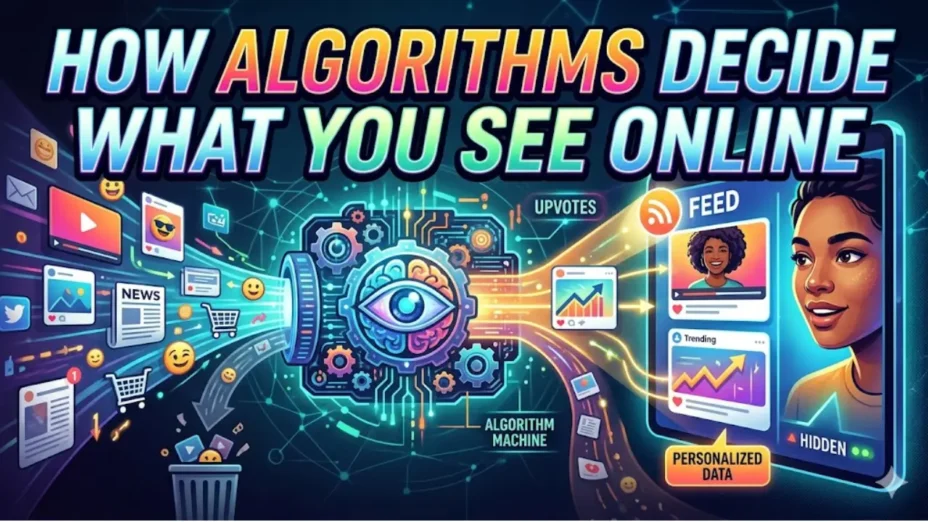
Let’s strip away the technical jargon for a second. At its core, an algorithm is just a set of instructions.Think about this: you and a friend can search the exact same phrase on Google and get slightly different results. That’s not random it’s algorithmic personalization. These systems analyze tons of data points, from your past behavior to your preferences, to predict what you’re most likely to engage with. It’s like having a digital assistant who knows you better than you might expect.
What makes modern algorithms especially powerful is their ability to evolve. They don’t just follow static rules; they learn from patterns. For instance, if you consistently watch cooking videos, the algorithm starts serving you more recipes, chef tips, and even restaurant recommendations. This gradually leads to a highly customized experience.
But here’s the catch: while algorithms aim to make life easier, they also shape your perspective. The content you see isn’t necessarily the most accurate or balanced it’s the content you’re most likely to interact with. That subtle difference matters more than most people realize.
Why Algorithms Matter More Than Ever
Algorithms aren’t just a tech buzzword anymore they’ve quietly become the gatekeepers of information in our daily lives. Whether you’re catching up on news, shopping online, or even looking for a job, algorithms are making decisions that influence your choices. It’s almost like having an invisible editor curating your digital reality 24/7.
The importance of algorithms has skyrocketed because of the sheer volume of content online. Every minute, millions of posts, videos, and articles are uploaded across platforms. Without algorithms, finding relevant content would feel like searching for a needle in a haystack. These systems act as filters, helping you cut through the noise.
However, this is where things become intriguing and somewhat worrisome. Algorithms prioritize engagement. That means content that triggers strong reactions whether it’s excitement, anger, or curiosity is more likely to be pushed to the top. This is why sensational headlines and emotionally charged posts often go viral. The algorithm isn’t necessarily promoting truth; it’s promoting interaction.
From a business perspective, algorithms are gold. Companies use them to keep you on their platforms longer, which translates into more ad revenue. The longer you scroll, the more ads you see. Simple, right? But this also means your attention is being carefully engineered.
So, while algorithms make our online experiences smoother and more personalized, they also raise important questions. Are you truly in control of what you see, or are you being subtly guided? That’s where understanding how algorithms work becomes not just useful but essential.
The Hidden Engine Behind Your Feed
How Platforms Collect Your Data
If you’ve ever wondered how your phone seems to “know” what you want before you even search for it, the answer lies in data collection and lots of it. Every click, pause, swipe, like, and even how long you hover over a post gets quietly recorded. It might feel a little unsettling when you realize it, but this constant stream of behavioral data is the fuel that powers modern algorithms.
Let’s analyze it in a way that is truly understandable. Imagine walking into your favorite café every morning. Over time, the barista remembers your order, your preferred seat, and even your mood based on your expressions. Now scale that up to billions of users, and you’ve got platforms like Facebook, YouTube, and TikTok doing the same thing but with far more precision. They don’t just track what you explicitly tell them; they observe what you do.
Here’s the interesting part: platforms collect both explicit data (like your profile information, interests, and searches) and implicit data (your behavior patterns). For example, if you watch a video halfway and scroll away, that sends a different signal than watching it to the end or rewatching it. These subtle signals often carry more weight than likes or comments because they reflect genuine interest.
According to industry estimates, platforms like Facebook process over 4 petabytes of data daily, which is equivalent to millions of HD movies. That sheer volume allows algorithms to spot patterns that humans could never detect manually. This is how your feed becomes eerily accurate over time.
But there’s a trade-off. While data collection enhances personalization, it also raises questions about privacy and control. Most users aren’t fully aware of how much information they’re giving away or how it’s being used. And once that data is fed into the algorithm, it starts shaping your online experience in ways you might not consciously notice.
Signals That Influence Content Ranking
So now that platforms have all this data, how do they decide what deserves your attention? That’s where ranking signals come into play. Think of these signals as criteria that algorithms use to score and sort content before presenting it to you.
One of the strongest signals is engagement. If a post is getting lots of likes, comments, shares, or watch time, the algorithm assumes it’s valuable and pushes it to more users. But not all engagement is equal. A thoughtful comment or a long watch time usually carries more weight than a quick like. Why? Because it shows deeper interest.
Another major factor is relevance. Algorithms try to match content with your past behavior. If you’ve been interacting with fitness content, don’t be surprised when your feed suddenly fills with workout routines, diet tips, and transformation stories. It’s not coincidence it’s calculated.
There’s also recency, which determines how fresh the content is. Some platforms, like Twitter (now X), prioritize newer posts to keep things timely, while others balance freshness with relevance. Then you’ve got relationship signals, especially on platforms like Facebook. Content from people you frequently interact with friends, family, or favorite creators gets prioritized.
To make things clearer, here’s a quick comparison:
| Signal Type | What It Means | Impact Level |
| Engagement | Likes, shares, comments, watch time | High |
| Relevance | Match with user interests and behavior | High |
| Recency | How recent the content is | Medium |
| Relationships | Interaction with specific users or creators | Medium to High |
| Content Type | Video, image, text preferences | Medium |
What’s fascinating is how these signals interact. A highly engaging but slightly older post might still outrank a fresh one if it’s more relevant to you. Algorithms are constantly balancing these factors, adjusting in real time.
This is why two people can follow the same accounts and still see completely different feeds. The algorithm isn’t just sorting content it’s curating an experience tailored specifically for you.
Social Media Algorithms Explained
Facebook and Instagram Ranking Systems
Facebook and Instagram don’t just show you posts in chronological order anymore and honestly, they haven’t for years. Instead, they rely on sophisticated ranking systems designed to predict what you’ll find most interesting. The goal? Keep you scrolling, engaging, and coming back for more.
At the heart of these platforms is a concept called “meaningful interactions.” Facebook, in particular, has publicly stated that it prioritizes content that sparks conversations think comments, replies, and shares between users. So, a post that gets people talking is far more likely to climb to the top of your feed than one that just collects passive likes.
Instagram, on the other hand, focuses heavily on engagement velocity how quickly a post gains traction after being published. If a photo or reel starts getting likes and comments within minutes, the algorithm interprets that as a sign of quality and boosts its reach. That’s why timing can make a big difference when posting.
Both platforms also consider user relationships. If you frequently interact with someone liking their posts, commenting, or even messaging them their content gets prioritized in your feed. It’s almost like the algorithm is saying, “Hey, you care about this person, so let’s show you more of them.”
Another layer to this is content format preference. If you tend to watch reels more than scrolling through static images, Instagram will serve you more video content. The platform is constantly adapting to your habits, refining your feed with each interaction.
Interestingly, Meta (Facebook’s parent company) revealed that its algorithm uses thousands of signals to rank content. While not all of these are publicly disclosed, it’s clear that the system is far more complex than most users realize.
The takeaway? Your feed isn’t just a random collection of posts it’s a carefully curated stream designed to maximize your engagement.
TikTok’s For You Page Magic
TikTok’s algorithm has become something of a legend and for good reason. It’s incredibly good at figuring out what you want to watch, often before you even realize it yourself. The For You Page (FYP) is where the magic happens, and it’s driven by one of the most advanced recommendation systems in the digital world.
Unlike traditional social platforms, TikTok doesn’t rely heavily on who you follow. Instead, it focuses on content performance and user behavior. This means even a brand-new creator with zero followers can go viral if their video resonates with viewers. That’s a game-changer.
The key metric here is watch time. If people watch your video all the way through or better yet, rewatch it the algorithm takes that as a strong signal of quality. Add in likes, comments, shares, and even whether users click on your profile, and you’ve got a powerful mix of signals driving distribution.
TikTok also categorizes content using hashtags, captions, and audio cues. This helps the algorithm understand what your video is about and who might be interested in it. Once your video is published, it’s shown to a small group of users. If it performs well, it gets pushed to a larger audience, and the cycle continues.
Here’s what sets TikTok apart: its ability to rapidly adapt. Spend just 15 minutes interacting with a specific type of content say, travel videos and your entire feed can shift almost instantly. It’s like the algorithm is learning in real time.
Experts often point out that TikTok’s success lies in its feedback loop. As data scientist Eugene Wei once noted, “TikTok’s algorithm is less about who you know and more about what you enjoy.” That subtle shift has redefined how content spreads online.
Of course, this level of personalization comes with its own set of concerns, especially when it comes to addictive behavior and content bubbles. But there’s no denying that TikTok has set a new standard for algorithm-driven discovery.
Search Engine Algorithms Uncovered
How Google Decides What Ranks First
When you type a query into Google, you probably expect the “best” answer to appear right at the top. But what does ” best” actually signify in this context? Google’s algorithm has spent decades refining that definition, and today it relies on hundreds of ranking factors to decide which pages deserve prime real estate. It’s not just about matching keywords anymore it’s about understanding intent, authority, and usefulness in a deeply nuanced way.
At the core of Google’s system is a concept called PageRank, originally designed to measure the importance of web pages based on backlinks. Consider backlinks as expressions of trust. If many reputable sites link to a page, Google assumes that page has value. But PageRank is just one piece of the puzzle now. Modern algorithms incorporate signals like content quality, mobile usability, page speed, and user experience.
Google also uses natural language processing (NLP) models like BERT and MUM to understand the context behind search queries. This means the algorithm doesn’t just look at the words you type it tries to interpret what you actually mean. For example, searching “best way to fix a leaking tap” will surface practical guides, videos, and step-by-step tutorials, not just pages stuffed with those exact keywords.
Another major factor is E-E-A-T (Experience, Expertise, Authoritativeness, Trustworthiness). Google evaluates whether the content comes from credible sources, especially for sensitive topics like health or finance. This is why expert-written articles and well-established websites tend to rank higher.
Here’s a simplified breakdown:
| Ranking Factor | What It Evaluates | Importance |
| Backlinks | Authority and credibility | High |
| Content Quality | Depth, accuracy, usefulness | High |
| User Experience | Page speed, mobile-friendliness | Medium-High |
| Keyword Relevance | Match with search query | Medium |
| Engagement Metrics | Bounce rate, dwell time | Medium |
Google processes over 8.5 billion searches per day, which means its algorithm must constantly evolve to keep up. Frequent updates like the Helpful Content Update—aim to prioritize content created for humans, not just search engines.
So, when you see a page ranking first, it’s not there by accident. It has passed through a complex filter of signals designed to predict what will satisfy your search the best.
The Role of Keywords and Intent
Keywords used to be the backbone of SEO stuff them into your content, and you’d rank. That strategy doesn’t hold up anymore. Today, it’s all about search intent, which is essentially the “why” behind a user’s query. Are they looking to learn something, buy a product, or find a specific website? Google’s algorithm is remarkably good at figuring that out.
There are typically four kinds of search intent:
- Informational (e.g., “how do algorithms work”)
- Navigational (e.g., “Facebook login page”)
- Transactional (e.g., “buy iPhone online”)
- Commercial Investigation (e.g., “best laptops 2026”)
What’s fascinating is how Google tailors results based on these categories. For informational queries, you’ll often see blog posts, videos, and featured snippets. For transactional searches, product pages and ads dominate the results.
Keywords remain important, but their significance has changed. Instead of focusing on exact matches, algorithms now look for semantic relevance. That means your content should naturally include related terms and concepts. For example, an article about “digital marketing” might also mention SEO, social media, content strategy, and analytics.
Voice search has also changed the game. People now use more conversational queries like, “What’s the best way to improve my website traffic?” Algorithms have adapted by prioritizing content that answers questions clearly and directly.
The shift toward intent-based ranking has made content creation more challenging—but also more rewarding. It forces creators to think about the reader first, which ultimately leads to better, more useful content.
Personalization: Why Your Feed Is Unique
Behavioral Tracking and User Profiles
Ever noticed how your friend’s Instagram feed looks completely different from yours, even if you follow many of the same accounts? That’s personalization at work. Algorithms build detailed user profiles based on your behavior, creating a digital version of you that evolves over time.
This profiling goes far beyond basic demographics. Sure, platforms might know your age, location, and language, but the real magic lies in behavioral tracking. Every action you take—what you click, how long you watch, what you ignore feeds into a constantly updating model of your preferences.
Think of it like a Spotify playlist that keeps refining itself. The more you listen, the better it gets at predicting your taste. Similarly, algorithms analyze patterns to anticipate what you’ll engage with next. If you suddenly start interacting with fitness content, your feed will quickly pivot in that direction.
What’s particularly interesting is how fast this adaptation happens. Studies suggest that platforms can significantly refine user profiles within just a few hours of activity. That’s why a single deep dive into a new topic like watching several travel videos can reshape your recommendations almost instantly.
However, this level of personalization isn’t just about convenience. It’s also about retention. The more relevant your feed feels, the longer you stay on the platform. And the longer you stay, the more valuable you become from an advertising perspective.
While personalization enhances user experience, it also raises an important question: are you discovering new ideas, or just seeing more of what you already like?
Filter Bubbles and Echo Chambers
Here’s where things get a bit tricky. While personalization makes your feed more enjoyable, it can also create what experts call filter bubbles and echo chambers. These are environments where you’re primarily exposed to information that aligns with your existing beliefs and interests.
Imagine living in a world where everyone agrees with you. Sounds comfortable, right? But it can also limit your perspective. Algorithms, by design, prioritize content you’re likely to engage with—which often means content you already agree with. Over time, this reinforces your views and filters out opposing opinions.
This phenomenon has real-world implications. Research has shown that algorithm-driven content can contribute to political polarization and misinformation. When users are repeatedly exposed to one-sided narratives, it becomes harder to see the bigger picture.
Social platforms have started acknowledging this issue. Some have introduced features to diversify content or allow users to customize their feeds. But the challenge remains: balancing personalization with exposure to diverse viewpoints.
From a user perspective, being aware of filter bubbles is the first step. Actively seeking out different perspectives, following a variety of sources, and questioning what you see can help break out of these digital echo chambers.
Algorithms aren’t inherently biased but the data they learn from can be. And since that data often reflects human behavior, the results can sometimes amplify existing biases rather than challenge them.
The Role of AI and Machine Learning
How AI Improves Algorithm Accuracy
Artificial Intelligence has taken algorithms from simple rule-based systems to incredibly sophisticated decision-makers. In the early days of the internet, algorithms followed straightforward instructions: if X happens, show Y. Today, they rely on machine learning models that continuously improve based on data.
Machine learning allows algorithms to identify patterns that humans might miss. For instance, an AI model can analyze millions of interactions to determine which types of content perform best under specific conditions. It’s like having a system that learns from experience—except it processes information at a scale that’s hard to comprehend.
One of the biggest advantages of AI is its ability to adapt in real time. If user behavior shifts—say, a sudden surge in interest around a global event the algorithm can quickly adjust and prioritize relevant content. This responsiveness is what makes modern platforms feel so dynamic.
AI also helps reduce noise. With billions of pieces of content uploaded daily, algorithms must filter out low-quality or irrelevant material. Machine learning models can assess factors like originality, coherence, and engagement potential to rank content more effectively.
But accuracy doesn’t mean perfection. AI systems are only as good as the data they’re trained on. If the data contains biases, those biases can be reflected in the algorithm’s decisions. That’s why ongoing refinement and oversight are crucial.
Deep Learning and Predictive Models
Taking things a step further, deep learning has revolutionized how algorithms understand and predict user behavior. Unlike traditional machine learning, deep learning uses neural networks inspired by the human brain to process complex data.
These models excel at recognizing patterns in unstructured data like images, videos, and text. That’s how platforms can automatically tag photos, recommend videos, or even generate captions. It’s not just about analyzing what you’ve done; it’s about predicting what you’ll do next.
Predictive models are at the heart of recommendation systems. They analyze past behavior to forecast future actions. For example, Netflix uses predictive algorithms to suggest shows you’re likely to enjoy, while Amazon recommends products based on your browsing history.
What’s fascinating is how these models handle uncertainty. They don’t just make binary decisions they assign probabilities. So instead of saying, “You will like this video,” the algorithm says, “There’s an 85% chance you’ll engage with this.” That probabilistic approach allows for more nuanced recommendations.
As deep learning continues to evolve, algorithms are becoming more intuitive and human-like in their decision-making. But with that power comes responsibility. Ensuring transparency and fairness in these systems is one of the biggest challenges facing the tech industry today.
The Business Behind Algorithms
Advertising and Revenue Models
If you follow the money, you’ll understand the algorithm. That might sound a bit blunt, but it’s surprisingly accurate. Most major platforms Google, Facebook, Instagram, TikTok are not just tech companies; they are advertising ecosystems. Their algorithms aren’t only designed to show you relevant content; they’re engineered to keep your attention long enough to monetize it.
Here’s how it works in practice. The longer you stay on a platform, the more ads you see. The more ads you see, the more revenue the platform generates. Simple equation, right? But achieving that “longer stay” requires highly optimized algorithms that can predict what will hook you. That’s why you’ll often find yourself scrolling far longer than you intended it’s not accidental, it’s strategic.
Advertising models rely heavily on targeting precision. Platforms use your data interests, behavior, demographics to match you with ads that are most likely to resonate. According to industry reports, targeted ads can increase conversion rates by up to 300% compared to non-targeted ones. That’s a massive incentive for companies to refine their algorithms continuously.
There are generally two main types of ads you’ll encounter:
- Display Ads: Banner-style ads shown across websites and apps.
- Native Ads: Ads that blend seamlessly into your feed (like sponsored posts).
Native ads are particularly effective because they feel less intrusive. You might not even realize you’re looking at an ad until you notice the small “Sponsored” label. That subtlety is intentional it increases engagement while maintaining the illusion of organic content.
Another layer to this system is real-time bidding (RTB). Every time an ad space becomes available, advertisers compete in milliseconds to display their ad to you. The winner is determined by a combination of bid amount and relevance score, which is influenced by how likely you are to engage.
So, while algorithms enhance user experience, they’re also deeply tied to profit. Your attention isn’t just valuable it’s the product being sold.
Sponsored Content vs Organic Reach
If you’ve ever posted something online and wondered why it didn’t get much visibility, you’ve already encountered the tension between organic reach and paid promotion. Algorithms don’t treat all content equally, and understanding this difference can completely change how you approach digital platforms.
Organic reach indicates the amount of individuals who view your content without any paid advertising. Years ago, organic reach was relatively high. You could post something on Facebook, and a large percentage of your followers would see it. Today, that number has dropped significantly sometimes to below 5% for business pages.
Why the decline? Because platforms prioritize content that generates revenue. By limiting organic reach, they encourage users and businesses to invest in paid advertising. It’s a subtle but powerful shift.
Here’s a quick comparison:
| Aspect | Organic Content | Sponsored Content |
| Cost | Free | Paid |
| Reach | Limited and algorithm-dependent | گسترده and targeted |
| Visibility Speed | Gradual | Immediate |
| Control | Low | High |
| Audience Targeting | General (followers or algorithm-based) | Highly specific |
That doesn’t mean organic content is dead it just means it needs to be strategic. High-quality, engaging, and timely posts can still perform well, especially if they generate strong early interactions. But relying solely on organic reach in today’s algorithm-driven landscape is like trying to shout in a crowded room.
For creators and businesses, the key is balance. Use organic content to build authenticity and trust, and paid content to amplify reach. Algorithms reward consistency, engagement, and relevance whether the content is sponsored or not.
Controversies and Ethical Concerns
Bias in Algorithms
Algorithms are often seen as neutral, objective systems but that perception doesn’t always hold up. In reality, algorithms can reflect and even amplify human biases embedded in the data they’re trained on. It’s a classic case of “garbage in, garbage out.” If the input data is skewed, the output will be too.
Take hiring algorithms, for example. Some companies have experimented with AI tools to screen job candidates, only to discover that the system favored certain demographics over others. Why? Because it was trained on historical hiring data that already contained bias. The algorithm didn’t invent the bias it learned it.
Social media platforms face similar challenges. Content moderation algorithms may unintentionally favor certain viewpoints or suppress others, depending on how they’re trained. This can influence public discourse in subtle but significant ways.
Even recommendation systems can exhibit bias. If an algorithm consistently promotes certain types of content—whether it’s based on popularity, engagement, or advertiser preferences it can create an uneven playing field for creators. Smaller voices may struggle to gain visibility, while established accounts dominate the space.
Tech companies are aware of these issues and are investing in fairness and accountability measures. But solving algorithmic bias isn’t straightforward. It requires ongoing monitoring, diverse data sets, and transparent practices.
For users, understanding that algorithms aren’t perfectly neutral is crucial. It encourages a more critical approach to the content you consume and the systems that deliver it.
Privacy Issues and Data Misuse
Let’s address the obvious issue: privacy. The same data that powers personalized experiences can also be a source of concern. When platforms collect vast amounts of information about users, questions about how that data is stored, shared, and used become unavoidable.
One of the biggest controversies in recent years involved the misuse of user data for political advertising. Incidents like these have sparked global debates about data protection and user consent. Regulations such as the GDPR in Europe and CCPA in California aim to give users more control over their data, but enforcement and compliance remain ongoing challenges.
What makes privacy issues particularly tricky is the trade-off involved. Personalized services rely on data collection. Without it, algorithms wouldn’t be able to tailor content effectively. But with it, users risk losing control over their personal information.
Many platforms now offer settings that allow you to manage your data things like ad preferences, activity tracking, and account permissions. But let’s be honest: how many people actually dive into those settings and adjust them?
Experts often emphasize the importance of data literacy. Knowing what information you’re sharing and how it’s used can help you make more informed decisions. As cybersecurity expert Bruce Schneier once said, “Data is the pollution problem of the information age.” It’s a powerful analogy data, like pollution, can have unintended consequences if not managed properly.
How You Can Influence Algorithms
Smart Ways to Train Your Feed
Here’s the good news: you’re not completely at the mercy of algorithms. In fact, you have more control than you might think. Every action you take online sends signals that shape your future experience. In a way, you’re constantly “training” the algorithm whether you realize it or not.
Start with something simple: engage intentionally. If you want to see more of a certain type of content, interact with it like, comment, share, or watch it. On the flip side, if there’s content you don’t enjoy, avoid engaging with it. Even negative interactions can signal interest.
Most platforms also offer tools to refine your feed. You can:
- Mute or unfollow accounts
- Mark content as “not interested”
- Follow new topics or creators
- Adjust notification preferences
These small actions can have a surprisingly big impact over time. Think of it like steering a ship—you don’t need to make drastic changes; consistent, subtle adjustments will gradually shift your direction.
Another effective strategy is diversifying your interactions. Engage with a variety of content to avoid falling into a narrow content bubble. This not only improves your feed but also broadens your perspective.
The key takeaway? Algorithms respond to behavior. If you’re mindful of your actions, you can shape a more balanced and enjoyable digital experience.
Content Creation Tips for Visibility
If you’re on the other side creating content rather than just consuming it understanding algorithms becomes even more valuable. Visibility isn’t just about luck; it’s about aligning your content with the signals algorithms prioritize.
First, focus on quality and engagement. Content that sparks conversation or holds attention tends to perform better. Ask questions, tell stories, and create value for your audience. Remember, algorithms are designed to detect what resonates with people.
Timing also matters. Posting when your audience is most active increases the chances of early engagement, which can boost your content’s reach. Consistency is another key factor. Regular posting signals reliability and keeps your audience engaged.
Don’t overlook format optimization. Different platforms favor different types of content short videos on TikTok, reels on Instagram, long-form articles on LinkedIn. Tailoring your content to the platform can make a significant difference.
Finally, pay attention to analytics. Most platforms provide insights into how your content is performing. Use that data to refine your strategy over time.
Success with algorithms isn’t about gaming the system it’s about understanding it and working.
The Future of Algorithms
Emerging Trends in AI and Personalization
Algorithms are evolving at a pace that’s hard to keep up with, and the future looks even more personalized, predictive, and immersive. One of the biggest trends shaping this evolution is the rise of context-aware AI. Instead of just analyzing past behavior, future algorithms will consider real-time context your location, time of day, mood (inferred from behavior), and even environmental factors.
Another emerging trend is multimodal AI, which can process text, images, audio, and video simultaneously. This means algorithms will better understand complex content and deliver more nuanced recommendations. Imagine searching for something and getting results that combine video tutorials, written guides, and interactive elements seamlessly.
We’re also seeing a shift toward decentralized platforms and user-controlled data. Technologies like blockchain are being explored as ways to give users more ownership over their information. While still in early stages, this could fundamentally change how algorithms operate.
Voice assistants and wearable tech are adding another layer. As devices become more integrated into daily life, algorithms will have access to even richer data streams making personalization more precise than ever.
The direction is clear: algorithms are becoming less reactive and more predictive, anticipating needs before they’re explicitly expressed.
Will Algorithms Become More Transparent?
Transparency has become a major talking point in the world of algorithms. Users are increasingly asking, “Why am I seeing this?” and platforms are starting to respond. Features that explain why certain content appears in your feed are becoming more common, still limited.
The challenge lies in complexity. Modern algorithms are incredibly intricate, often involving millions of parameters. Explaining them in a way that’s both accurate and understandable isn’t easy. Still, there’s growing pressure from regulators and the public for greater openness.
Some experts argue that full transparency might not even be ideal. If algorithms were completely exposed, they could be manipulated more easily. It’s a delicate balance between openness and security.
What seems more likely is controlled transparency giving users insights without revealing every detail. This could include clearer explanations, better control settings, and more accountability measures.
As algorithms continue to shape our digital experiences, the demand for transparency will only grow. And how companies respond could define the next era of the internet.
Conclusion
Algorithms are no longer just background code quietly running behind your favorite apps they are powerful decision-makers shaping what you see, think, and even feel online. From social media feeds to search engine results, these systems analyze vast amounts of data to deliver content tailored specifically to you. While this personalization makes digital experiences more convenient and engaging, it also introduces challenges around bias, privacy, and control.
Understanding how algorithms work isn’t just for tech experts it’s essential for anyone navigating the modern internet. The more aware you are of how your actions influence these systems, the more control you gain over your digital environment. Whether you’re a casual user or a content creator, recognizing the mechanics behind algorithms can help you make smarter choices and avoid common pitfalls like echo chambers.
As technology continues to evolve, algorithms will only become more sophisticated. The key is to stay informed, stay curious, and approach your online experience with a critical eye.
FAQs
1. Do algorithms control everything I see online?
Not entirely. While algorithms heavily influence what appears in your feed or search results, you still have control through your interactions, settings, and choices. They guide your experience—but don’t completely dictate it.
2. Can I reset or change my algorithm?
Yes, in a way. By changing your behavior engaging with different content, unfollowing accounts, or clearing search history you can gradually reshape your recommendations.
3. Are algorithms biased?
They can be. Algorithms learn from data, and if that data contains biases, the outcomes may reflect them. This is an ongoing challenge in AI development.
4. Why do I keep seeing the same type of content?
Because algorithms prioritize content similar to what you’ve interacted with before. It’s designed to keep you engaged, but it can also create repetitive patterns.
5. Do ads influence algorithm recommendations?
Yes, indirectly. Algorithms prioritize content that keeps you engaged, which often aligns with advertising goals. Sponsored content is also integrated into your feed based on targeting data.