
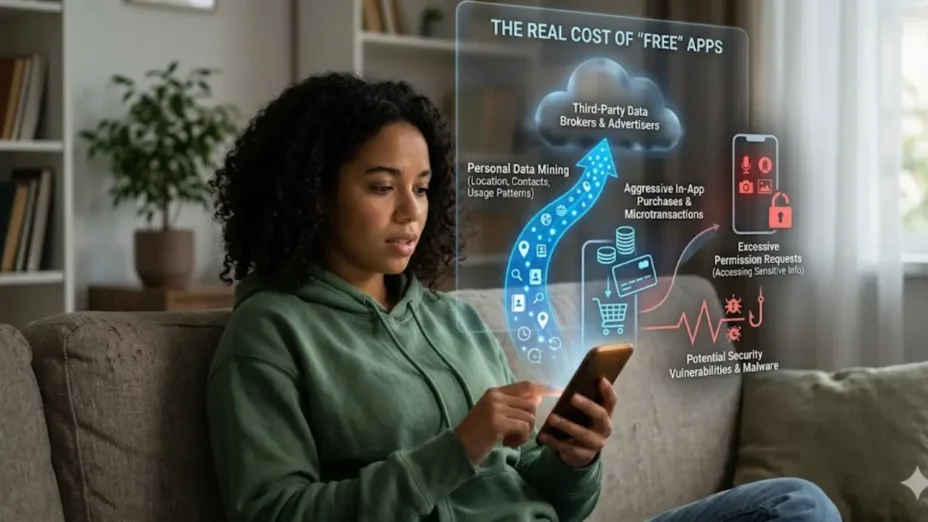
What “Free” Really Means in the Digital Economy
The Illusion of Zero Cost
Let’s be honest when you see the word “free”, it feels like a win. No credit card, no commitment, just tap download and you’re in. But here’s the uncomfortable truth: in the digital world, nothing is truly free. If you’re not paying with money, you’re paying with something else and that “something” is often far more valuable than a few dollars.
Free apps operate on a subtle exchange system. Instead of charging upfront, they monetize your attention, behaviour, and personal data. Think of it like walking into a store where everything looks free, but cameras track every move you make, noting what you pick up, what you ignore, and how long you linger. That information is then sold or used to influence your future decisions.
This model thrives because it feels frictionless. There’s no barrier to entry, so millions of users flock to these apps without a second thought. But behind the scenes, companies are building incredibly detailed profiles about you your habits, preferences, location, and even your emotional triggers.
What makes this illusion even more powerful is how normalized it has become. Most users don’t question why a sophisticated app with constant updates and support costs nothing. But developing and maintaining software is expensive. So if you’re not funding it directly, someone else is and they expect a return on that investment.
The real cost of free apps isn’t visible on your bank statement. It’s hidden in the background, quietly accumulating in ways that affect your privacy, your time, and even your behavior.
How Free Apps Became the Norm
Rewind a couple of decades, and software wasn’t free at all. You paid upfront sometimes a hefty price for programs you installed on your computer. Then smartphones entered the scene, and everything changed. The app ecosystem exploded, and with it came intense competition. Developers needed a way to attract users quickly, and free apps became the ultimate hook.
The rise of app stores created a winner-takes-all environment. If your app wasn’t free, users would simply download a competitor’s version that was. This pushed developers toward alternative revenue models like advertising, freemium features, and data monetization.
At the same time, big tech companies realized that user data could be incredibly profitable. Platforms like Google and Facebook built empires by offering free services while collecting vast amounts of user information. This approach trickled down to smaller app developers, creating an ecosystem where “free” became the default expectation.
There’s also a psychological angle. People are far more likely to try something if there’s no financial risk. Free apps remove hesitation, making it easy for users to experiment. But once they’re hooked, monetization strategies kick in ads, upgrades, subscriptions, and more.
This shift didn’t happen overnight, but now it’s deeply ingrained. Today, paying upfront for an app almost feels unusual. That’s precisely why the system works so well. Users rarely question it anymore, even though the trade-offs are more significant than ever.
The Data Economy Behind Free Apps
Your Data as Currency
Imagine walking into a café where you don’t pay for your coffee but instead, you hand over your phone, your browsing history, and a record of your daily habits. Sounds absurd, right? Yet that’s essentially what happens every time you use many free apps.
In today’s digital economy, data is currency. Companies collect information about you and turn it into profit, often in ways you never see. Your likes, clicks, search history, location, and even how long you pause on a post all contribute to a detailed digital profile. This profile is incredibly valuable to advertisers who want to target you with precision.
According to recent industry estimates, the global data economy is worth hundreds of billions of dollars annually, and it continues to grow rapidly. Free apps are one of the primary sources feeling this system. They act as data collection engines, constantly gathering insights about user behaviour.
What’s fascinating and a bit unsettling is how invisible this process is. You don’t feel like you’re paying for anything. There’s no notification saying, “You just exchanged your browsing habits for this feature.” It all happens quietly in the background.
The trade-off might seem harmless at first. After all, what’s the big deal if an app knows your favourite restaurants or the music you listen to? But when this data is aggregated and analyzed, it reveals patterns that can predict your behaviour, influence your decisions, and even shape your opinions.
So while the app itself might be free, the value you’re giving away can far exceed what you would have paid upfront.
How Companies Collect and Use Your Information
The way free apps collect data isn’t always obvious. It’s not just about what you type or search it’s about everything you do. From the moment you install an app, it can start gathering information through permissions, trackers, and embedded analytics tools.
For example, when an app asks for access to your location, contacts, or camera, it’s not always strictly necessary for functionality. Sometimes, it’s about building a richer data profile. Even seemingly harmless permissions can reveal a lot when combined with other data points.
Many apps also use third-party trackers. These are pieces of code that send your data to external companies, often advertisers or analytics firms. That means your information isn’t just staying within one app it’s being shared across an entire network.
Here’s a quick look at common data collection methods:
| Data Type | How It’s Collected | Purpose |
| Location | GPS, Wi-Fi signals | Targeted ads, user insights |
| Behaviour | Clicks, time spent | Personalization, engagement |
| Device Info | IP address, OS | Tracking and analytics |
| Contacts | User permission | Network expansion |
Once collected, this data is analyzed using algorithms to predict what you’re likely to do next. That’s how apps can recommend products, show relevant ads, and keep you engaged.
The real issue isn’t just collection it’s control. Most users have little visibility into how their data is used or who it’s shared with. And once it’s out there, it’s nearly impossible to get it back.
Hidden Financial Costs Users Overlook
In-App Purchases and Microtransactions
At first glance, free apps feel like a bargain you download them, use them, and spend nothing. But then comes the subtle nudge: a locked feature here, a bonus there, maybe a “limited-time offer” that feels too good to ignore. Before you know it, you’re making small purchases that barely register in the moment but quietly stack up over time. This is the world of in-app purchases and microtransactions, and it’s one of the most effective monetization strategies in modern apps.
The psychology behind this model is surprisingly clever. Instead of asking for a large upfront payment, apps break costs into tiny, digestible chunks $0.99 here, $2.99 there. These amounts feel insignificant individually, which lowers resistance. But over weeks or months, users can end up spending far more than they would have on a paid app. Games are particularly notorious for this, offering virtual currencies, cosmetic upgrades, or “time-saving” boosts that accelerate progress.
There’s also a strong emotional component at play. Many apps are designed to create friction waiting times, limited resources, or locked content then offer paid solutions to remove that friction. It’s like being handed a problem and then sold the solution moments later. This design approach isn’t accidental; it’s engineered to maximize engagement and spending.
What makes microtransactions especially tricky is their invisibility. Unlike a one-time purchase, they don’t feel like a commitment. But when you review your spending history, the total can be surprising. In some cases, users report spending hundreds or even thousands of dollars without realizing how quickly it added up.
So while the app itself may be free, the financial cost can sneak up on you in ways that feel almost effortless and that’s exactly the point.
Subscription Traps and Freemium Models
If microtransactions are the slow drip, subscriptions are the silent drain. Many free apps today operate on a freemium model, where basic features are free but premium functionality requires a recurring subscription. At first, this seems reasonable you get to try the app before committing. But the transition from free to paid is often designed to be as seamless and as unnoticed as possible.
Free trials are a common entry point. You sign up for a 7-day or 30-day trial, explore the premium features, and then forget to cancel. Suddenly, you’re billed automatically, and unless you’re actively monitoring your subscriptions, it can continue for months. According to recent consumer reports, a significant percentage of users forget about at least one active subscription they’re paying for.
What makes this model particularly effective is how it leverages habit. Once an app becomes part of your daily routine whether it’s for fitness, productivity, or entertainment it’s harder to let go. The idea of losing access to features you’ve grown accustomed to creates a subtle pressure to keep paying.
Some apps also blur the line between essential and premium features. They might offer just enough functionality for free to keep you engaged, but reserve the most useful tools behind a paywall. This creates a sense of dependency, where upgrading feels less like a choice and more like a necessity.
The real issue isn’t that subscriptions exist it’s that they’re often designed to be easy to start and easy to forget. Over time, these recurring charges can add up to a significant monthly expense, all stemming from apps that initially promised to cost nothing.
Privacy Trade-Offs You Might Not Notice
Tracking, Cookies, and Behavioural Monitoring
Every tap, swipe, and scroll you make inside a free app tells a story and someone is always listening. Tracking technologies, including cookies and behavioral monitoring tools, are embedded deeply within many apps, quietly observing how you interact with content. The goal? To grasp your perspective even more deeply than you do.
This tracking isn’t limited to what you do within a single app. Many platforms use cross-app tracking, meaning your behaviour in one app can influence what you see in another. Ever searched for a product and then seen ads for it everywhere? That’s not coincidence it’s a coordinated system of data sharing and analysis.
Behavioural monitoring goes even deeper. Apps can track how long you pause on a piece of content, what you skip, and even how quickly you scroll. These micro-interactions help build a detailed psychological profile, allowing companies to predict your preferences and tailor content accordingly.
While this level of personalization can feel convenient, it comes with a trade-off. You’re essentially giving up a degree of privacy and autonomy in exchange for a smoother user experience. And because this tracking happens in the background, it rarely feels intrusive until you stop and think about it.
There’s also the issue of consent. Many users agree to tracking through lengthy terms and conditions without fully understanding what they’re accepting. The language is often complex, making it difficult to grasp the full extent of data collection.
In the end, the cost isn’t just about data it’s about how that data is used to influence your decisions, shape your preferences, and keep you engaged longer than you intended.
Third-Party Data Sharing Risks
When you share data with a free app, you might assume it stays within that app. But in reality, your information often travels far beyond its original destination. Third-party data sharing is a common practice, where apps pass user data to external companies for advertising, analytics, or other purposes.
This creates a complex web of data exchange that’s difficult to track. Your information might be shared with multiple entities, each with its own privacy policies and security standards. And once your data is out there, controlling it becomes nearly impossible.
The risks aren’t just theoretical. Data breaches and leaks have exposed millions of users’ personal information in recent years. Even well-known companies aren’t immune, which raises important questions about how securely your data is being handled.
There’s also the issue of data aggregation. When multiple sources combine their data, they can create highly detailed profiles that reveal sensitive information your habits, preferences, and even potential vulnerabilities. This level of insight can be used for targeted advertising, but it can also be exploited in less ethical ways.
What makes third-party sharing particularly concerning is its lack of transparency. Most users have no clear way of knowing who has access to their data or how it’s being used. It’s like handing out copies of your personal diary without knowing who’s reading it.
So, while free apps offer convenience, they often come with hidden privacy risks that extend far beyond the app itself, affecting how your data is stored, shared, and potentially exposed.
The Psychological Cost of Free Apps
Addiction by Design
If you’ve ever found yourself mindlessly scrolling through an app long after you intended to stop, you’re not alone and it’s not accidental. Many free apps are deliberately designed to be addictive, using psychological principles to keep you engaged for as long as possible.
This design approach often includes features like infinite scrolling, autoplay videos, and constant notifications. These elements remove natural stopping points, making it harder to disengage. It’s like being on a treadmill that never slows down you keep going because there’s no obvious reason to stop.
Developers use behavioural psychology to create habits. By rewarding users with likes, comments, or new content at unpredictable intervals, apps tap into the same mechanisms that make gambling addictive. This element of surprise encourages users to return, anticipating the next benefit.
The cost here isn’t financial or even directly related to privacy it’s about time and attention. Hours spent on apps can take away from more meaningful activities, affecting productivity, relationships, and overall well-being.
What’s particularly striking is how normalized this has become. People often joke about being “addicted” to their phones, but the underlying reality is more serious. These apps are competing for your attention in an increasingly crowded digital landscape, and they’re using every tool available to win.
Understanding this design strategy is the first step toward regaining control. Because once you see how the system works, it becomes easier to recognize when you’re being pulled in and to decide whether it’s worth the cost.
Dopamine Loops and User Retention Strategies
At the heart of app addiction lies a powerful chemical: dopamine. This neurotransmitter plays a key role in motivation and reward, and free apps are expertly designed to trigger it. Every notification, like, or new piece of content delivers a small dopamine hit, reinforcing the behaviour and encouraging you to come back for more.
This creates what’s known as a dopamine loop. You engage with the app, receive a reward, feel good, and then repeat the process. Over time, this loop becomes ingrained, turning casual use into habitual behaviour.
Retention strategies go hand in hand with this. Apps use reminders, streaks, and personalized content to keep users engaged. For example, a fitness app might track your daily activity and encourage you to maintain a streak, while a social media platform might highlight new interactions to draw you back in.
These strategies aren’t inherently harmful, but they can become problematic when they start to dominate your attention. The constant pull of notifications and updates can make it difficult to focus on other tasks, leading to a fragmented attention span.
There’s also an emotional aspect. Apps often tap into social validation, making users feel connected and valued. While this can be positive, it can also create dependency, where self-worth becomes tied to digital interactions.
The real cost here is subtle but significant. It’s about how your behavior is shaped over time, often without your conscious awareness. And while the app remains free, the influence it has on your habits and mindset can be far-reaching.
Impact on Device Performance and Security
Battery Drain and Background Activity
Free apps don’t just consume your time they can also drain your device’s resources in ways you might not notice immediately. Many apps continue running in the background even when you’re not actively using them, performing tasks like data syncing, location tracking, and updating content. This constant activity can lead to increased battery consumption and reduced device performance.
It’s a bit like leaving multiple appliances running in your home all day. Individually, they might not seem significant, but together they add up. Similarly, a handful of free apps running in the background can noticeably impact your phone’s battery life and speed.
Some apps are particularly resource-intensive, especially those that rely on real-time data or frequent updates. Social media platforms, navigation apps, and streaming services often fall into this category. While they provide valuable functionality, they can also put a strain on your device.
The issue isn’t just inconvenience it’s also longevity. Constant battery drain and high resource usage can contribute to wear and tear on your device, potentially shortening its lifespan. That means you might end up replacing your phone sooner than expected, adding an indirect financial cost to your use of free apps.
Understanding how apps use your device’s resources can help you make smarter choices. By managing background activity and uninstalling unnecessary apps, you can reduce this hidden cost and keep your device running smoothly.
Malware and Security Vulnerabilities
Not all free apps are created equal. While many come from reputable developers, others can pose serious security risks. Malicious apps, often disguised as legitimate ones, can contain malware designed to steal data, track activity, or even take control of your device.
These risks are more common in unofficial app stores, but they can occasionally slip through even in trusted platforms. Once installed, a malicious app can operate quietly in the background, making it difficult to detect.
Security vulnerabilities aren’t limited to malicious apps. Even legitimate apps can have weaknesses that hackers exploit. Outdated software, poor encryption, and excessive permissions can all create opportunities for data breaches.
The consequences can be severe. From identity theft to financial fraud, the impact of compromised data can extend far beyond your device. And because free apps often rely on extensive data collection, they can be particularly attractive targets for attackers.
Protecting yourself requires a combination of awareness and action. Downloading apps from trusted sources, keeping software updated, and reviewing permissions are simple steps that can make a big difference.
The bottom line is that while free apps offer convenience, they can also introduce security risks that are easy to overlook but difficult to undo.
Are Paid Apps Actually Better?
Benefits of Premium Applications
Paid apps often come with a different philosophy. Instead of monetizing user data or relying heavily on ads, they generate revenue directly from users. This can lead to a more straightforward relationship, where the app’s success depends on delivering value rather than maximizing engagement or data collection.
One of the biggest advantages is privacy. Paid apps are generally less reliant on tracking and data sharing, which means your information is less likely to be collected and sold. This alone can make them appealing to users who prioritize security and transparency.
Performance is another area where premium apps often excel. Without the need for constant ads or background data collection, they tend to run more smoothly and efficiently. This can result in better battery life and a more seamless user experience.
There’s also the matter of quality. Paid apps often invest more in design, functionality, and customer support. Because users are paying for the product, developers have a stronger incentive to maintain high standards and continuously improve the app.
That said, not all paid apps are perfect, and not all free apps are problematic. The key is understanding the trade-offs and choosing what aligns best with your priorities.
When Paying Makes More Sense
Deciding whether to pay for an app comes down to how you use it and what you value most. If an app plays a significant role in your daily life whether it’s for work, health, or productivity it might be worth investing in a premium version.
Paying in advance can also offer reassurance. Instead of worrying about hidden costs, data privacy, or intrusive ads, you get a clear and predictable experience. It’s like choosing a subscription-free service where you know exactly what you’re getting.
There’s also a long-term perspective to consider. While free apps might seem cheaper initially, their hidden costs financial, psychological, and privacy-related can add up over time. In some cases, paying a small fee upfront can actually save you money and reduce stress.
Ultimately, the decision isn’t just about cost it’s about value. Understanding what you’re giving up in exchange for “free” can help you make more informed choices and avoid unexpected trade-offs.
How to Protect Yourself While Using Free Apps
Smart Permissions Management
One of the simplest yet most effective ways to protect yourself is by managing app permissions carefully. When an app asks for access to your location, contacts, or camera, it’s worth asking: does this make sense for what the app does?
Granting unnecessary permissions can expose more data than you realize. By limiting access to only what’s essential, you can reduce the amount of information being collected and shared.
Regularly reviewing permissions is also important. Over time, you might forget which apps have access to certain features. Taking a few minutes to check and adjust these settings can make a big difference in your overall privacy.
Choosing Trustworthy Apps
Not all apps are created with the same level of integrity. Choosing apps from reputable developers with strong privacy policies can help minimize risks. Reading reviews, checking ratings, and researching the developer can provide valuable insights.
It’s also a good idea to be cautious with new or unfamiliar apps, especially those that request extensive permissions. If something feels off, it’s worth taking a closer look before downloading.
Being selective about the apps you use isn’t about limiting your options it’s about making informed choices. And in a world where “free” often comes with hidden costs, that awareness is more valuable than ever.
Conclusion
Free apps have reshaped the digital landscape, making technology more accessible than ever before. But behind their convenience lies a complex system of trade-offs involving data, privacy, time, and even money. Understanding these hidden costs doesn’t mean you need to avoid free apps altogether it simply means using them with awareness and intention.
By recognizing how these apps operate, you can make smarter decisions, protect your information, and ensure that “free” doesn’t end up costing more than you expected.
FAQs
1. Are all free apps unsafe to use?
No, not all free apps are unsafe. Many reputable developers offer free apps with transparent practices. The key is to evaluate permissions, privacy policies, and developer credibility before downloading.
2. How do free apps make money without charging users?
Free apps typically generate revenue through ads, data collection, in-app purchases, and subscription models. These methods allow them to remain free while still being profitable.
3. Can free apps really track everything I do?
They can track a significant amount of activity, especially within the app and sometimes across apps. However, the extent depends on permissions and tracking technologies used.
4. Is it safer to use paid apps instead?
Paid apps often offer better privacy and fewer ads, but safety still depends on the developer. Paying doesn’t automatically guarantee security, but it can reduce certain risks.
5. How can I reduce the risks of using free apps?
You can reduce risks by managing permissions, downloading from trusted sources, keeping apps updated, and avoiding apps that request unnecessary access to your data.