The Middle East has once again moved to the center of global tension after the United States and Israel launched coordinated strikes on Iran, triggering explosions in Tehran and retaliatory missile fire across the region. What began as a targeted military operation has quickly escalated into a dangerous confrontation involving Gulf nations, Israel, and potentially global powers.
For India, which depends heavily on Middle Eastern oil and has millions of citizens working in Gulf countries, the implications are not distant headlines — they are deeply relevant economic and strategic concerns.
This article breaks down what happened, why it matters, and what could happen next.
What Happened in Iran and Why It Matters
Explosions in Tehran and Other Iranian Cities
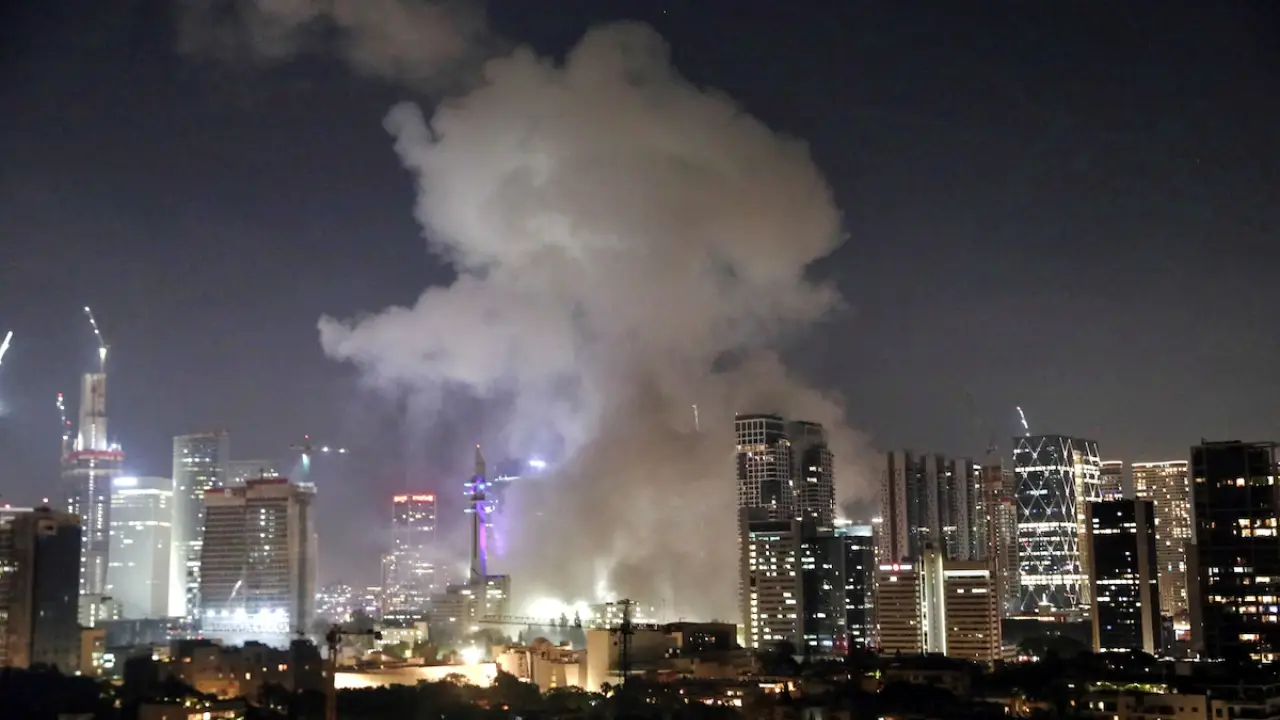
Missiles struck key areas of Tehran, including University Street and the Jomhouri district. Iranian media outlets such as Fars News Agency and Tasnim News Agency reported explosions in the northern Seyyed Khandan area and western Ilam province.
Smoke was seen rising across parts of the capital. According to state-run IRNA, one of the most tragic incidents occurred in Minab, in Hormozgan province, where an Israeli strike reportedly hit a school building, causing dozens of casualties.
Iran’s Foreign Ministry stated that both military installations and civilian infrastructure were targeted. The scale and coordination of the strikes indicate a pre-planned operation rather than a limited retaliation.
This marks one of the most direct confrontations between the US, Israel, and Iran in recent years.
The Joint US-Israel Military Operation
Washington’s Position
US President Donald Trump described the operation as necessary to eliminate “imminent threats” posed by Iran. According to US officials, the strikes were conducted by air and sea, signalling extensive military preparation.
The United States has maintained significant military assets across the region, including naval fleets and airbases in Gulf states. Analysts suggest the buildup was intended to pressure Iran over its nuclear program, but diplomacy appears to have collapsed.
Israel’s Strategic Objective
Israeli Prime Minister Benjamin Netanyahu called the operation essential to remove what he described as an “existential threat.” He framed the joint action as a defensive necessity and praised American cooperation.
Reports from The Associated Press indicated that one strike occurred near offices linked to Iran’s Supreme Leader, Ayatollah Ali Khamenei, though he was reportedly moved to a secure location.
The coordination between Washington and Tel Aviv suggests a deep strategic alignment.
Iran’s Retaliation and Regional Fallout
Missile Fire Toward Israel
Shortly after the strikes, sirens echoed across northern Israel. The Israeli military activated air defence systems to intercept incoming missiles. Civil aviation was suspended, and emergency protocols were implemented nationwide.
Although initial reports suggested limited casualties, the psychological impact on civilians was significant. The possibility of prolonged missile exchanges raises fears of a sustained conflict.
Attacks on Gulf States Hosting US Bases
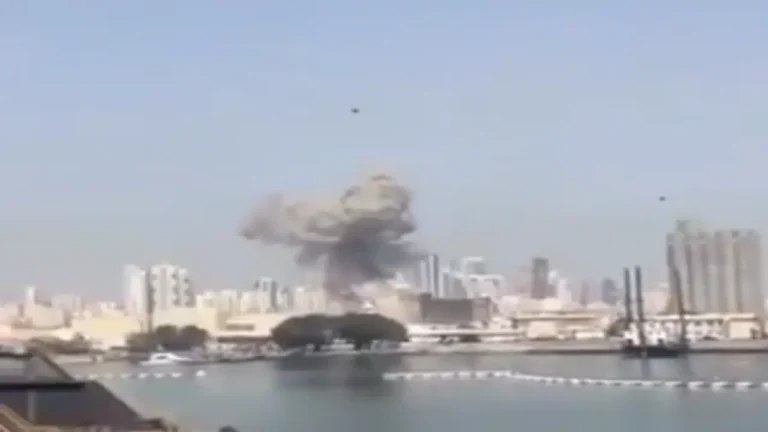
Iran’s retaliation extended beyond Israel. Explosions were reported in Gulf countries hosting American military facilities, including Qatar, Kuwait, United Arab Emirates, and Bahrain.
Iranian sources claimed strikes targeted Al Udeid Air Base in Qatar and the US Navy’s Fifth Fleet headquarters in Bahrain. Qatar’s Defence Ministry said it successfully intercepted several missiles.
In Abu Dhabi, UAE authorities confirmed one casualty after missile debris fell following interception attempts.
By targeting Gulf states, Iran is signalling that US regional alliances will carry consequences.
Why This Conflict Is Escalating
Nuclear Tensions and Failed Negotiations
The confrontation unfolds against the backdrop of stalled nuclear negotiations. The United States and Iran had been engaged in indirect talks regarding Iran’s nuclear program.
According to analysts such as Mehran Kamrava of Georgetown University in Qatar, the timing of the strike may have been intended to derail negotiations. Israel has long opposed any agreement that allows Iran to maintain nuclear capabilities.
This clash could mark the collapse of diplomatic efforts.
Strategic Calculations and Deterrence
Each side is trying to project strength. The US and Israel aim to deter Iran from expanding its military influence. Iran seeks to demonstrate that attacks will be met with regional consequences.
However, deterrence strategies often carry high risks. A miscalculation could trigger a broader regional war involving multiple actors.
The absence of clear red lines increases uncertainty.
What It Means for India
Oil Prices and Economic Impact
India imports a significant portion of its crude oil from the Middle East. Any escalation in the region can disrupt supply routes, especially through the Strait of Hormuz.
If tensions continue, global oil prices could rise sharply. Higher crude prices would impact fuel costs, transportation expenses, and inflation in India.
For a country managing economic recovery and growth, energy instability is a serious concern.
Indian Diaspora in the Gulf
Millions of Indians live and work in Gulf nations such as UAE, Qatar, and Kuwait. If the conflict expands, evacuation or safety measures may become necessary.
The Indian government has previously conducted large-scale evacuation missions during regional crises. Monitoring developments will be crucial.
Strategic Balancing
India maintains diplomatic ties with Iran, Israel, and the United States. Navigating neutrality while protecting national interests will require careful diplomatic engagement.
India’s response will likely focus on de-escalation and protecting economic stability.
Possible Scenarios Ahead
Limited Conflict with Controlled Escalation
One possibility is a short cycle of strikes followed by backchannel negotiations. Both sides may attempt to declare symbolic victory and step back.
Prolonged Regional War
If missile exchanges continue or civilian casualties rise, neighbouring countries may be drawn deeper into the conflict. This could disrupt global markets and energy supplies.
Return to Diplomacy
International pressure from Europe, Asia, and regional actors could push the parties back to negotiation tables. However, trust has been severely damaged.
The Human Dimension
Beyond military strategy, the human cost is mounting. Civilians in Tehran, Minab, northern Israel, and Gulf cities are experiencing fear and uncertainty.
Schools, residential areas, and infrastructure have been affected. Families are seeking safety amid sirens and explosions.
In every conflict, ordinary people pay the highest price.
Conclusion: A Dangerous Turning Point
The US-Israel attack on Iran represents a critical moment in Middle Eastern geopolitics. Coordinated military action, Iranian retaliation, and regional involvement have created a volatile situation.
For India and the wider world, the stakes are high from energy security to regional stability.
Whether this crisis spirals into a prolonged war or returns to diplomatic channels will depend on decisions made in the coming days. What is certain is that the Middle East stands at a dangerous crossroads, and the world is watching closely.
Related posts:
 Pakistan’s 27th Amendment: Cementing Field Marshal Asim Munir’s Power
 Japan–China Diplomatic Row Deepens Over Taiwan Comments
 Medvedev Warns US: Nuclear Weapon Transfer to Ukraine Equals Attack
 Mossad Uncovers Hamas Terror Network in Europe Linked to Qatar
 Delhi Government Restructures Revenue Districts: 13 Districts, 39 SDM Offices
 Trump Sends Envoy to Moscow for Russia-Ukraine Peace Talks
 Trump Announces Permanent Pause on Migration from Third World Countries
 Major Anti-Drug Operation: Telangana and Delhi Police Bust Big Network
 Assam GoM Recommends ST Status for Six Communities in Report
 Fresh FIR Against Gandhis Sparks Congress Allegations of Vendetta Politics