
The Unpublished Memoir That Rocked the Indian Parliament
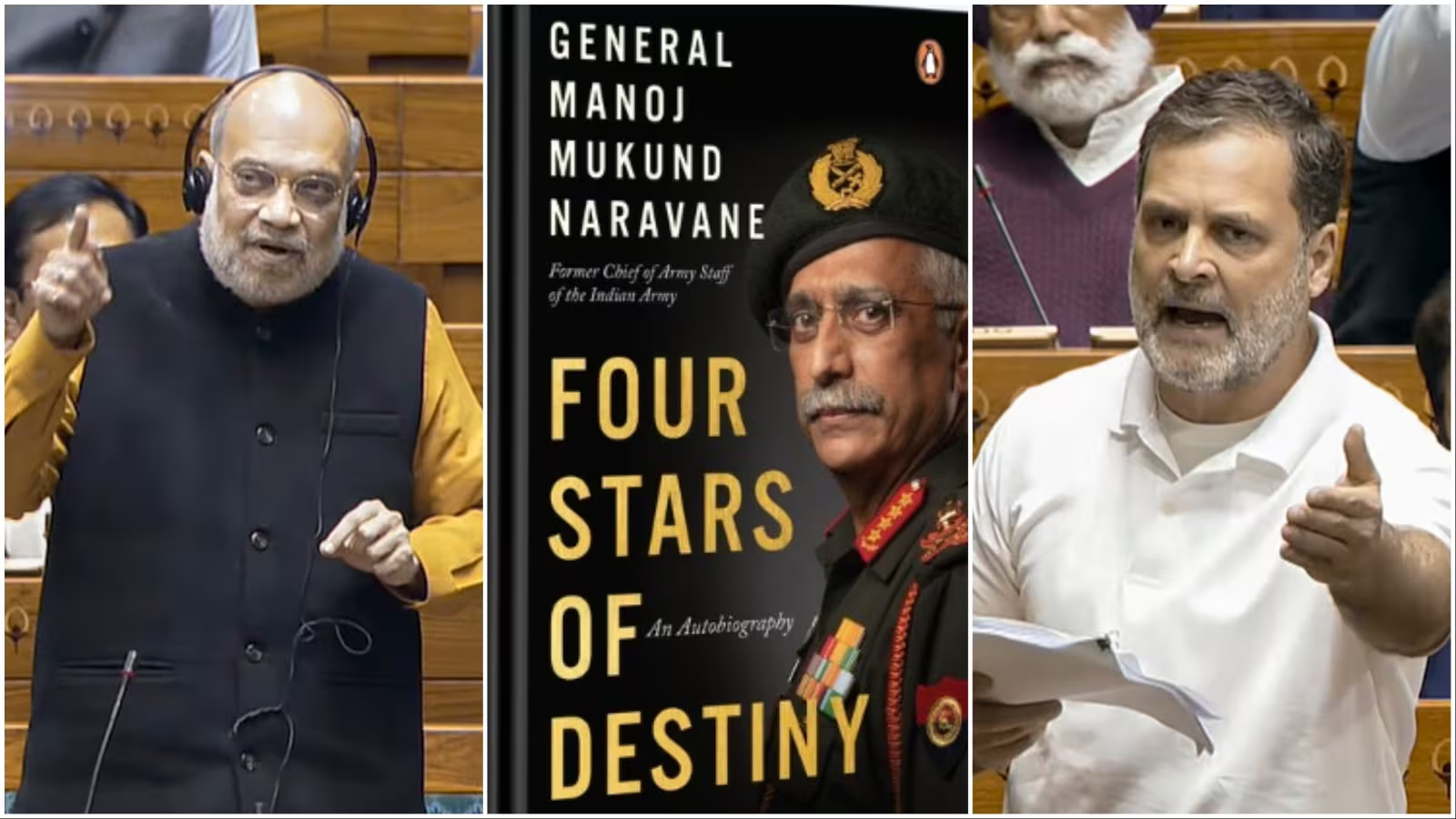
This week in February 2026, Indian Parliament was dominated by a dramatic controversy over a book by General MM Naravane, India’s former Chief of Army Staff. The book, titled Four Stars of Destiny, has not been officially published yet, and its existence has become the centre of a heated political dispute involving Leader of Opposition Rahul Gandhi and the government led by Prime Minister Narendra Modi. The row has brought issues such as national security, parliamentary rules, and India’s China policy into sharp public focus.
What Triggered the Parliament Row?
The controversy started when Rahul Gandhi attempted to quote passages that he said were from General Naravane’s unpublished book during a Lok Sabha session debating the Motion of Thanks to the President’s Address. He wanted to use the book’s contents to question the government’s handling of India-China border tensions, especially during the 2020 Ladakh standoff.
However, Defence Minister Rajnath Singh, Home Minister Amit Shah and Speaker Om Birla objected strongly. They argued that the book has not been published or cleared by official review, making it inappropriate for citation in parliamentary proceedings and potentially harmful to national security. This led to repeated interruptions, adjournments, and even the suspension of several opposition MPs after intense debate.
Why Four Stars of Destiny Is Still Unpublished
Four Stars of Destiny was expected to be released more than a year ago, with some pre-orders listed on platforms like Amazon and Flipkart. However, it remains under review by the Ministry of Defence, largely due to the standard procedures applied to memoirs of senior military officers that may contain sensitive defence and national security material. This includes details touching on India’s policy decisions and operational matters at the Line of Actual Control with China.
In past interviews, General Naravane himself has explained that he had not intended to write a memoir originally. He was encouraged by his publishers after attending a book event, and despite completing the manuscript, the final clearance and publication process has lagged as officials review its contents. He has described the experience of writing the book as personally satisfying, though he has expressed disappointment at the long delay in approval.
What the Book Is About
Although not publicly released, the planned memoir is reported to span General Naravane’s four decades of service, from early encounters with Chinese forces to his leadership during the Galwan Valley clashes in 2020, a confrontation that resulted in the deaths of 20 Indian soldiers and marked one of the most significant India-China border crises in recent history. The book reportedly also reflects on other major defence issues, including the Agnipath recruitment scheme and strategic decisions taken during his tenure as Army Chief.
Because it remains unpublished and under review, details about its full content are limited. Some excerpts have been carried by media outlets such as The Caravan magazine and widely discussed online, but the official version of the book itself has not been made available to readers.
The Heart of the Political Dispute
The core dispute in Parliament centred around whether Parliament can legitimately cite or quote from an unpublished manuscript. The Speaker invoked parliamentary rules — including Rule 349(i) of the Lok Sabha Procedure — which guides the use of documents in debates, stating a member cannot read from or rely on books or articles that have not been authenticated or formally brought before the House. The ruling party argued that using such material could violate parliamentary norms and compromise national interest or security.
Rahul Gandhi and other opposition leaders countered that the material was already reported in the public domain through media and that it raised critical questions about how the border tensions were managed. Gandhi even brought a printed version of the unpublished book into the Parliament precincts to show that it indeed “exists,” challenging the government’s claim that it was not available.
Voices and Reactions Beyond Parliament
Beyond Parliament, the row has drawn reactions from various political figures. Some leaders outside the central government have expressed support for Rahul Gandhi’s effort to raise issues about India’s security and transparency, while government supporters emphasise strict adherence to parliamentary procedure and national security protocols.
The debate has also spurred larger discussions online and in public discourse about the balance between freedom of expression, transparency in defence matters, and the need to safeguard classified information that could affect diplomatic and military relations.
Why This Matters
The Four Stars of Destiny controversy has transcended what might otherwise be a routine delay in book publication. It struck a chord because it ties into ongoing strategic concerns about India’s relationship with China, parliamentary norms, and accountability of leadership during critical national security situations. The issue has highlighted how defence policy and political debate can intersect in ways that capture national attention and raise questions about the role of former military leaders in public dialogue.
Looking Ahead
As of now, Four Stars of Destiny remains unpublished, and the political tensions around its use in official debates continue to shape the narrative in Parliament and public conversations. Whether the book will eventually be cleared for publication and whether its contents will enter broader public awareness remains uncertain. But its impact on political debate, especially during the 2026 Budget Session, has already been significant and will likely be discussed further in the months ahead.
Related posts:
 India’s craft beer revolution led by Millennials & Gen Z experiences
 Indian Army’s High-Altitude Monorail Boosts Logistics at 16,000 Feet
 Arunachal Indian Woman Alleges Harassment at Shanghai Airport Incident
 X’s New Location Feature Sparks Controversy Over Foreign Political Accounts
 India Releases Translated Constitution Versions as Nation Celebrates Samvidhan Divas
 India and Afghanistan’s Historic Border Connection Through Wakhan Corridor
 AI Chatbots Tricked by Adversarial Poetry in Shocking Jailbreak Discovery
 Pakistan’s Asim Munir War Rhetoric Sparks India-Pakistan Tension
 Telangana names road “Donald Trump Avenue” near US Consulate
 Virologist Li-Meng Yan fears China luring her back to silence

Very informative