
South Korea Birth Rate Crisis Sparks Political and Diplomatic Storm
South Korea’s long-running birth rate crisis has once again come into sharp focus after a senior local official made controversial remarks that triggered widespread outrage at home and abroad. Kim Hee-soo, the head of Jindo County in South Jeolla Province, has been expelled from South Korea’s ruling Democratic Party after suggesting that the country should “import young women” from Vietnam or Sri Lanka to boost declining birth rates. His comments, made during a televised town hall meeting, quickly went viral and sparked public anger, diplomatic backlash, and protests from women’s rights groups.
Controversial Remarks at a Town Hall Meeting
The controversy began last week during a town hall meeting in Jindo County, which was called to discuss a possible administrative merger with a nearby city. Such mergers are increasingly being considered in South Korea as many rural regions struggle with shrinking populations and ageing communities. During the discussion, Kim suggested that young women from Vietnam or Sri Lanka could be brought to South Korea and married off to young men in rural areas as a way to address population decline.
Although Kim later claimed that his intention was to highlight the seriousness of the population issue in rural regions, the language he used was widely condemned. Many viewers felt the remarks treated women as commodities rather than individuals with rights and dignity.
Public Backlash and Failed Apology
The response to Kim Hee-soo’s statement was swift and intense. South Korean citizens expressed anger across social media and news platforms, accusing him of sexism and discrimination against migrant women. Activists for women’s rights and migrant communities announced plans to hold a rally outside the Jindo County Office, demanding accountability and stronger protection for migrant women in South Korea.
Kim attempted to defuse the situation by issuing an apology the day after the town hall meeting. He admitted that his choice of words was “inappropriate” and said he regretted the pain caused by his remarks. However, the apology did little to calm public sentiment, as many felt the statement reflected deeper issues in how migrant women are viewed in parts of society.
Diplomatic Reaction from Vietnam
The controversy soon crossed South Korea’s borders. The Vietnamese Embassy in Seoul issued a strong statement condemning Kim’s remarks, calling them not just careless words but a reflection of troubling values and attitudes toward migrant women and minority groups. The embassy stressed that such comments could reinforce harmful stereotypes and discrimination.
South Jeolla Province also issued a formal apology, acknowledging that Kim’s words had caused “deep pain” to Vietnamese people and to women more broadly. While Sri Lankan authorities have not publicly commented on the issue, the mention of Sri Lanka in the remarks has added to the sensitivity of the situation.
Expulsion from the Democratic Party
Facing mounting pressure, the Democratic Party’s Supreme Council took decisive action. The party voted unanimously to expel Kim Hee-soo, signaling that his comments were unacceptable and inconsistent with the party’s values. A party spokesperson confirmed the decision, stating that such remarks undermine social equality and damage South Korea’s international image.
The expulsion highlights how seriously South Korean political parties are treating issues related to gender equality, migrant rights, and diplomatic relations, especially at a time when the country is under global scrutiny for its demographic challenges.
South Korea’s Deepening Population Crisis
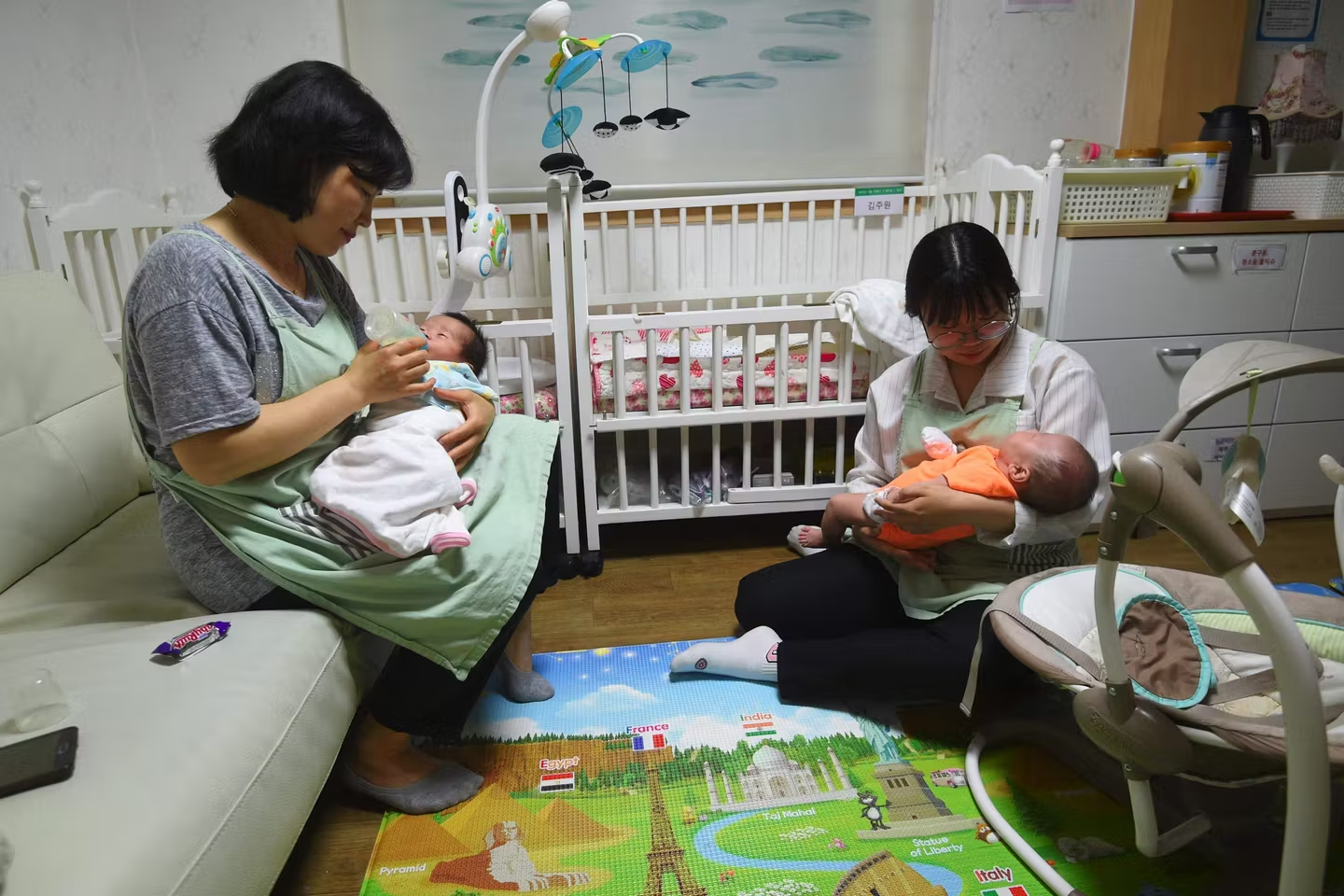
South Korea currently has one of the lowest birth rates in the world, a trend that has alarmed policymakers and economists alike. Experts warn that if current trends continue, the country’s population of around 50 million could shrink by nearly half within the next 60 years. This decline poses serious risks to economic growth, social welfare systems, and national competitiveness.
While the government has introduced incentives such as childcare support, housing benefits, and parental leave reforms, results have been limited. The controversy surrounding Kim’s remarks has highlighted the sensitive balance between discussing population solutions and respecting human rights and dignity.
A Lesson in Policy and Responsibility
The fallout from this incident serves as a reminder that addressing South Korea’s birth rate crisis requires thoughtful, inclusive, and respectful solutions. Comments that objectify women or target migrant communities not only harm social cohesion but also weaken trust at home and abroad.
As protests continue and public debate intensifies, the episode underscores the importance of responsible leadership when tackling complex social issues. South Korea’s demographic future may be uncertain, but incidents like this show that how the conversation is framed matters just as much as the policies themselves.
Related posts:
 Air India Flight 171 Investigation: Pilot Not Blamed, Report Shows
 Delhi-NCR Pollution Crisis: GRAP Revised to Enforce 50% Work From Home
 Viral Lawrence Bishnoi Bail Video Sparks Confusion and Fact-Check
 Good News for Gas Consumers: CNG & PNG Price Relief 2026
 Young Cricket Prodigy Suryavanshi Draws Tendulkar Comparisons From Shashi Tharoor
 Shashi Tharoor supports India’s humanitarian approach amid Bangladesh tensions
 Telegram Founder Pavel Durov Promises Fortune to His 100 Children
 How Butterfly Pea Flower Farming Is Transforming Rural India’s Livelihoods
 Goa Considers Social Media Ban for Children Inspired by Australia
 Trump Praises India Gate, Plans America’s Biggest Triumphal Arch