The decision by the Government of India to move forward with the 1,856 MW Sawalkote Hydroelectric Project on the Chenab River has triggered intense reactions across Pakistan’s political and media landscape. The development, first reported by CNN-News18, marks one of the most significant infrastructure pushes in Jammu & Kashmir in recent years.
The project comes at a sensitive time, especially after India placed the Indus Waters Treaty (IWT) in abeyance. For Islamabad, the move has raised fears about water security. For New Delhi, it signals sovereign assertion and long-delayed hydropower development.
At the heart of the debate lies a simple but powerful question: Is Sawalkote a legitimate development project, or is it being framed as a geopolitical weapon?
Why Sawalkote Dam Matters for India
Energy security and Jammu & Kashmir’s development
India’s energy demand continues to grow rapidly. Hydropower remains one of the cleanest and most reliable renewable energy sources available.
The Sawalkote project, with a total installed capacity of 1,856 MW, will significantly boost electricity generation in Jammu & Kashmir. It is being developed by NHPC Limited at an estimated cost of ₹5,129 crore.
For a region that has historically faced infrastructure and connectivity challenges, large hydropower projects are not just about electricity, but about economic transformation.
Local employment during construction, improved grid stability, and long-term revenue generation are key benefits.
Strategic assertion after IWT pause
India’s decision to move ahead with Sawalkote follows a period during which the Indus Waters Treaty has effectively been paused by the Centre.
The Ministry of External Affairs clarified that any development project within India is based on its own understanding and sovereign rights.
This indicates a shift from defensive compliance to assertive infrastructure planning.
What Is the Sawalkote Hydroelectric Project?
Technical design and capacity
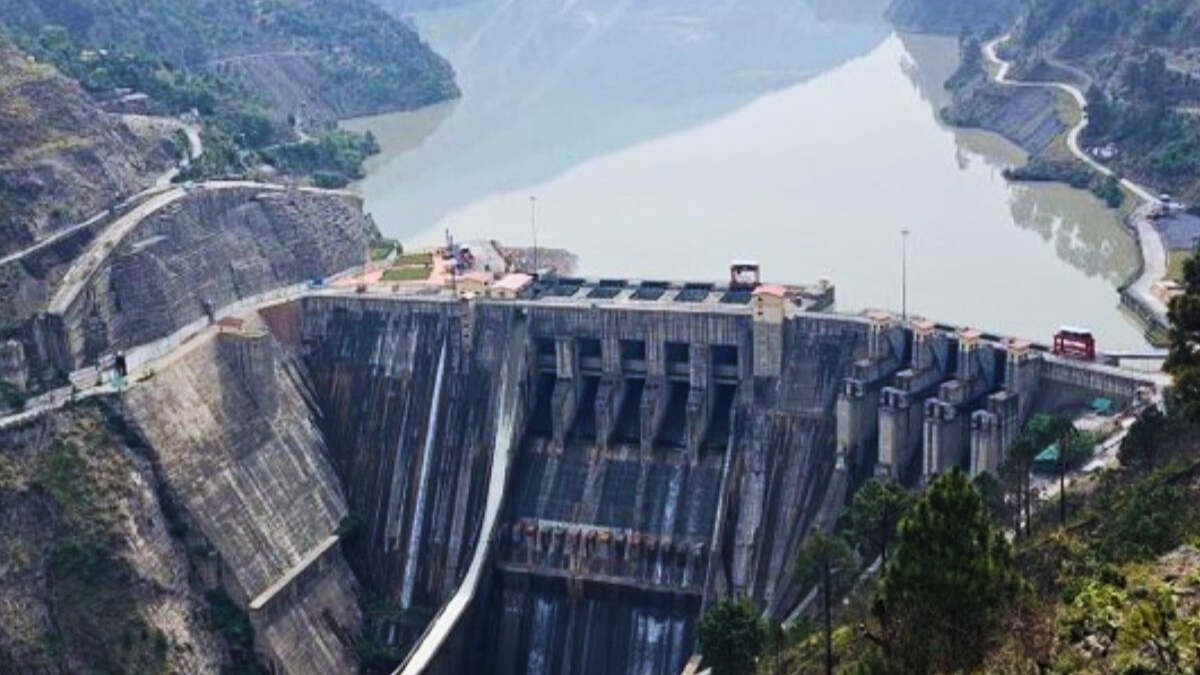
Sawalkote is located on the Chenab River between the Baglihar project upstream and the Salal project downstream, in the Udhampur and Ramban districts of Jammu & Kashmir.
It will feature a Roller Compacted Concrete Gravity Dam with a height of 192.5 meters from the deepest foundation level.
The project includes three horseshoe-shaped diversion tunnels measuring 965 meters, 1,130 meters, and 1,280 meters.
An underground powerhouse on the left bank of the Chenab will house eight units of 225 MW each, totaling 1,800 MW. An additional 56 MW environmental flow power station will bring total capacity to 1,856 MW.
Run-of-the-river design explained
Indian officials have underlined that Sawalkote is a run-of-the-river project.
This means it does not store large volumes of water like traditional dams. Instead, it uses the natural flow of the river to generate electricity.
Under the Indus Waters Treaty framework, run-of-the-river projects are permitted, provided they do not divert water outside the basin.
The distinction is critical because it counters the narrative that India intends to “dry up” Pakistan.
Pakistan’s Reaction: Media Meltdown and Official Concern
Accusations of “Water Terrorism”
Pakistani media outlets have reportedly described the project as “Fifth Generation Warfare” and even coined the term “Water Terrorism.”
Panel discussions and editorials framed the development as part of a “dewatering strategy,” alleging that India aims to weaponize water flows from the Chenab basin.
Such strong language reflects deep anxieties about water dependency, especially since Pakistan relies heavily on the Indus river system for agriculture and drinking water.
Official diplomatic response
Pakistan’s Foreign Office spokesperson termed the development a matter of “grave concern.”
Letters were reportedly sent by Pakistan’s Indus water commissioner seeking consultations, including communications as recently as February 11.
Islamabad has called for a return to full treaty compliance, while India maintains its sovereign right to pursue infrastructure projects.
This diplomatic tension highlights how water issues between the two countries remain highly sensitive.
Historical Context: A Long-Delayed Vision
Conceived in the 1960s
The Sawalkote project is not a sudden idea.
It was originally conceived in the 1960s by India’s Central Water Commission. Geological investigations were conducted between 1962 and 1971 by the Geological Survey of India.
The Detailed Project Report was last submitted in February 2018.
The delay of decades underscores how political, environmental, and strategic considerations have shaped its timeline.
Part of a broader Chenab strategy
Sawalkote is not an isolated project.
It forms part of a larger hydropower push in the Chenab basin, alongside projects like Pakal Dul Dam, Kiru Hydroelectric Project, and Ratle Hydroelectric Project.
Together, these projects aim to fully utilize India’s share of river waters under the treaty framework.
Is Water Being Weaponized?
Legal perspective under Indus Waters Treaty
The Indus Waters Treaty of 1960 allocates control of eastern rivers to India and western rivers, including the Chenab, largely to Pakistan.
However, India retains rights for non-consumptive uses such as hydropower generation under strict design parameters.
Sawalkote’s run-of-the-river design appears to align with these technical provisions.
From a legal standpoint, the project does not automatically constitute a treaty violation.
Strategic signaling vs actual impact
While Pakistan fears water flow manipulation, experts argue that run-of-the-river dams have limited long-term storage capacity.
They can temporarily regulate flows but cannot permanently block or divert large volumes.
The larger strategic significance may lie in signaling.
By accelerating projects after placing the treaty in abeyance, India is demonstrating that it will no longer allow prolonged disputes to stall development.
What It Means for India’s Future
Clean energy and climate commitments
Hydropower contributes to India’s renewable energy targets.
Projects like Sawalkote reduce dependence on coal and help stabilize the grid when solar and wind output fluctuate.
In the long term, hydropower is essential for India’s climate and energy security goals.
Infrastructure as geopolitical leverage
Infrastructure development in border states carries both economic and strategic importance.
Strong energy infrastructure enhances resilience, reduces vulnerability, and strengthens regional integration.
In sensitive regions like Jammu & Kashmir, this becomes doubly significant.
The Bigger Picture: Development or Dispute?
The Sawalkote Dam controversy reflects the broader complexities of India-Pakistan relations.
Water, like territory and security, remains deeply intertwined with politics and perception.
For India, the project represents long-overdue development and lawful utilization of resources.
For Pakistan, it raises fears about future water security.
Ultimately, the real test will lie in transparency, technical compliance, and sustained diplomatic engagement.
Sawalkote is more than a dam. It is a symbol of how infrastructure, energy, and geopolitics intersect in South Asia’s evolving strategic landscape.
Related posts:
 Pakistan’s 27th Amendment: Cementing Field Marshal Asim Munir’s Power
 Trump Warns NATO Exit Over Greenland Deal and Security Concerns
 PM Modi Launches Kaziranga Corridor, Amrit Bharat Trains in Assam
 United States Completes Historic Withdrawal From World Health Organization WHO
 Diplomatic Tensions Rise After Sheikh Hasina’s Recorded Delhi Message
 Save Manipur Rally Shows Unity Against Division, Demands Peace, Resettlement
 Myanmar Earthquake Shakes Kolkata, Tremors Felt Across Eastern India
 SSB Clears No Man’s Land Encroachment Along India Nepal Border
 Tragic Noida and Delhi Pit Accidents Safety Negligence Claims Lives
 Bangladesh Rushes Secret US Trade Deal Ahead of Crucial Elections