India’s financial sector is set for a major accountability shift. The Reserve Bank of India (RBI) has released a draft guideline to crack down on mis-selling of financial products and dark patterns on digital platforms.
If implemented, these rules could fundamentally change how banks, NBFCs, and All India Financial Institutions (AIFIs) sell loans, insurance-linked products, investment schemes, and other financial services.
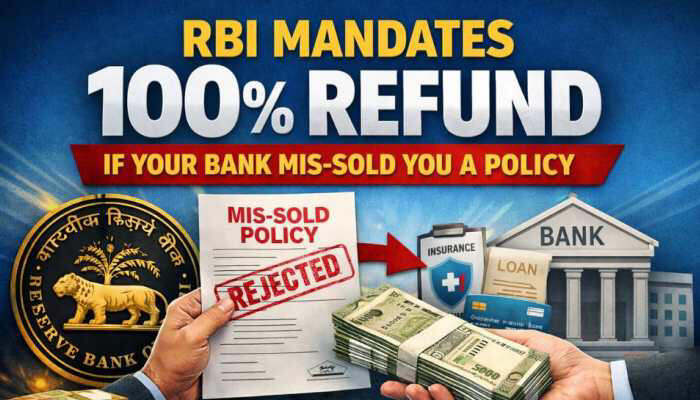
The biggest headline? Proven mis-selling may trigger a 100% refund to customers along with compensation.
The draft is open for public comments until 4 March 2026.
Why RBI Is Targeting Mis-Selling Now
India’s financial ecosystem has rapidly digitised. From instant loans to bundled insurance, financial products are often sold via apps and websites within minutes.
However, regulators have noticed growing concerns:
- Customers being misled about product terms
- Hidden charges or bundled services
- Consent taken through confusing digital designs
- Aggressive cross-selling practices
The RBI believes stronger safeguards are necessary to restore transparency and trust.
The focus is clear: protect customers without slowing financial innovation.
What Is Mis-Selling in Financial Products?
Mis-selling occurs when a financial product is sold:
- Without proper disclosure
- By hiding key risks or charges
- By forcing bundled purchases
- Through misleading claims
Examples of Mis-Selling
- Making insurance mandatory for loan approval
- Concealing high processing fees
- Promising guaranteed returns without risk disclosure
- Auto-selecting add-on services in digital forms
Under the new draft, institutions must fully explain product features and obtain informed consent before sale.
100% Refund Rule: A Game-Changer
One of the strongest provisions in the draft is the refund mandate.
Mandatory Full Refund for Proven Mis-Selling
If mis-selling is proven:
- The institution must refund 100% of the customer’s payment.
- Compensation may also be required.
This shifts the risk burden from consumers to institutions.
Earlier, disputes often resulted in partial redress or lengthy grievance processes. The proposed rule introduces direct financial accountability.
Stronger Customer Consent Requirements
The draft also tightens rules around customer consent.
Financial institutions must:
- Clearly explain product terms
- Avoid pre-ticked boxes
- Ensure digital disclosures are visible and understandable
- Maintain proof of explicit customer approval
Consent cannot be hidden inside complex legal language.
Informed consent must be real not technical.
RBI’s Crackdown on Dark Patterns
The RBI has taken a firm stand against “dark patterns” in digital financial services.
What Are Dark Patterns?
Dark patterns refer to design techniques that manipulate users into making unintended decisions.
Examples include:
- Countdown timers creating artificial urgency
- Hidden cancellation buttons
- Confusing subscription options
- Default opt-ins for add-ons
The RBI believes such tactics push customers toward choices they might not make if fully informed.
Digital Interface Monitoring Is Now Mandatory
The draft directs All India Financial Institutions to:
- Audit websites and mobile apps
- Conduct regular user testing
- Perform internal compliance reviews
- Identify and eliminate deceptive design features
Non-compliance could invite strict regulatory action.
This aligns with the 2023 dark pattern guidelines issued by the Central Consumer Protection Authority.
Financial platforms must now ensure transparency by design.
Ban on Forced Bundling of Services
Another major reform is the prohibition of compulsory bundled sales.
No More “Buy One to Get One Compulsory”
Institutions cannot:
- Force insurance with a loan
- Make credit cards mandatory for account approval
- Tie unrelated financial services together
Each product must stand on its own merit.
Customers must have the freedom to choose.
This rule is expected to particularly impact digital lending apps and cross-selling practices within banking ecosystems.
Mandatory Customer Feedback Within 30 Days
The draft introduces a customer feedback requirement.
Post-Sale Review Process
Within 30 days of product sale:
- Institutions must seek customer confirmation.
- Customers must be given an opportunity to report concerns.
This adds a second layer of protection.
If customers were misled or misunderstood terms, they can flag it early.
Early detection reduces long-term disputes.
Impact on Banks, NBFCs and AIFIs
The new draft rules could reshape internal processes across financial institutions.
Compliance Burden Will Increase
Institutions may need to:
- Redesign digital platforms
- Train sales teams
- Improve disclosure formats
- Strengthen grievance redress systems
This could increase short-term compliance costs.
However, in the long run, it may improve brand trust and reduce litigation.
Stronger Consumer Trust in Digital Finance
India’s digital finance market is one of the fastest-growing globally.
But growth must be matched with safeguards.
By targeting mis-selling and dark patterns, the RBI aims to:
- Strengthen financial inclusion
- Improve customer confidence
- Enhance ethical sales culture
- Support sustainable fintech growth
Trust is becoming a regulatory priority.
Public Consultation and What Happens Next
The draft guidelines are open for public feedback until 4 March 2026.
Stakeholders including banks, fintech firms, consumer groups, and legal experts — can submit suggestions.
After reviewing feedback, the RBI may:
- Modify certain provisions
- Clarify definitions
- Set implementation timelines
Once finalised, these guidelines will likely become binding compliance requirements.
What Customers Should Do Now
While the rules are still in draft stage, customers should:
- Carefully read financial product documents
- Avoid rushed digital decisions
- Check for bundled services
- Keep transaction records
If mis-selling is suspected, customers can approach grievance redress mechanisms or the RBI’s complaint platforms.
Awareness is your first line of protection.
Final Analysis: A New Era of Financial Accountability
The RBI’s draft guidelines signal a powerful shift in India’s regulatory landscape.
Instead of reactive penalties, the regulator is moving toward:
- Preventive design oversight
- Mandatory transparency
- Strict refund liability
- Customer-centric consent standards
If implemented in full, these measures could redefine how financial products are sold in India.
For institutions, it’s a warning. For consumers, it’s a shield.
The coming months will determine how strictly these reforms are shaped but one thing is certain: mis-selling and dark patterns are now firmly in the regulatory spotlight.
Related posts:
 Understanding ECI’s Special Intensive Revision SIR for Voter Lists in 12 Regions
 Bengaluru Woman Loses ₹31.83 Crore in Horrific “Digital Arrest” Scam
 Kavach Train Protection System Transforms Safety on North Eastern Railway
 India’s New E-Passport: Safer, Smarter, and Faster Travel for All
 Fixing PAN Card Name Mismatch: A Simple Guide for 2025
 Top 10 Technologies for 2026 Shaping India’s Future Jobs
 CGHS OPD Fees Clarified, Ayush Bima Launched for Beneficiaries
 Maharashtra Launches Bhu-Aadhaar to Modernise Farm Land Records System
 DIGIPIN India Digital Address System Explained, Benefits, How To Find
 PAN Card Rules 2026 Big Relief or Big Shift?