North Korea’s Kim Jong Un Picks Daughter Kim Ju-ae as Successor
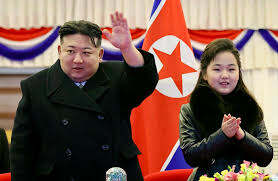
In a major revelation shaping global political headlines, North Korean leader Kim Jong Un appears to have chosen his teenage daughter, Kim Ju-ae, as his successor, according to a briefing from South Korea’s National Intelligence Service (NIS) shared with lawmakers on Thursday. This unusual announcement has stirred widespread interest because it signals a possible fourth generation of the Kim family dynasty and may mark the emergence of one of the most high-profile young figures in the politically isolated state.
Kim Ju-ae, believed to be in her early teens, has become increasingly visible alongside her father in official roles. Intelligence officials highlighted that her public profile has grown through appearances at military events, national celebrations, and visits to symbolic sites associated with the ruling family’s legacy. These developments have fuelled speculation that North Korea may be moving toward a formal designation of Ju-ae as the heir, a rare and significant moment in the succession dynamics of the secretive state.
Growing Public Role and Symbolic Appearances
Kim Ju-ae’s public presence has steadily expanded in recent years. She first came into the international spotlight when she appeared at a long-range missile test with her father and has since been frequently featured in state media coverage of military parades, key national events, and official visits. These images are meaningful in the context of North Korea’s tightly controlled propaganda environment, where any change in how leaders and potential successors are portrayed often carries deliberate political symbolism.
Perhaps most symbolically striking was her first known visit to the Kumsusan Palace of the Sun, the mausoleum dedicated to the country’s founder Kim Il-sung and his son Kim Jong-il, where both are preserved as national icons. Standing beside her parents in this sacred place for the regime suggests that Kim Ju-ae is being positioned not only within the family lineage but also as part of the symbolic continuity of leadership.
In addition to these domestic appearances, Ju-ae has made at least one public overseas trip with Kim Jong Un, travelling to Beijing, China. That visit, attended by top leaders including Chinese officials, further raised global attention and showed that her role may extend beyond internal public engagement to diplomatic visibility.
Spy Agency Assessment and Succession Signals
According to the NIS briefing, Kim Ju-ae’s status appears to have moved from simply being “groomed” for leadership to the “designated successor stage.” South Korean lawmakers cited additional evidence, noting that Ju-ae has participated in significant events such as anniversaries of the Korean People’s Army and has been observed voicing opinions on certain state policy matters. These developments suggest she is not merely a ceremonial figure but one being prepared to understand and potentially influence governance matters.
The NIS also highlighted that Ju-ae’s role in public life has grown stronger without an official title, as North Korean state media still refrains from naming her directly. However, her growing prominence in both propaganda material and real-world appearances — including strategic military and symbolic venues — indicates a deliberate effort by the regime to establish her legitimacy within the power structure.
A Unique Moment in North Korean Politics
If Kim Ju-ae’s succession is formally confirmed, it would mark a historic shift in North Korean leadership dynamics. Since the country’s founding in 1948, the supreme leadership has passed through three generations of the Kim family: from Kim Il-sung to Kim Jong-il, and then to Kim Jong Un. This dynastic continuity has been a defining feature of the regime. The potential future leader’s selection at such a young age, and as a female heir in a traditionally patriarchal political system, is noteworthy and unprecedented in North Korean history.
Analysts observe that North Korea’s tightly controlled media and public displays often hold deep political meaning. Kim Ju-ae’s frequent presence beside her father and her participation in military and ceremonial events hint at an ongoing internal narrative that is beginning to frame her role as more than a symbolic figure. At major international and domestic occasions, her placement next to Kim Jong Un can be interpreted as strategic.
Despite these strong indications, it is important to note that North Korea has not officially confirmed her name, age, or formal designation as the next leader. The regime’s secrecy means that many details about her personal life and role remain speculative. Nonetheless, intelligence assessments and expert analysis point to a sustained effort by Kim Jong Un to position his daughter for future leadership.
Implications and the Road Ahead
The timing of this development coincides with the lead-up to North Korea’s Workers’ Party Congress, a major political gathering held every five years, where key policies are outlined and leadership decisions may be formalised. Intelligence agencies are closely watching whether Kim Ju-ae will appear at this event and whether she might be awarded a formal title or position of authority. Such recognition would solidify her status as heir apparent and likely confirm the transition of power before many global observers expected.
Observers also note that the succession process in North Korea is inherently tied to the cult of personality around the Kim family, and any hint of leadership change is laden with political symbolism. The possibility that Ju-ae could eventually lead the reclusive, nuclear-armed state raises questions about regional stability, continuity of policies, and how the regime will manage internal power structures during and after the transition.
If her formal succession is confirmed at the party congress or through other state channels, Kim Ju-ae would become perhaps the youngest and first female leader in the Kim dynasty’s history, marking a significant milestone in the political evolution of one of the world’s most secretive nations.
LATEST UPDATE:
South Korea’s NIS now believes Kim Ju-ae has moved from being trained for leadership to the designated successor stage, with increased public roles and signs she may soon be officially named heir during North Korea’s upcoming Workers’ Party Congress.
Related posts:
 Pakistan’s 27th Amendment: Cementing Field Marshal Asim Munir’s Power
 Japan–China Diplomatic Row Deepens Over Taiwan Comments
 Medvedev Warns US: Nuclear Weapon Transfer to Ukraine Equals Attack
 Mossad Uncovers Hamas Terror Network in Europe Linked to Qatar
 Delhi Government Restructures Revenue Districts: 13 Districts, 39 SDM Offices
 Trump Sends Envoy to Moscow for Russia-Ukraine Peace Talks
 Trump Announces Permanent Pause on Migration from Third World Countries
 Major Anti-Drug Operation: Telangana and Delhi Police Bust Big Network
 Assam GoM Recommends ST Status for Six Communities in Report
 Fresh FIR Against Gandhis Sparks Congress Allegations of Vendetta Politics