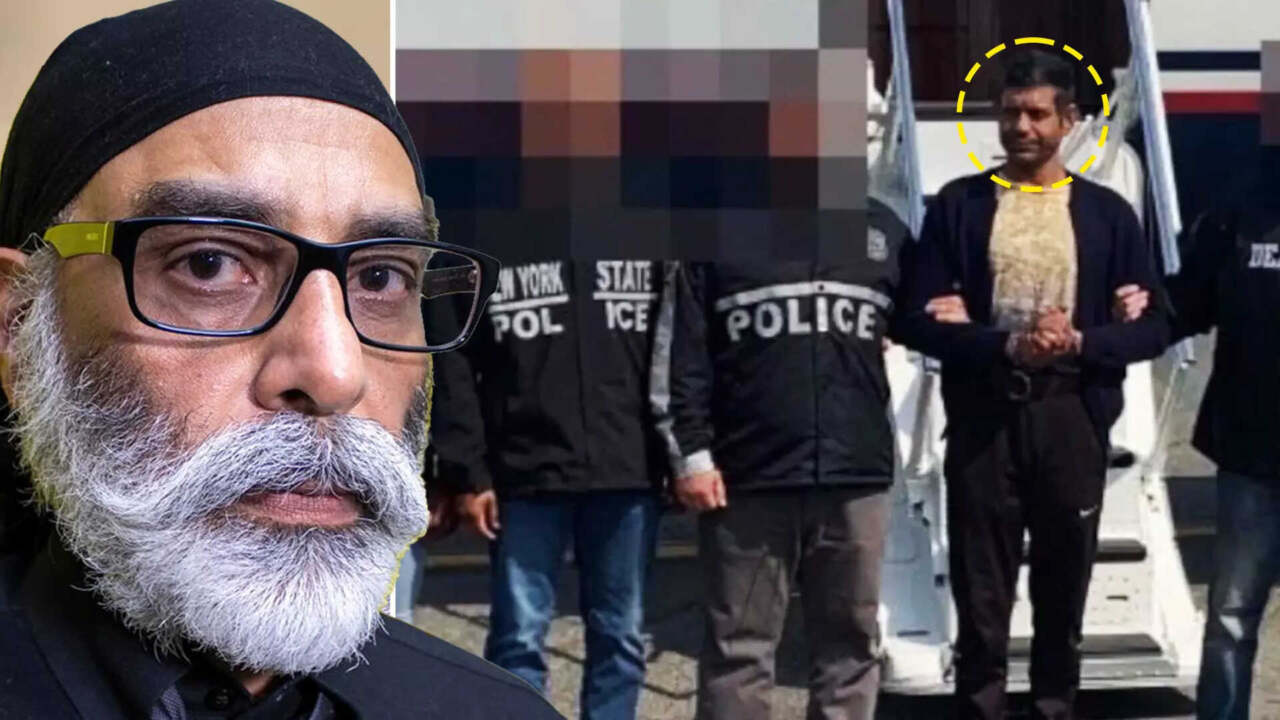
A US federal court has described Indian citizen Nikhil Gupta as a “key participant” in a murder-for-hire conspiracy targeting Sikh separatist leader Gurpatwant Singh Pannun in 2023. The alleged assassination attempt, which was ultimately foiled by US law enforcement, has triggered serious diplomatic and legal repercussions.
Gupta has now pleaded guilty to multiple charges, including murder-for-hire and conspiracy to commit money laundering. He could face up to 40 years in prison, with sentencing scheduled after a court hearing on May 29.
The case has drawn international attention because US prosecutors have alleged that the plot was orchestrated at the direction of an Indian government employee—an accusation New Delhi has previously denied.
What the US Federal Court Said About Nikhil Gupta
According to statements made in court filings and by senior US officials, Gupta was not a peripheral figure.
FBI Calls Gupta a “Key Participant”
An assistant director of the Federal Bureau of Investigation stated that Gupta played a central role in the murder-for-hire conspiracy against a US citizen.
The FBI emphasized that the killing was prevented only because of proactive action by American law enforcement agencies.
The use of the term “key participant” signals that prosecutors view Gupta as deeply involved rather than merely connected.
DEA Describes Ruthless Criminal Conduct
The Drug Enforcement Administration also weighed in, calling the case a reminder of the lengths criminals may go to further illegal enterprises.
While the DEA is traditionally focused on narcotics enforcement, its involvement highlights the multi-agency coordination in dismantling the alleged plot.
Arrest, Extradition and Guilty Plea
The timeline of Gupta’s legal journey underscores the seriousness of the case.
Arrest in the Czech Republic
Gupta was arrested in the Czech Republic in June 2023 following a US request. After legal proceedings, he was extradited to the United States in June 2024.
Since then, he has been held without bail in Brooklyn.
Extradition in such high-profile cases often requires substantial evidence and diplomatic coordination. The Czech court’s approval of extradition suggests the charges met international legal standards.
Guilty Plea and Potential 40-Year Sentence
On Friday, Gupta pleaded guilty to murder-for-hire and related conspiracy charges.
Although he faces a possible maximum of 40 years in prison, the final sentence will be determined by the federal court after reviewing aggravating and mitigating factors.
A guilty plea may indicate cooperation or a strategic legal decision. However, sentencing will ultimately depend on judicial discretion and federal guidelines.
Alleged Links to the Indian Government
One of the most controversial aspects of the case involves the alleged involvement of an Indian government employee.
Role of Vikash Yadav
US prosecutors have linked Gupta to another Indian national, Vikash Yadav.
Court filings allege that Yadav was employed by India’s Cabinet Secretariat, which houses the country’s foreign intelligence agency, the Research and Analysis Wing.
According to the indictment, Yadav recruited Gupta in May 2023 to facilitate the assassination plot.
India has previously denied allegations that it sanctioned or supported such actions, stating that they are contrary to official policy.
These allegations, if proven, carry significant diplomatic implications.
How the Alleged Assassination Plot Unfolded
The US Attorney’s Office described a detailed and structured conspiracy.
Recruitment and Planning
Prosecutors claim that Yadav provided Gupta with sensitive personal information about the intended victim, including home addresses, phone numbers and daily routines.
Gupta allegedly passed this information to a man he believed to be a hired assassin.
However, the purported hitman was actually an undercover US law enforcement officer.
Undercover Operation and Surveillance
Gupta was reportedly introduced to the undercover officer through an intermediary who was, in reality, a confidential source working with US authorities.
According to prosecutors, Gupta provided updates on the plot, including surveillance photographs.
In a notable detail, Gupta allegedly instructed the undercover operative not to carry out the killing around the time of the Indian Prime Minister’s official state visit to the United States in June 2023.
This detail has drawn particular attention because it suggests careful timing considerations tied to diplomatic events.
Connection to Hardeep Singh Nijjar
Court documents refer to the intended victim as an associate of Hardeep Singh Nijjar, who was killed in British Columbia in June 2023.
Although the indictment does not always name Pannun directly in every reference, public statements and reports confirm that he was the target.
The broader geopolitical context includes heightened tensions between India and Western nations over allegations of transnational repression.
Diplomatic and Legal Implications
This case sits at the intersection of criminal law and international diplomacy.
Strain on US-India Relations
The United States and India share strategic ties in defense, trade and regional security.
However, allegations of a foreign-directed assassination plot on US soil are serious.
If US prosecutors substantiate claims of state involvement, it could create friction between the two governments.
India has maintained that such allegations do not reflect its official policies.
Legal Precedent in Transnational Crime
The case reinforces a key principle in international law enforcement: foreign political disputes cannot justify violence on US territory.
American courts have historically taken a strong stance against extraterritorial plots targeting individuals within US borders.
The prosecution of Gupta may serve as a precedent for handling similar cases involving alleged state-linked actors.
What Happens Next?
Gupta’s sentencing hearing is scheduled for May 29.
The federal judge will weigh factors such as:
The seriousness of the offense.
The level of planning involved.
The defendant’s cooperation.
The potential impact on US national security.
Meanwhile, Vikash Yadav has reportedly been charged in a superseding indictment but has not been arrested.
If Yadav remains outside US jurisdiction, it could complicate further legal proceedings.
Final Analysis: A Case with Global Repercussions
The Nikhil Gupta case is more than a criminal prosecution. It is a high-stakes legal battle with diplomatic overtones.
At its core, the case underscores the US commitment to protecting citizens from foreign-linked assassination plots.
It also highlights the complex challenges governments face when intelligence, geopolitics and criminal law intersect.
As sentencing approaches, the world will watch closely not only for the legal outcome, but for what it signals about accountability in cases that cross international boundaries.
Related posts:
 Pakistan’s 27th Amendment: Cementing Field Marshal Asim Munir’s Power
 Trump Warns NATO Exit Over Greenland Deal and Security Concerns
 PM Modi Launches Kaziranga Corridor, Amrit Bharat Trains in Assam
 United States Completes Historic Withdrawal From World Health Organization WHO
 Diplomatic Tensions Rise After Sheikh Hasina’s Recorded Delhi Message
 Save Manipur Rally Shows Unity Against Division, Demands Peace, Resettlement
 Myanmar Earthquake Shakes Kolkata, Tremors Felt Across Eastern India
 SSB Clears No Man’s Land Encroachment Along India Nepal Border
 Tragic Noida and Delhi Pit Accidents Safety Negligence Claims Lives
 Bangladesh Rushes Secret US Trade Deal Ahead of Crucial Elections