NASA Prepares New Mission to Unlock Aurora Secrets
NASA is preparing an ambitious scientific mission to better understand the powerful electric currents behind the aurora borealis, commonly known as the northern lights. The mission, called Geophysical Non-Equilibrium Ionospheric System Science (GNEISS), is scheduled for launch in early February 2026 from Poker Flat Research Range in Alaska. This location is one of the world’s best sites for aurora research due to its proximity to the Arctic Circle and frequent auroral activity.
The goal of the GNEISS mission is to study how energy flows through Earth’s upper atmosphere during auroral events and how these currents influence space weather conditions that can affect satellites, GPS systems, and communication networks.
Understanding How Auroras Are Formed
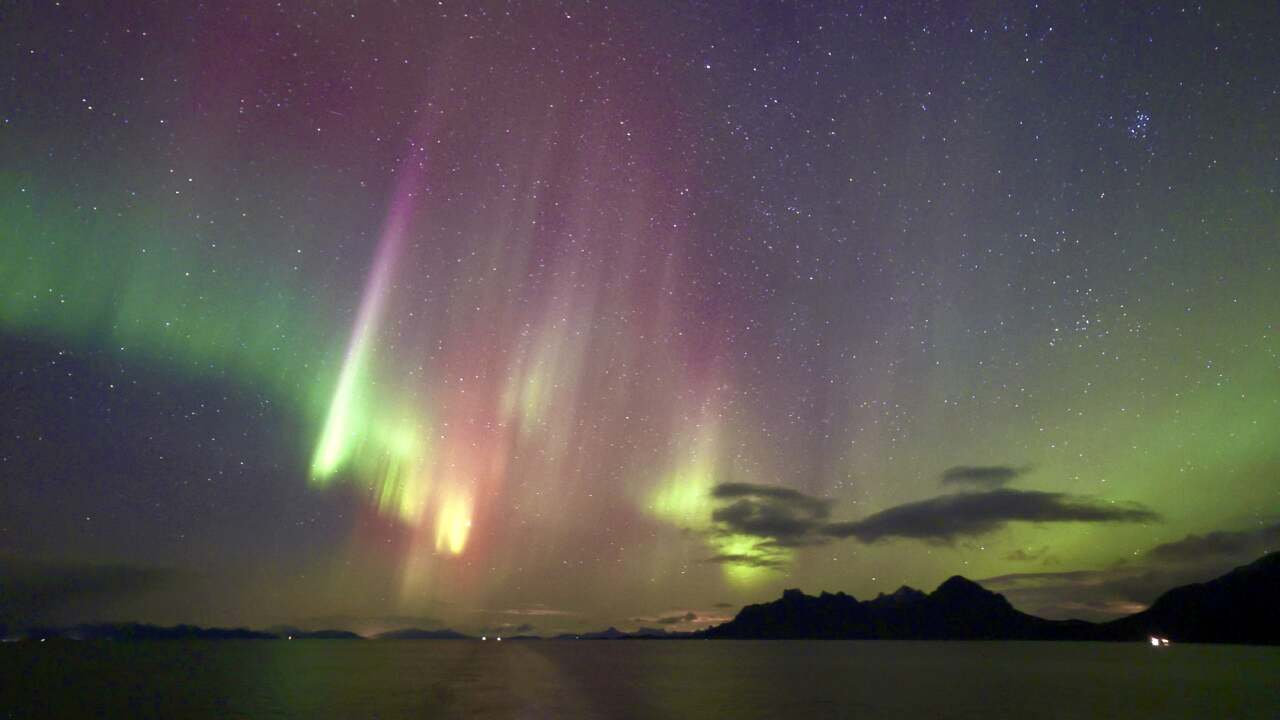
Auroras are created when charged particles, mainly electrons from space, collide with gases in Earth’s upper atmosphere. These collisions release energy in the form of light, producing the shimmering green, red, and purple curtains seen in polar skies. NASA scientists explain this process by comparing it to an electric bulb, where electrons move and create light.
However, the exact paths these electrons take are complex and often randomly directed. For auroras to glow brightly, electrons must follow curved paths shaped by Earth’s magnetic field. Understanding these invisible electric currents has been a long-standing challenge, and the GNEISS mission aims to solve this puzzle with a new approach.
Twin Rockets and a CT Scan-Like Technique
The GNEISS mission will use two rockets, each carrying four smaller sub-payloads. These rockets will fly directly through an active auroral arc. As the sub-payloads travel through the aurora, they will send radio signals back to receivers on the ground.
Plasma within the aurora interferes with these radio signals, similar to how different tissues affect X-rays during a CT scan of the human body. By studying how the signals change, scientists can map the density, direction, and structure of the electric currents flowing through the aurora. This method allows researchers to create a three-dimensional picture of auroral currents with unprecedented accuracy.
Why Studying Auroral Currents Matters
Auroral electric currents are a key part of space weather, a term used to describe conditions in space caused by solar activity. These currents transfer massive amounts of energy into Earth’s upper atmosphere, leading to heating and turbulence. Such disturbances can disrupt satellite orbits, degrade radio communications, and interfere with navigation systems.
By studying these currents in detail, NASA hopes to improve space weather forecasting. Better predictions could help satellite operators and power grid managers prepare for geomagnetic disturbances caused by solar storms.
Working Alongside NASA’s EZIE Satellite
The GNEISS mission will not work alone. Its findings will be combined with data from NASA’s EZIE (Electrojet Zeeman Imaging Explorer) satellite, which was launched in March 2025. EZIE focuses on measuring electric currents flowing at the edge of space, while GNEISS will provide detailed, local measurements from inside the aurora itself.
Together, these missions will give scientists a more complete picture of how energy from the Sun interacts with Earth’s magnetic field and atmosphere.
Investigating the Mystery of Black Auroras
NASA has also announced plans for a future rocket mission to study black auroras, mysterious dark patches that appear within glowing auroral displays. Scientists believe these dark regions may indicate areas where electric current flows in the opposite direction or temporarily shuts off.
Understanding black auroras could reveal how auroral systems balance energy and how sudden changes in current flow occur during geomagnetic activity.
A Major Step Forward in Space Weather Science
The GNEISS mission represents a significant step forward in aurora research and space weather science. By using innovative rocket-based techniques and working alongside satellite missions, NASA aims to uncover how auroral currents behave and how they impact life and technology on Earth.
As the February 2026 launch approaches, scientists are hopeful that this mission will not only deepen our understanding of the northern lights but also help protect critical space-based infrastructure in an increasingly technology-dependent world.
Related posts:
 AI-Powered Academic Discovery Transforms Research Literature Review Efficiency
 Seven New Frog-Shaped Leafhoppers Discovered in Uganda Rainforest by Scientist
 How Dogs Sense Human Fear Through Smell, According to Science
 ISRO’s LVM3-M6 Christmas Eve Launch Boosts India’s Space Ambitions
 Starlink Satellite 35956 Failure Explained: SpaceX Anomaly and Reentry
 India Successfully Tests Pralay Missile in Key DRDO User Trial
 India Reaffirms 500GW Renewable Energy Target and Net Zero Goals
 Elon Musk Says Human Death Solvable, Sparks Longevity Science Debate
 Rare S4 Solar Radiation Storm Triggers Stunning Auroras Across Earth
 NASA Moon Rocket Fueling Test Brings Historic Lunar Mission Closer