Why the Kaveri Engine Breakthrough Matters Now
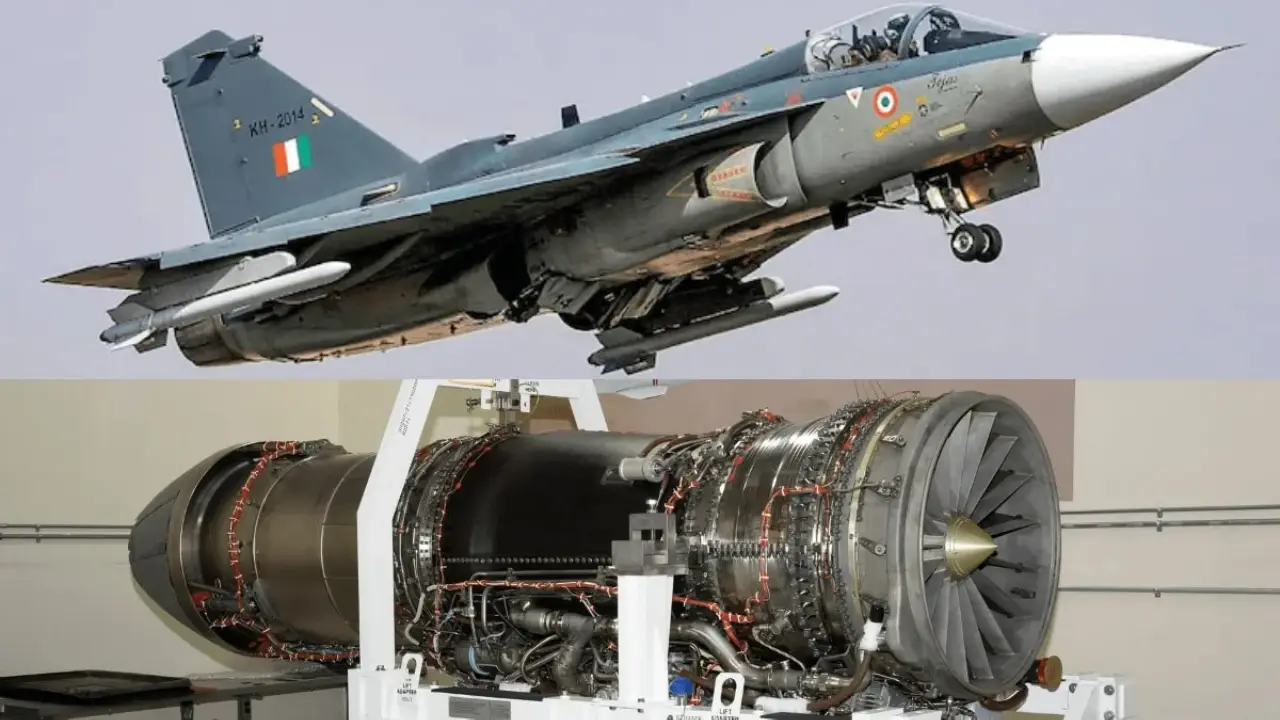
For decades, India dreamed of building its own fighter jet engine. That dream, called the Kaveri engine, began in 1989 under the Gas Turbine Research Establishment (GTRE), a lab of the Defence Research and Development Organisation (DRDO).
Today, after years of setbacks, redesigns, and criticism, the Kaveri engine is once again in the spotlight.
Recent reports suggest that its upgraded afterburner has achieved thrust levels of 81–83 kilonewtons (kN), close to what is required for modern fighter jets. This is a major milestone for India’s self-reliance mission in defence manufacturing.
For a country that has depended heavily on imported engines, this breakthrough is more than technical it is strategic.
India’s Engine Dependency: The Long Struggle
India has built impressive fighter aircraft like the HAL Tejas, developed by Hindustan Aeronautics Limited (HAL). However, the engine powering the Tejas is the American GE F404, manufactured by General Electric.
This dependency has long been a strategic vulnerability.
Why Fighter Jet Engines Are So Difficult
A fighter jet engine is among the most complex machines ever built. It must withstand extreme heat, pressure, and vibration while delivering enormous thrust.
Only a handful of countries including the US, UK, France, and Russia have mastered this technology.
For years, critics argued that India lacked the technological ecosystem required to build such engines. However, DRDO has consistently maintained that funding was not the issue. The real challenge was mastering advanced metallurgy, high-temperature materials, and precision engineering.
The Kaveri program did not fail due to lack of money — it struggled because India was building knowledge from scratch.
The Latest Kaveri Engine Breakthrough
The recent showcase of the Kaveri’s full afterburner to Defence Minister Rajnath Singh marked a turning point.
Afterburners significantly boost thrust during combat or takeoff. Earlier, the Kaveri engine delivered around 72 kN of thrust, which was below the 83–85 kN needed for the Tejas.
Now, after major upgrades, the engine reportedly achieved 81–83 kN in testing.
Improved Dry Thrust and Air Mass Flow
The dry thrust of Kaveri stands at around 49 kN, nearly equal to the GE F404 used in Tejas.
Its air mass flow is 78 kg/s, which is higher than the 65 kg/s of the French M88-2 engine used in the Dassault Rafale.
This indicates strong core engine performance.
Weight Reduction Efforts
One major drawback was weight. Kaveri was about 300 kg heavier than its competitors.
Recent upgrades have reportedly reduced 100 kg. The gap now stands at approximately 200 kg.
This may not sound dramatic, but in fighter aviation, every kilogram matters. Reducing weight improves agility, fuel efficiency, and payload capacity.
These improvements show that Kaveri is evolving — not stagnating.
From Tejas to Ghatak: A Strategic Shift
DRDO Chairman Samir V Kamat clarified that Kaveri will not power the Tejas due to thrust limitations. Instead, a derivative will power India’s upcoming unmanned combat aerial vehicle, the DRDO Ghatak UCAV.
This is a smart strategic pivot.
Unmanned combat aircraft require slightly different performance parameters. The modified Kaveri derivative could fit perfectly into that role.
By adapting rather than abandoning Kaveri, India is preserving decades of R&D investment.
AMCA and Global Partnerships: Safran and Rolls-Royce
At the same time, India is exploring partnerships with Safran of France and Rolls-Royce of the United Kingdom for engines under the Advanced Medium Combat Aircraft (AMCA) program.
The AMCA is India’s ambitious fifth-generation stealth fighter project.
Such partnerships are not contradictions to self-reliance. Instead, they may enable technology transfer and co-development.
India’s approach appears to be hybrid.
Develop domestic capability through Kaveri.
Collaborate internationally for cutting-edge advancements.
Gradually reduce long-term dependence.
This balanced strategy is pragmatic.
Rafale Debate and Indigenisation
There has been debate in India over the purchase of additional Rafale jets from France.
However, defence experts argue that indigenisation of Rafale components and weapon systems is also expanding.
If India can locally manufacture or co-develop critical systems, it strengthens domestic industry while benefiting from proven platforms.
The bigger picture is capability building, not just aircraft buying.
Godrej Aerospace and Industry Participation
Private industry participation is another encouraging sign.
Godrej Aerospace is reportedly set to deliver two more Kaveri derivatives, D2 and D3, to GTRE this year.
This indicates growing synergy between DRDO and Indian private manufacturers.
Such partnerships are crucial because aerospace engine manufacturing demands high-precision machining, advanced materials, and large-scale production expertise.
Could India End Engine Dependence by 2027?
Some analysts believe that if development continues smoothly, India could significantly reduce reliance on foreign engines by 2027.
That would be transformative.
Currently, any geopolitical tension affecting supply chains can delay aircraft production.
An indigenous engine ecosystem would shield India from such vulnerabilities.
However, caution is necessary.
Engine development cycles are long. Certification, reliability testing, and operational validation take years.
Self-reliance is a journey, not a single breakthrough moment.
The Strategic Importance of Engine Sovereignty
Owning engine technology is not just about pride. It is about strategic autonomy.
Engines determine range, payload, speed, and mission capability. Without control over engines, a country’s defence manufacturing remains partially dependent.
China invested heavily in developing its own jet engines after facing similar challenges.
India is now at a comparable turning point.
If Kaveri derivatives succeed in UAVs and future fighters, it will strengthen India’s defence exports as well.
Many countries hesitate to buy aircraft dependent on third-party engine approvals.
An indigenous engine removes that barrier.
Challenges Ahead
Despite progress, several hurdles remain.
Further weight reduction is essential.
Long-term durability testing must prove reliability.
Operational integration into platforms must be seamless.
International collaboration must also ensure meaningful technology transfer rather than mere assembly rights.
India must negotiate smartly.
A Symbol of India’s Self-Reliance Vision
The Kaveri engine is more than metal and turbines.
It represents persistence.
From 1989 to 2026, the journey has seen criticism, redesigns, delays, and breakthroughs.
Today’s improved thrust figures show that India’s defence research ecosystem is maturing.
The flames coming out of Kaveri’s afterburner are symbolic — they reflect a nation steadily igniting its aerospace ambitions.
As India moves forward with AMCA, Rafale indigenisation, and UAV programs, the Kaveri engine stands as a reminder that technological sovereignty demands patience and long-term vision.
The coming years will determine whether India fully masters jet engine technology.
But one thing is clear.
The dream that began three decades ago is no longer just a dream.
It is slowly becoming reality.
Related posts:
 Banking Connect Boosts Real-Time Monitoring and Transforms India’s Bill Payments
 India Introduces New Mandatory SIM Rule for Messaging Apps Nationwide
 NASA Artemis II Mission 2026: Humanity’s Moon-Fly Opportunity
 Apple iOS 26.2 Update Brings Alarms, Lock Screen Changes
 Google Dark Web Report Shutdown 2026: What Users Need Know
 China’s Superconducting Maglev Train Smashes Speed Record At 700 Kmph
 China Proposes AI Safety Rules for Human-Like Interaction and Ethics
 iQOO 15 Ultra Leaks 2026: Gaming Flagship With Elite Performance
 Android 17 New Design Leaks Reveal Blur Effects, Features
 Nothing Phone 4a Pro Launch, Specs, Battery, Price Expectations 2026