India Quietly Strengthens Its Missile Defence Shield
India is quietly laying the foundation for a next-generation missile tracking and early-warning system, marking a major step toward a more resilient ballistic missile defence (BMD) capability. Unlike loud political messaging seen elsewhere, India’s approach has remained largely out of public view. This silence, however, reflects careful planning rather than inactivity. The focus is on building strong capabilities that can detect, track, and intercept modern missile threats with accuracy and reliability.
A Methodical Approach to National Security
While former U.S. President Donald Trump’s “America First” strategy often relied on dramatic statements and public pressure, India is following a very different path. Instead of rhetoric, New Delhi is investing in technology and infrastructure. The goal is clear: create a dependable missile defence architecture that works in real-world conditions. This contrast highlights India’s emphasis on long-term deterrence rather than short-term political optics.
DRDO’s Advanced Long-Range Sensors at the Core
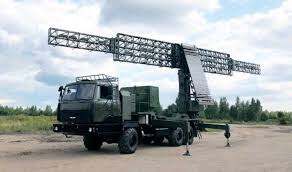
At the heart of this effort are advanced long-range sensors being developed by the Defence Research and Development Organisation (DRDO) and specialised laboratories such as the Instruments Research and Development Establishment (IRDE). These sensors are not designed for routine surveillance. They are built to meet the extreme demands of ballistic missile detection, including high speeds, long distances, and high altitudes.
Experts say these systems can detect missile launches at very long ranges, track them during the boost and mid-course phases, and send real-time data to interceptor systems. Such capabilities are essential for any credible layered ballistic missile defence system, as early detection and precise tracking directly affect interception success.
A New Radar Site to Improve Coverage
What makes this development especially significant is the reported creation of a new sensor site separate from India’s existing radar infrastructure along the western coast and maritime approaches. Observers believe this new facility, likely located in southern India, will improve angular coverage and tracking geometry for long-range missiles.
By adding redundancy, the system also becomes more survivable. If one sensor is degraded or targeted, others can continue to function. This kind of redundancy is considered a best practice in modern missile defence planning and strengthens the reliability of early-warning assets.
Linked to Phase II of India’s BMD Programme
The expansion is widely seen as part of DRDO’s Phase II BMD plans, which aim to move India’s missile defence posture from largely reactive to more proactive. Phase II focuses on countering longer-range and more advanced ballistic threats, including missiles with higher speeds and potential manoeuvring capabilities.
Rather than relying on visible demonstrations, India is quietly building the underlying architecture needed for future defence. Analysts note that this behind-the-scenes work is far more important than public announcements when it comes to strategic stability.
Why Secrecy Matters More Than Location
The exact location of the new radar and sensor facilities remains classified, and experts say that is intentional. In missile defence, what matters most is sensor performance, data fusion, and decision-making speed, not public knowledge of coordinates. These sites will feed data into a national network that connects command centres and interceptor batteries, enabling rapid and coordinated responses.
Responding to an Evolving Regional Threat
This expansion comes at a time when missile technologies in the region are becoming more complex. Longer ranges, faster speeds, and advanced counter-measures are changing the threat environment. India’s steady investment in advanced missile tracking shows a clear strategic vision aimed at staying ahead of these developments.
A Quiet but Powerful Strategic Shift
In contrast to the uncertainty created by loud and unilateral security approaches elsewhere, India’s silent, technically rigorous strategy offers a different model. It prioritises capability, survivability, and long-term deterrence. These programmes may not dominate headlines today, but over time they can significantly alter the strategic balance.
India’s growing missile defence and early-warning network shows that in strategic affairs, silence and ambiguity can be powerful tools. By focusing on substance over spectacle, India is building a stronger and more credible shield for the future.
Related posts:
 What Happens to Your Brain When Smartwatch AI Lives on Your Wrist
 Perplexity Strengthens Comet Assistant with Smarter Safeguards and Control
 CERT-In Urges Apple Users to Update Devices to Prevent Hacks
 India Gears Up for Deep-Sea Breakthrough With Matsya-6000 Submersible
 New VoxeLite Finger Wearable Brings Realistic Digital Touch Technology
 China’s Superconducting Maglev Train Smashes Speed Record At 700 Kmph
 China Proposes AI Safety Rules for Human-Like Interaction and Ethics
 iQOO 15 Ultra Leaks 2026: Gaming Flagship With Elite Performance
 Android 17 New Design Leaks Reveal Blur Effects, Features
 Nothing Phone 4a Pro Launch, Specs, Battery, Price Expectations 2026