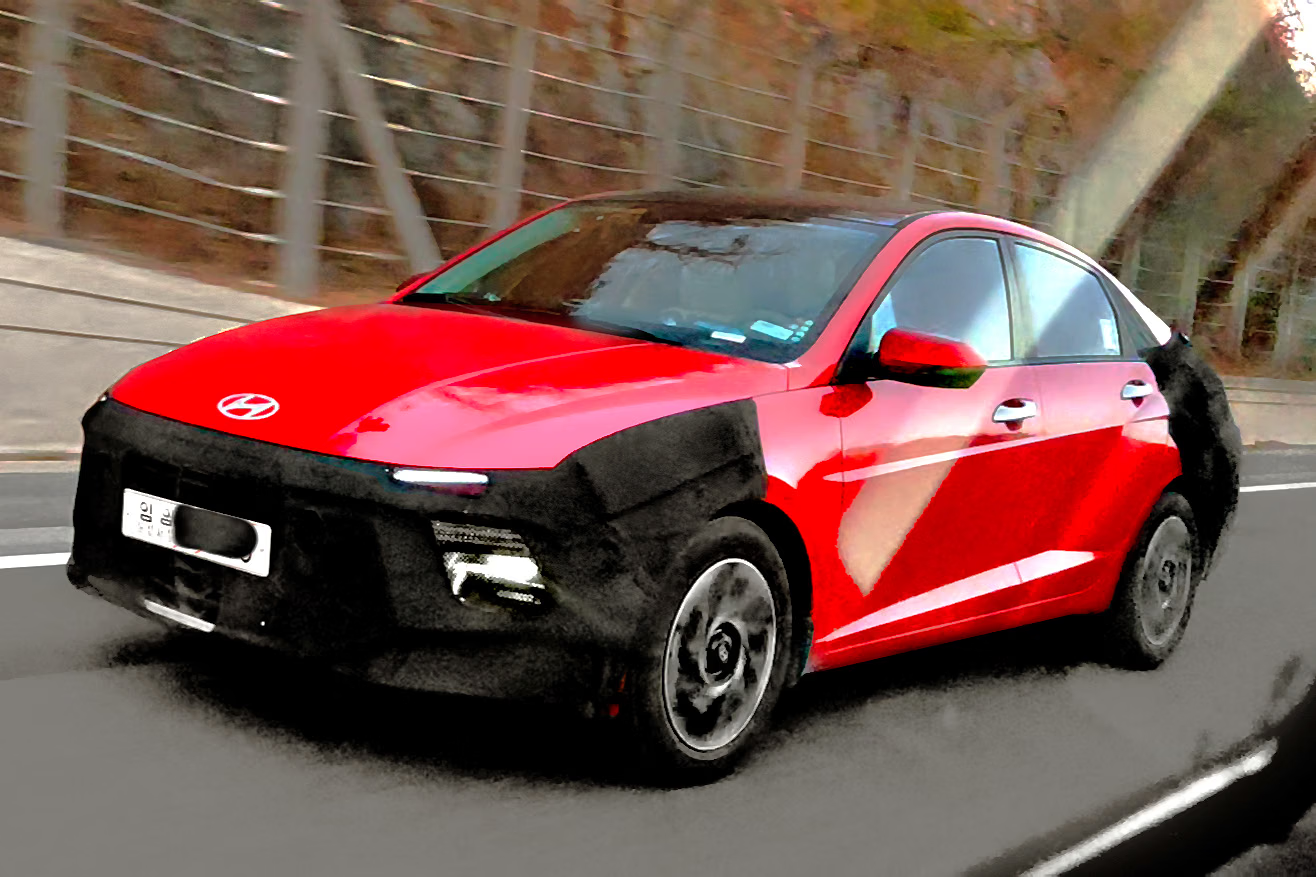
The upcoming Hyundai Verna facelift has been spotted testing ahead of its official debut, and the spy shots reveal significant updates inside the cabin. While Hyundai Motor Company has not made a formal announcement yet, the test mule gives us a strong preview of what buyers can expect.
From a redesigned steering wheel to subtle exterior tweaks, the facelifted Verna appears to focus on refinement rather than reinvention. Here’s a detailed look at what has changed and what remains the same.
Hyundai Verna Facelift Interior Upgrades
One of the most noticeable highlights of the Hyundai Verna facelift is the revamped cabin. The updates aim to make the sedan feel more premium and aligned with Hyundai’s newer design language.
New Steering Wheel with Modern Identity
The facelift introduces a brand-new steering wheel design, replacing the outgoing version. Instead of the traditional ‘H’ logo at the center, the new wheel features four dots — a design element already seen on Hyundai’s latest global models.
This subtle shift gives the cabin a fresher identity.
The steering wheel also appears to come with a dual-tone finish. In the test vehicle, sporty red accents on the steering wheel and seat upholstery suggest that Hyundai could introduce a sportier trim variant.
This update enhances the overall cabin appeal without changing the core layout.
Dual 10.25-Inch Screens Continue
The spy shots confirm that the sedan will continue to feature the dual 10.25-inch display setup, similar to the current model.
One screen functions as a fully digital instrument cluster, while the other operates as a touchscreen infotainment system. This setup remains one of the strongest features of the Verna in its segment.
The infotainment system is expected to support:
- Wireless Android Auto and Apple CarPlay
- Connected car technology
- Navigation and voice commands
By retaining this premium digital layout, Hyundai ensures that the Verna remains competitive against rivals in the mid-size sedan category.
Exterior Design Changes in Hyundai Verna Facelift
While most attention is on the interior, the facelifted Verna also gets subtle but noticeable exterior revisions.
Refined Front Grille Design
The front grille is expected to receive minor aesthetic tweaks. Though the overall silhouette remains similar, the grille design may differ slightly from the current version to give the car a refreshed look.
The sedan is likely to retain its:
- Stylish LED daytime running lights
- Horizontal LED strip at the front
These elements already contribute to a futuristic front profile, and Hyundai seems keen to preserve that strong visual identity.
Updated Front and Rear Bumpers
The front bumper of the Hyundai Verna facelift appears to feature silver accents on the lower section, adding contrast and a more premium finish.
Similar detailing can also be seen on the rear bumper in the test mule. These silver inserts could enhance the sporty appeal of the car.
These small styling changes help keep the design fresh without altering the car’s successful formula.
New Alloy Wheel Design
The alloy wheels are also expected to receive a refreshed design. Though exact specifications are yet to be confirmed, the updated wheels may offer a more contemporary and dynamic appearance.
In competitive segments, such subtle changes often play a major role in attracting buyers who want a modern-looking sedan.
Engine Options Remain Unchanged
Mechanically, the Hyundai Verna facelift is expected to continue with the same petrol engine lineup. This decision makes sense, as the current engines already deliver strong performance and efficiency.
1.5-Litre Naturally Aspirated Petrol Engine
The first option is a 1.5-litre naturally aspirated petrol engine producing:
- 115 hp
- 143 Nm of torque
This engine is offered with:
- A 6-speed manual transmission
- An iVT (Intelligent Variable Transmission)
This setup focuses on smooth daily driving and fuel efficiency, making it ideal for city users.
1.5-Litre Turbo Petrol Engine
For performance-oriented buyers, the Verna continues with a 1.5-litre turbo petrol engine that delivers:
- 160 hp
- 257 Nm of peak torque
Transmission options include:
- 6-speed manual
- 7-speed DCT (Dual Clutch Transmission)
This turbo engine makes the Verna one of the most powerful sedans in its segment.
The decision to retain these engines suggests that Hyundai is confident in its current mechanical package and wants to focus on aesthetic and feature-based improvements.
How the Hyundai Verna Facelift Stands in the Segment
The Hyundai Verna competes in a highly competitive mid-size sedan segment. Its current version already offers:
- Bold styling
- Advanced digital features
- Strong turbo performance
- Premium interiors
With the facelift, Hyundai appears to refine these strengths rather than overhaul the vehicle completely.
By updating the steering wheel, adding sporty interior elements, refining exterior details, and retaining proven engine options, the brand ensures continuity while keeping the model fresh.
This strategy helps maintain brand loyalty while attracting new buyers.
Expected Launch and Market Impact
Although there is no official confirmation yet, industry trends suggest that Hyundai may introduce the Verna facelift within the next year.
Facelifts typically aim to:
- Extend a model’s lifecycle
- Boost sales
- Keep the product competitive
Given the popularity of the Verna in urban markets, these updates could further strengthen its position.
Final Verdict: Is the Hyundai Verna Facelift Worth Waiting For?
The Hyundai Verna facelift may not be a radical transformation, but it brings meaningful refinements. The new steering wheel design, sporty interior elements, updated bumpers, and refreshed alloy wheels add freshness to an already strong package.
At the same time, retaining the powerful 1.5-litre turbo petrol engine ensures that performance enthusiasts will not be disappointed.
If you are planning to buy a premium mid-size sedan, waiting for the Hyundai Verna facelift could be a smart move.
As more details emerge from Hyundai Motor Company, we can expect clearer insights into pricing, feature upgrades, and official launch timelines. Until then, the spy shots suggest that the Verna is evolving not changing and that might be exactly what buyers want.
Related posts:
 Hyundai Pulls Plug on Tucson India; No Replacement Planned Yet
 Maruti Suzuki e-Vitara Launch December 2 2025: India’s First Electric SUV
 Maharashtra to Use AI at Dahisar Toll Naka to Ease Traffic
 Mahindra’s Bold Move: XUV 700 Facelift Likely to Be XUV 7XO
 Mahindra Launches Charge_IN Network to Boost Ultra-Fast EV Charging
 Mahindra XEV 9S Launched in India as New Electric SUV
 Kawasaki India December Offers 2025 on Ninja and Versys Bikes
 Tesla Ends One-Time FSD Purchase Moves To Subscription Only
 2026 Bajaj Pulsar 125 Launched With LED Lights New Prices
 Mahindra UDO Electric Auto Launched Redefining Last-Mile EV Mobility in India