
Home Ministry Issues New Directive on Vande Mataram Protocol
The Union Home Ministry of India has issued a new and important official directive regarding the National Song Vande Mataram, bringing clarity and protocol to how it should be performed at official events and functions. In an order dated January 28, 2026, the ministry stated that all six stanzas of Vande Mataram, written by Bankim Chandra Chattopadhyay, must be sung or played before the National Anthem Jana Gana Mana whenever both are presented together at public ceremonies, government events, and school functions. This marks a notable shift in protocol and is part of ongoing efforts to honour India’s national symbols uniformly across the country.
For many years, only the first two stanzas of Vande Mataram were commonly performed at official occasions. The latest guidelines restore the complete original six-stanza version with a duration of around 3 minutes and 10 seconds, officially recognizing all verses as part of the National Song’s ceremonial use. This updated guidance also formalises when and how the song should be rendered, placing it ahead of the National Anthem in sequence when both are to be performed together.
Significance of the New Protocol in National Events
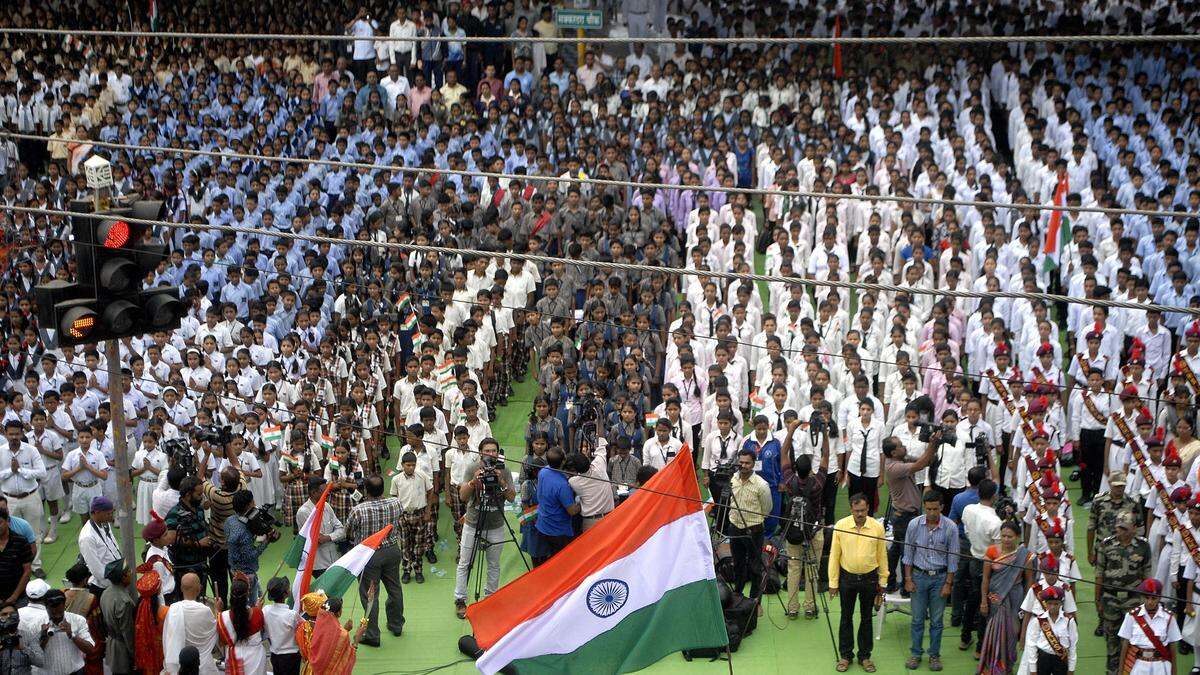
According to the Home Ministry’s new order, the full six-stanza rendition is now expected at official functions such as the unfurling of the Indian national flag, the arrival and departure of the President of India, speeches by governors, and other ceremonial occasions. The directive emphasises that whenever the National Song is played or sung, the audience should stand at attention as a mark of respect, mirroring the traditional protocol observed for the National Anthem. This standing requirement, however, will not apply when Vande Mataram is played as part of a newsreel or documentary film, where standing may interrupt the screening.
The new protocol comes at a time when India is celebrating the 150th anniversary of Vande Mataram, a song that has deep historical roots in the Indian freedom struggle and remains an emblem of national pride. By formalising the complete version of the song in official observances, the government aims to reinforce its importance and ensure greater uniformity in patriotic practices across official spheres and schools nationwide.
Historical Context of Vande Mataram and the National Anthem
Vande Mataram holds a distinguished place in India’s history as a powerful rallying cry during the country’s fight for independence. Penned in the 19th century by Bankim Chandra Chattopadhyay and included in his novel Anandamath, the song was first sung publicly in the late 1800s and became associated with movements against colonial rule. In 1950, when the Indian Constitution came into force, Jana Gana Mana was officially adopted as the National Anthem, while Vande Mataram was given the status of the National Song, acknowledging its historical and cultural significance alongside the anthem.
The new directive by the Home Ministry reaffirms this dual respect by clearly stating that whenever both national compositions are performed together, Vande Mataram must be rendered first, followed by the National Anthem. This sequence is expected to become a standard feature at state ceremonies, government events, cultural functions and formal gatherings that involve national symbols.
What the Protocol Means for Schools and Public Life
Under the new guidelines, schools are encouraged to begin the day with community singing of the full Vande Mataram during morning assemblies, alongside the National Anthem. The Home Ministry’s instructions aim to instil awareness and respect for the National Song among students and reinforce the feeling of unity and patriotism from an early age. Teachers and school administrators must now ensure that the official version with all six stanzas is used in place of shortened renditions that were previously common.
Beyond educational institutions, the directive may also influence how national songs are used in other public contexts, including award ceremonies, cultural programmes, and celebrations of national holidays. By setting clear guidelines on both timing and decorum, the Home Ministry hopes to foster a deeper connection between citizens and national traditions.
Respecting National Symbols with Uniform Protocols
The updated protocol emphasises not just the order in which Vande Mataram and Jana Gana Mana should be presented, but also the respectful manner in which they should be honoured. The Home Ministry’s directive encourages mass singing and participation at official events, urging organisers to provide adequate sound systems and printed lyrics to facilitate collective performance. When executed with attention and decorum, these practices are believed to enhance the patriotic spirit among attendees and preserve the dignity of national symbols.
It is important to note that while Jana Gana Mana enjoys statutory backing under the Prevention of Insults to National Honour Act, 1971, Vande Mataram does not currently have the same legal protection. Nevertheless, by issuing formal guidelines for the National Song’s ceremonial use, the government is promoting its importance in national life and cultural heritage.
Implementation and Public Response
The Home Ministry’s fresh set of protocols is expected to be implemented gradually across government departments, educational institutions, and public events throughout India. As awareness grows and institutions adapt to the updated guidelines, the presence of Vande Mataram alongside the National Anthem is likely to become a more visible part of formal ceremonies. The directive also invites discussions on how best to balance tradition with modern civic practices, prompting a broader conversation about national identity and collective memory in contemporary India.
In summary, the Home Ministry’s order to sing all six stanzas of Vande Mataram before the National Anthem at events where both are played represents a meaningful reaffirmation of national heritage. By combining historical reverence with modern protocol, the directive seeks to ensure that India’s national symbols continue to inspire respect, unity, and pride among its people.
Related posts:
 Understanding ECI’s Special Intensive Revision SIR for Voter Lists in 12 Regions
 Bengaluru Woman Loses ₹31.83 Crore in Horrific “Digital Arrest” Scam
 Kavach Train Protection System Transforms Safety on North Eastern Railway
 India’s New E-Passport: Safer, Smarter, and Faster Travel for All
 Fixing PAN Card Name Mismatch: A Simple Guide for 2025
 Top 10 Technologies for 2026 Shaping India’s Future Jobs
 RBI Tightens Aadhaar OTP KYC Rules to Curb Bank Fraud
 CGHS OPD Fees Clarified, Ayush Bima Launched for Beneficiaries
 Maharashtra Launches Bhu-Aadhaar to Modernise Farm Land Records System
 DIGIPIN India Digital Address System Explained, Benefits, How To Find