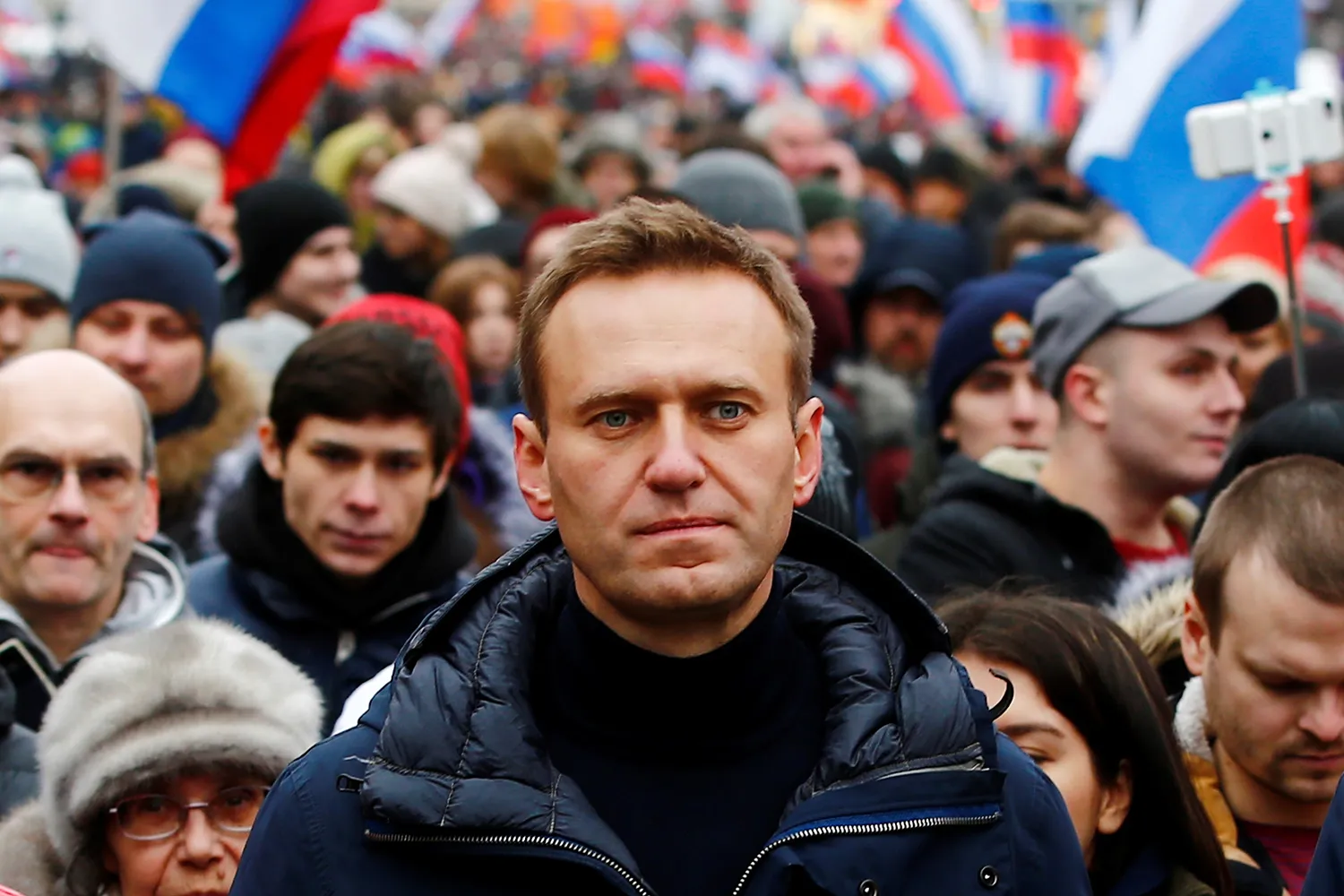
Five European countries have accused Russia of poisoning opposition leader Alexei Navalny with a lethal toxin derived from poison dart frogs, escalating international tensions over his death in an Arctic prison colony.
In a joint statement, the foreign ministries of the United Kingdom, France, Germany, Sweden and Netherlands said laboratory tests confirmed the presence of epibatidine in samples linked to Navalny.
The allegation marks one of the most serious chemical weapon accusations against Moscow in recent years.
What Is Epibatidine and Why It Matters
Epibatidine is a highly toxic alkaloid originally identified in certain South American poison dart frogs. It affects the nervous system and can be fatal in extremely small doses.
European officials said the substance is not naturally found in Russia.
Laboratory Confirmation of Epibatidine
According to the joint statement, independent laboratory analysis “conclusively confirmed” the presence of epibatidine.
The governments stated that Russia had the means, motive and opportunity to administer the toxin.
They announced plans to report Moscow to the Organisation for the Prohibition of Chemical Weapons for allegedly breaching the Chemical Weapons Convention.
If verified, the use of such a toxin would represent a grave violation of international law.
Chemical Weapons Convention Implications
The Chemical Weapons Convention prohibits the development, production and use of chemical agents for hostile purposes.
Russia is a signatory to the treaty.
A formal complaint could trigger international investigations and potential sanctions.
Such a move would deepen already strained relations between Moscow and Western capitals.
The Circumstances of Navalny’s Death
Navalny died in February 2024 in an Arctic penal colony, where he was serving a 19-year sentence on charges widely regarded by his supporters as politically motivated.
Russian authorities said he fell ill after a walk and died of natural causes.
However, doubts have persisted since the announcement of his death.
A Long History of Persecution
Navalny was the most prominent political opponent of Russian President Vladimir Putin.
He built his political profile by exposing corruption and organizing anti-Kremlin protests.
In 2020, he survived a poisoning involving a nerve agent that Western governments later identified as belonging to the Novichok family.
The Kremlin denied involvement in that case as well.
After recovering in Germany, Navalny returned to Russia in 2021 and was immediately arrested.
He remained imprisoned until his death three years later.
His imprisonment and death have become symbols of the shrinking space for political dissent in Russia.
International Reactions to Navalny’s Death
The renewed poisoning allegation has prompted sharp condemnation from Western governments.
British Foreign Secretary Yvette Cooper said Russia viewed Navalny as a threat and demonstrated “despicable tools” in dealing with opposition figures.
The five European countries’ joint action signals coordinated diplomatic pressure.
Reporting Russia to the OPCW
By taking the case to the Organisation for the Prohibition of Chemical Weapons, European governments are escalating the issue beyond bilateral criticism.
This step could pave the way for international inspections or sanctions.
It also reinforces a pattern of multilateral responses to alleged chemical weapon use.
Diplomatic and Sanction Risks
Western countries have previously imposed sanctions on Russian officials following poisoning allegations.
Further measures could include asset freezes, travel bans or expanded economic restrictions.
However, Russia has consistently rejected accusations and framed them as politically motivated.
The dispute risks widening geopolitical divides already intensified by the war in Ukraine.
Yulia Navalnaya’s Accusations
Navalny’s widow, Yulia Navalnaya, has repeatedly accused Putin of responsibility for her husband’s death.
She said independent laboratories had found evidence of poisoning shortly before his death.
On social media, she declared that there was now proof and called for accountability.
The Kremlin has dismissed these claims as unfounded.
A Symbol of Opposition in Exile
Since Navalny’s death, Yulia Navalnaya has emerged as a prominent voice for Russian opposition abroad.
She has urged the international community to maintain pressure on Moscow.
Her statements reflect a broader effort to keep her husband’s legacy alive.
Navalny’s name continues to resonate as a rallying point for critics of the Kremlin.
Implications for Russian Opposition Movements
Navalny’s death is likely to have lasting consequences for opposition politics in Russia.
Increased Fear Among Activists
The case underscores the risks faced by political challengers.
Analysts suggest that the circumstances surrounding his death may deter potential opposition leaders.
The message to dissenters appears stark.
The environment for organized political opposition in Russia may become even more constrained.
Impact on Public Protest
Navalny previously inspired nationwide protests.
However, crackdowns on demonstrations have intensified in recent years.
Stricter laws and security measures have reduced the space for public assembly.
International condemnation could influence domestic sentiment, but immediate large-scale protests appear unlikely.
Broader Geopolitical Consequences
The poisoning allegation adds to existing tensions between Russia and Western governments.
Relations have already deteriorated due to sanctions, diplomatic expulsions and security disputes.
Chemical Weapons Allegations and Global Norms
Accusations of chemical weapon use carry particular weight in international diplomacy.
Such claims challenge global norms designed to prevent the use of toxic substances in conflict or repression.
If the OPCW becomes formally involved, the case could gain further international visibility.
Long-Term Diplomatic Fallout
The diplomatic fallout may include intensified scrutiny of Russia’s compliance with international treaties.
At the same time, Moscow’s denial ensures that the dispute will remain politically charged.
The Navalny case may become another flashpoint in the broader struggle between Russia and Western democracies.
Conclusion: A Defining Moment in Russia’s Political Crisis
The confirmation by five European nations of epibatidine in samples linked to Alexei Navalny has transformed his death from a domestic controversy into a major international issue.
Whether international investigations yield definitive accountability remains uncertain.
What is clear is that Navalny’s death has further darkened the outlook for political opposition in Russia.
His legacy now extends beyond Russian politics, shaping global debates on human rights, chemical weapons and state accountability.
As diplomatic pressure mounts and geopolitical tensions deepen, the case of Alexei Navalny stands as a powerful symbol of the high stakes surrounding dissent, power and justice in modern Russia.
Related posts:
 Pakistan’s 27th Amendment: Cementing Field Marshal Asim Munir’s Power
 Trump Warns NATO Exit Over Greenland Deal and Security Concerns
 PM Modi Launches Kaziranga Corridor, Amrit Bharat Trains in Assam
 United States Completes Historic Withdrawal From World Health Organization WHO
 Diplomatic Tensions Rise After Sheikh Hasina’s Recorded Delhi Message
 Save Manipur Rally Shows Unity Against Division, Demands Peace, Resettlement
 Myanmar Earthquake Shakes Kolkata, Tremors Felt Across Eastern India
 SSB Clears No Man’s Land Encroachment Along India Nepal Border
 Tragic Noida and Delhi Pit Accidents Safety Negligence Claims Lives
 Bangladesh Rushes Secret US Trade Deal Ahead of Crucial Elections